
The Nusa Penida Glass Elevator Project has been one of the most controversial development projects in Bali in the last decade.
Here at The Bali Sun, we have been reporting on this story since the first rumours about the project started circulating. In November, the project was officially axed, and demolition orders were issued, but provincial leaders have since revealed more details.
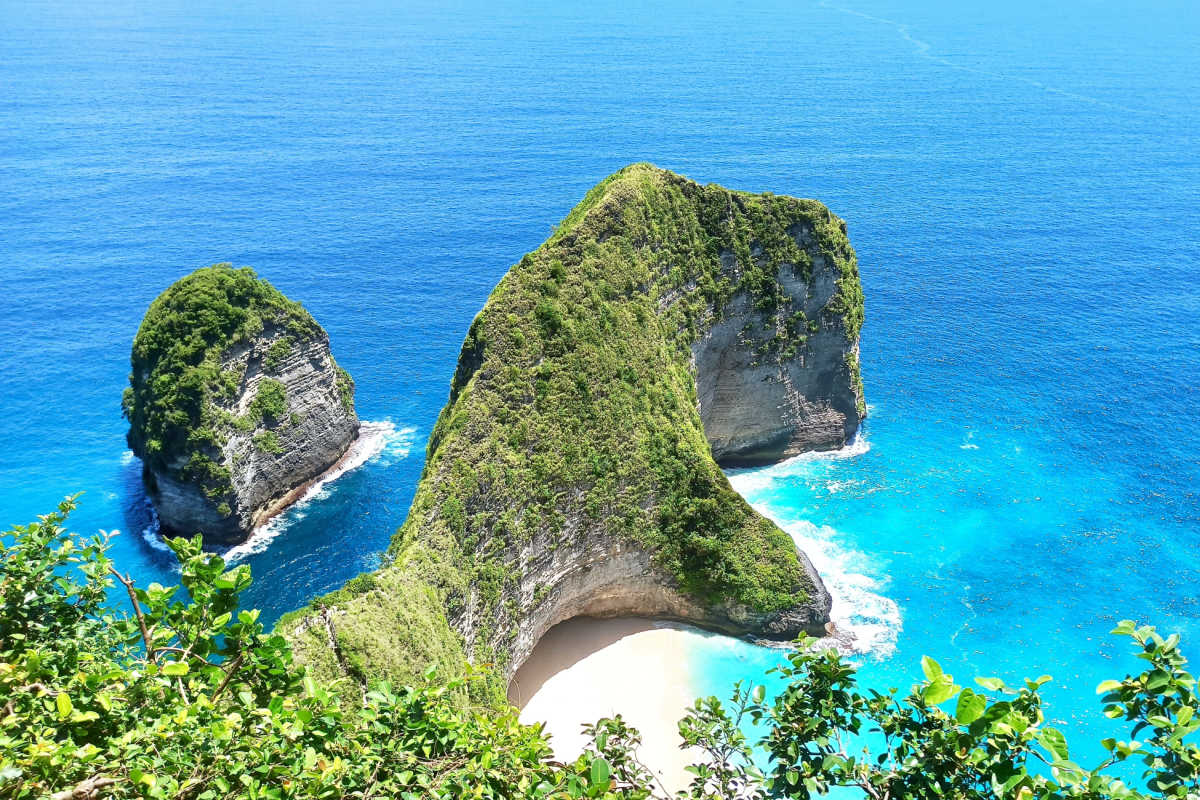
On Sunday, 23rd November 2025, Bali’s Governor Wayan Koster formally axed the Nusa Penida Glass Elevator Project.
The controversial development was set to create a 182m glass elevator shaft along the cliffside of the world-famous Kelingking Beach. Despite being under construction for well over a year, an investigation into the project’s building permits and licenses found five major violations.
In light of the scale and number of violations, Governor Koster shut down the project and issued a six-month order to PT Indonesia Kaishi Tourism Property Investment Development Group to deconstruct and demolish all structures connected to the Kelingking Glass Elevator.
During his press conference, Governor Koster shared “[I am] ordering PT Indonesia Kaishi Tourism Property Investment Development Group to stop all construction activities of the Glass Viewing Platform, carry out the demolition independently within a maximum of six months, and carry out the restoration of the function of the space after the demolition within a maximum of three months.”
The decision to axe the project has been met with both jubilation and condemnation. Many in Nusa Penida still want to see the project brought to fruition since it showed so much promise to bring an economic boom to the island. Others celebrated the decision, noting that it was a win for nature and for Balinese culture.
Despite pushback from some members of the community over the decision to cancel the project, Governor Koster is clear that the demolition will proceed. However, he has given a glimpse into his long-term vision for Kelingking Beach.
When asked by reporters for comment on the calls from leaders in Sejebag Traditional Village to resume the project, Governor Koster shared, “That’s an aspiration, but it can’t be continued. The violations have been seen.”
He explained further that the scale of the violations found by the investigation makes moving forward with the project untenable.
Governor Koster explained that the PBG permit only covers 500 meters, just the ticket counter; the elevator isn’t included. But they (the company) included it in an appendix, and then categorized the building as a simple permit. But in reality, this building is extraordinary; it’s no longer low-risk, but very high-risk.”
He added, “Then, the building is not based on their rights. This is state property, and there is no recommendation or permission from anyone. The land was reviewed by the special committee, and I participated in the discussion, and indeed there were violations and could even be criminal.”
When asked if axing the project would create a negative downturn of economic prospects for communities in Nusa Penida, Governor Koster reiterated that he chose to cancel the project for that very reason: to protect the economic prosperity and potential of Nusa Penida.
He noted, “Of course, development in other areas of Nusa Penida is allowed, as long as the spatial planning must be correct, environmental impact analysis (EIA), and other requirements for sustainable progress. That is what needs to be straightened out so we have a common understanding.”
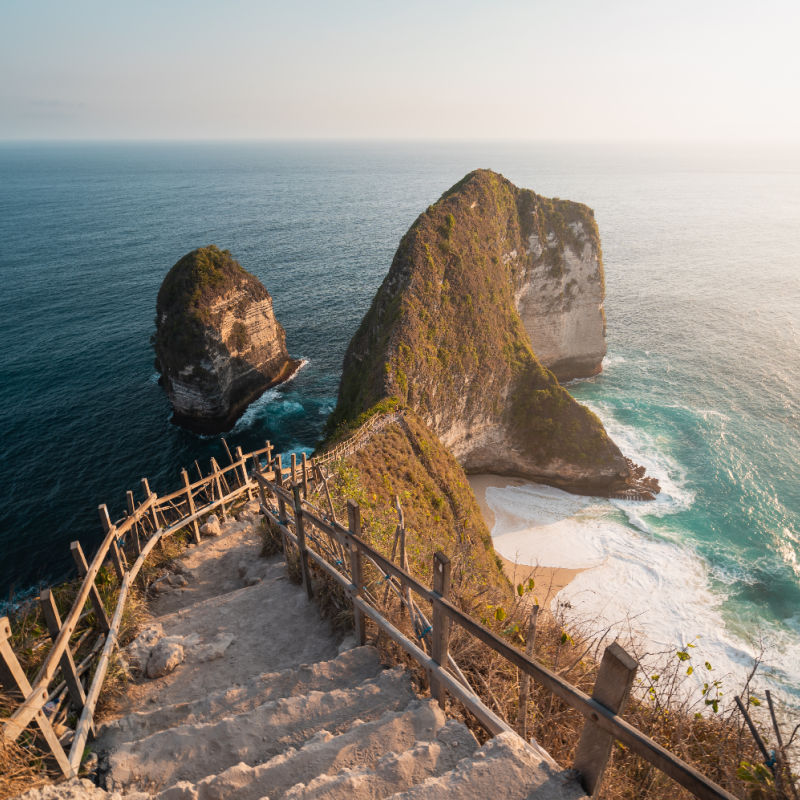
Governor Koster has been reported to be considering developing a more robust and well-constructed stairway from the clifftop to Kelingking Beach, rather than allowing the elevator to be built.
At present, it is possible to access Kelingking Beach via a treacherous coastal trekking path.
Every year, dozens of injuries are recorded on the route, not least because the terrain is seriously uneven, grave, and with few passing places and handholds for safety.
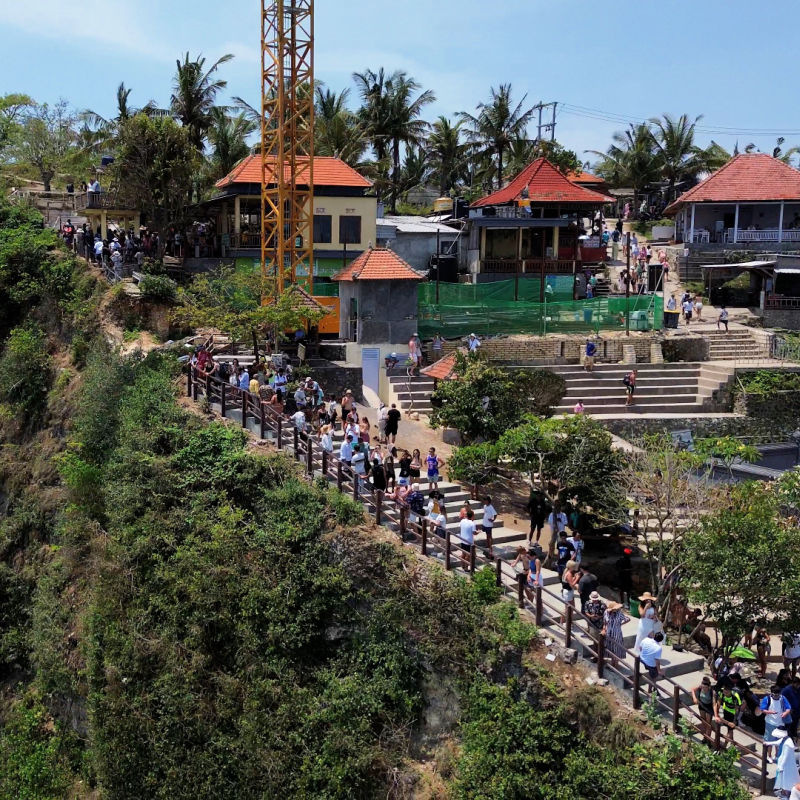
Tourists embarking on the hike down to Kelingking Beach do so entirely at their own risk, and it is important to note that Kelingking Beach is also a strictly no-swim zone, as is Nusa Penida’s Diamond Beach.
Discover more from The Bali Sun
Subscribe to get the latest posts sent to your email.