
Tourists traveling to Bali seeking to visit a seriously impressive historical and cultural gem without the crowds should look no further than Tampaksiring Village and specifically Gunung Kawi.
Located just a stone’s throw from the island’s arts and culture capital, Ubud, this small village is often overlooked.
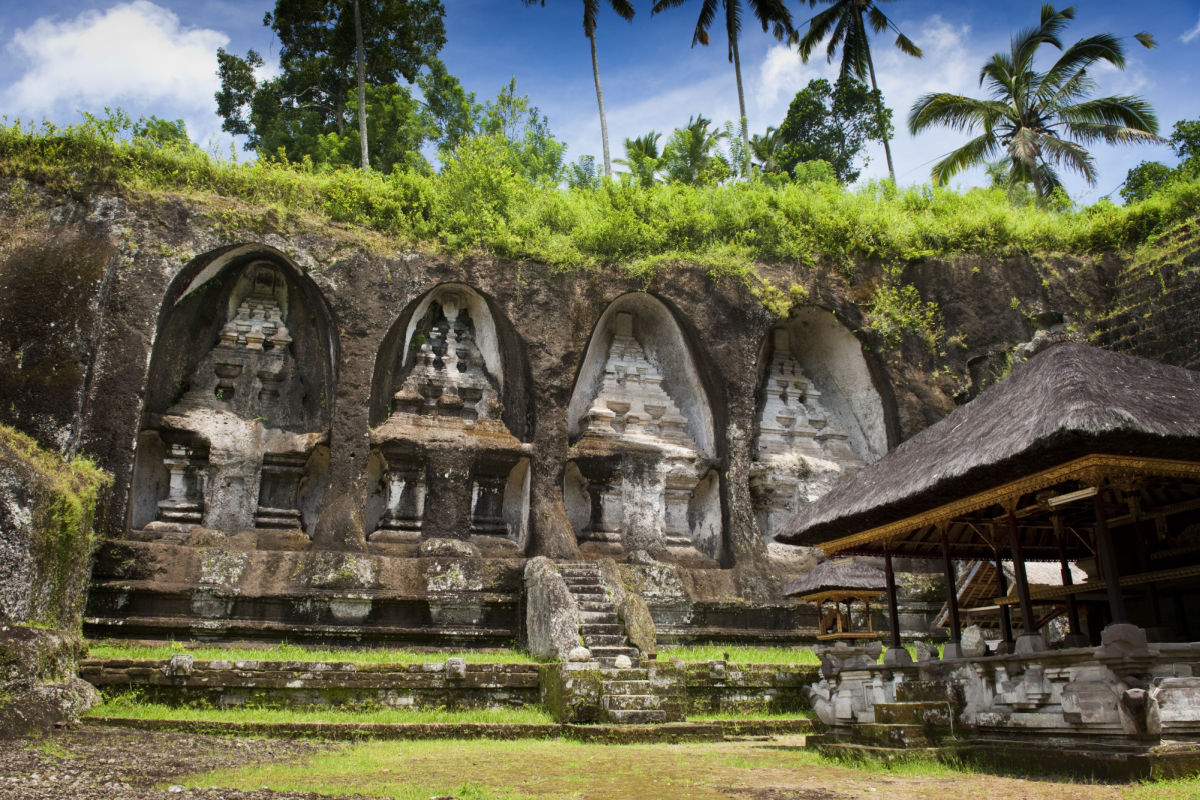
Gianyar Regency, home to tourist hotspots like Ubud and the Tegallalang Rice Terrace, is home to some of Bali’s oldest and most significant temples, palaces, and cultural landmarks. The quaint village of Tampaksiring is home to more than its fair share of cultural wonders and offers tourists a central yet slightly off-the-beaten-path alternative to Ubud.
Those imagining stepping back in time during their vacation in Bali, or those yearning to connect with the island’s rich cultural heritage in a meaningful way, should be sure to put Tampaksiring Village high on their Bali bucket list.
Tampaksiring Village is home to one of Bali’s best-kept hidden gems. While not entirely unknown to international tourists, it is rare to find Gunung Kawi Temple featured on Top 10 Best Destinations to Visit in Bali lists; in fact, it rarely features in the Top 20, which is a crying shame, as this temple complex is seriously magical and seriously impressive.
Gunung Kawi Temple is conserved as a Balinese cultural heritage site and one of Tampaksiring Village’s most impressive architectural landmarks.. Built in the 11th century, the temple complex comprises ten temples carved directly into the cliffs along the Pakerisan River Valley. Legend has it that the temples served as burial grounds for kings and royal families of Gianyar Regency in eras gone by.
There is some debate even amongst Balinese historians as to the origins of the temple and the carvings. The prevailing theory is that the ten temples were built in honour of King Anak Wungsu and his royal family.
One theory suggests that five of the shrines on the east side of the Pakerisan River are dedicated to King Udayana, his queen, Mahendradatta, and their sons.
It is surmised that the four shrines on the west side were carved for his minor queens, also known as concubines. A tenth shrine is located a short distance away from the other nine and can be visited too.
While the story of King Anak Wungsu is the prevailing belief of most historians, there is a belief amongst Balinese Hindus within the community of Tampaksiring Village and the surrounding area that the temple complex was carved by the mythical Kebo Iwa, who created the site in one night using only his long fingernails.
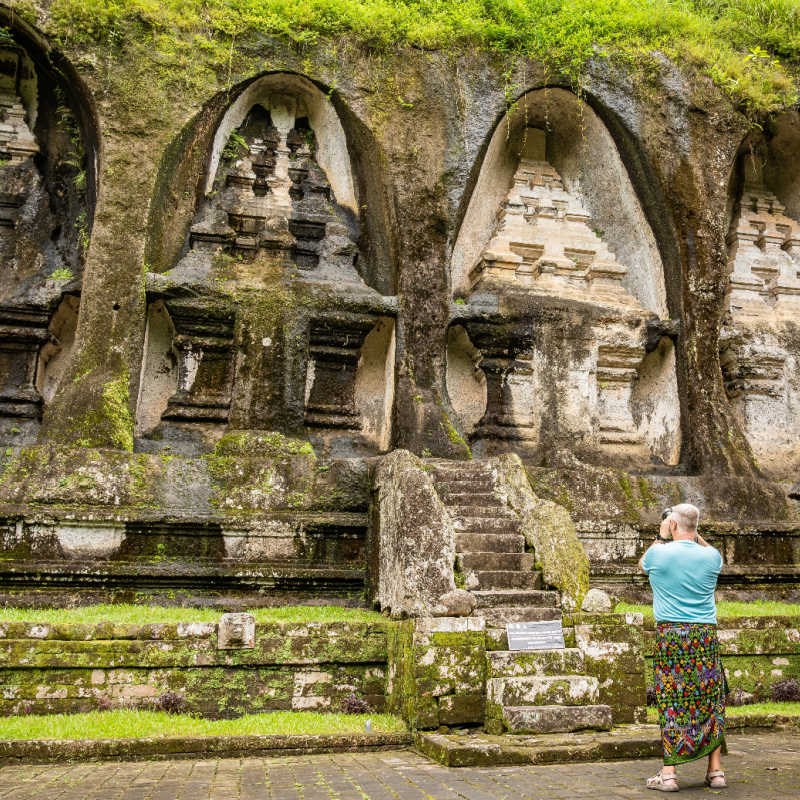
The whole temple complex is transected by the sacred Pakerisan River, and the presence of the flowing water, along with the surrounding tropical forest, adds to the magical feel of the area.
The temple is open daily from 7 am to 6 pm, with an entrance fee of IDR 50,000 for domestic tourists and IDR 75,000 for international adults. It offers complete facilities, including a parking area, restrooms, food stalls, a souvenir shop, sarong rentals, and tour guides.
Though tour guides are provided, visitors are expected to offer a tip at the end of the visit.
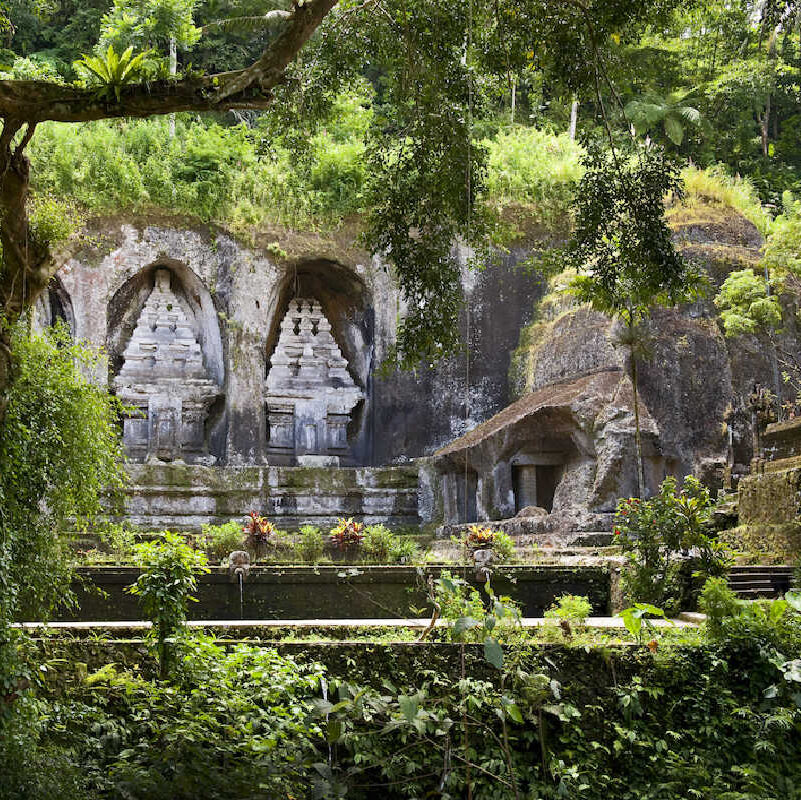
Gunung Kawi is just the start of the journey on a day trip to Tampaksiring Village. No visit to the area would be complete without a stop off at Mengening Temple.
Located just minutes from Gunung Kawi, this is one of Bali’s oldest temples and one of the most magical and secluded temples to take part in a melukat, or traditional water cleansing ceremony. Mengening Temple is home to ten natural springs, which are all sourced from the sacred Pakerisan River.
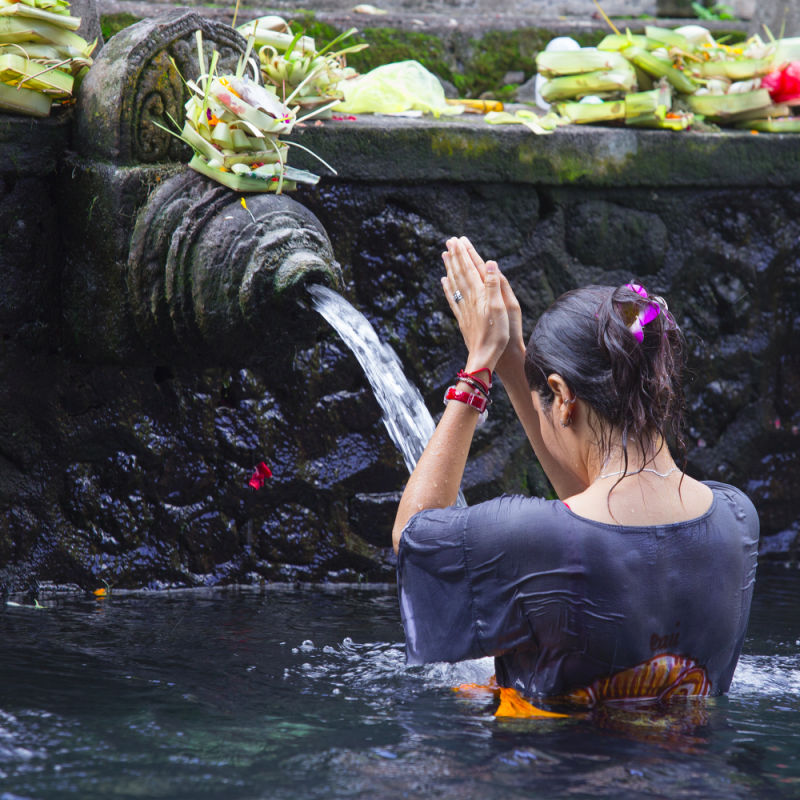
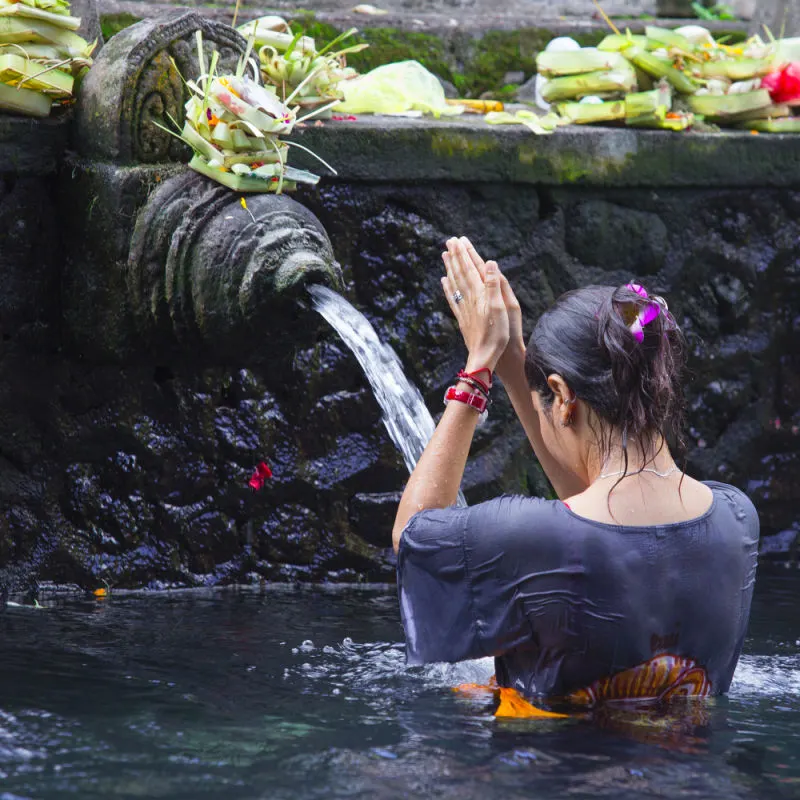
Mengening Temple is open from 9 am to 5 pm daily and is often visited as part of a full-day tour of Tampaksiring Village. Generally, visitors start at Gunung Kawi before heading to Mengening Temple, and it is possible to request to be guided through a melukat ceremony.
Entry costs IDR 10,000 for domestic tourists and IDR 30,000 for international tourists. An additional donation to the temple is appreciated for a meluakt ceremony.
Discover more from The Bali Sun
Subscribe to get the latest posts sent to your email.