
There are so many different areas of Bali that are deemed unmissable, but Ubud is perhaps the most unmissable of all. Here at The Bali Sun we have a very special place in our hearts for Ubud. As the arts and cultural capital of the province, this town really is the gateway to Balinese culture and in truth, even a lifetime is not long enough to understand all that this magical place has to offer.
This poses an important question. For tourists who are on a tight turnaround in Bali in terms of itinerary, how long should be allocated to visit Ubud. Some holidaymakers opt to make Ubud the base for their whole two week vacation, while others whizz on through as part of a day trip from elsewhere on the island.
So, what would be the minimum amount of time a tourist could spend in Ubud and still feel like they’ve dived into all that this heritage hub has to offer. 48-hours is our recommendation for a minimum amount of time in Ubud. This gives tourists who are interested in Balinese culture enough time to take an initial deep dive, and tick off all the most impressive and important cultural landmarks. We’ll tell you this for nothing though, 48-hours is enough time Ubud…but only for a first visit…we know you’ll be coming back for more!
The Cultural Clock Starts: Day One in the Town Core
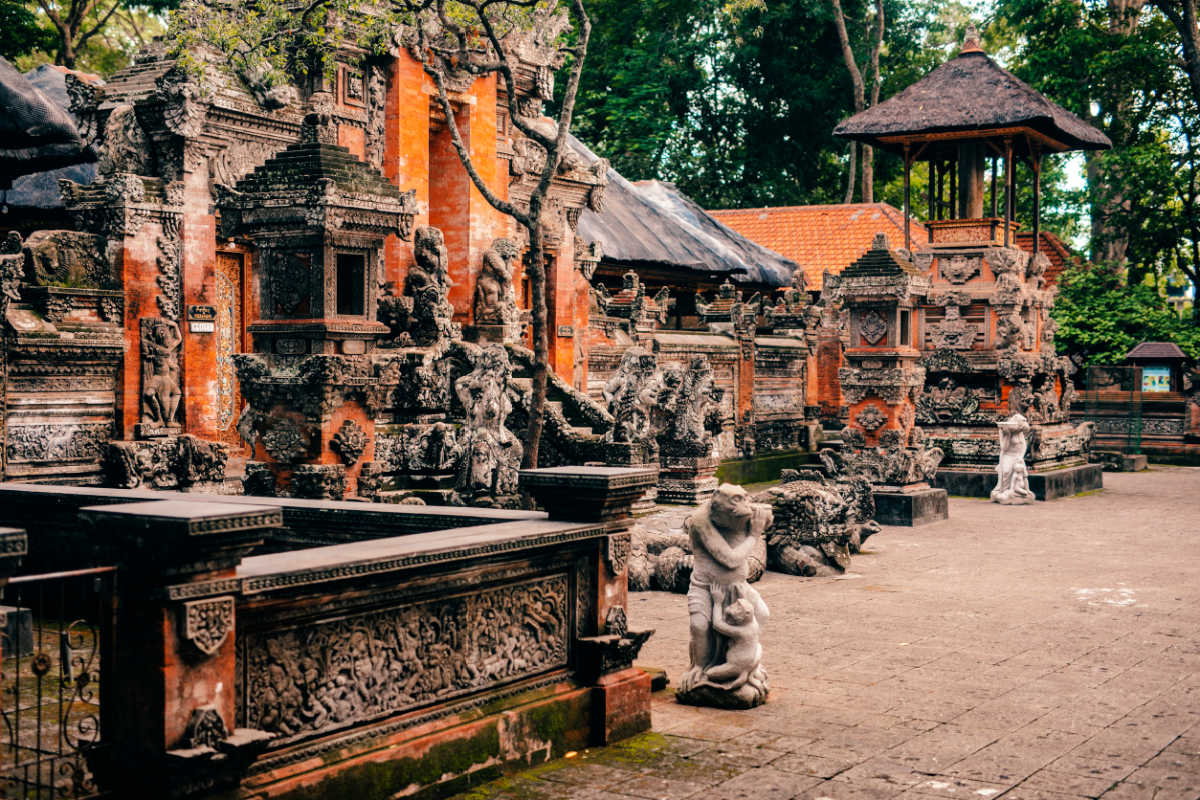
The key to maximizing any short visit to Ubud is ruthless efficiency and an early start, focusing Day One primarily on the attractions closest to the town centre, which are the most manageable on foot. The inevitable first stop for most visitors, and rightly so, is the Sacred Monkey Forest Sanctuary.
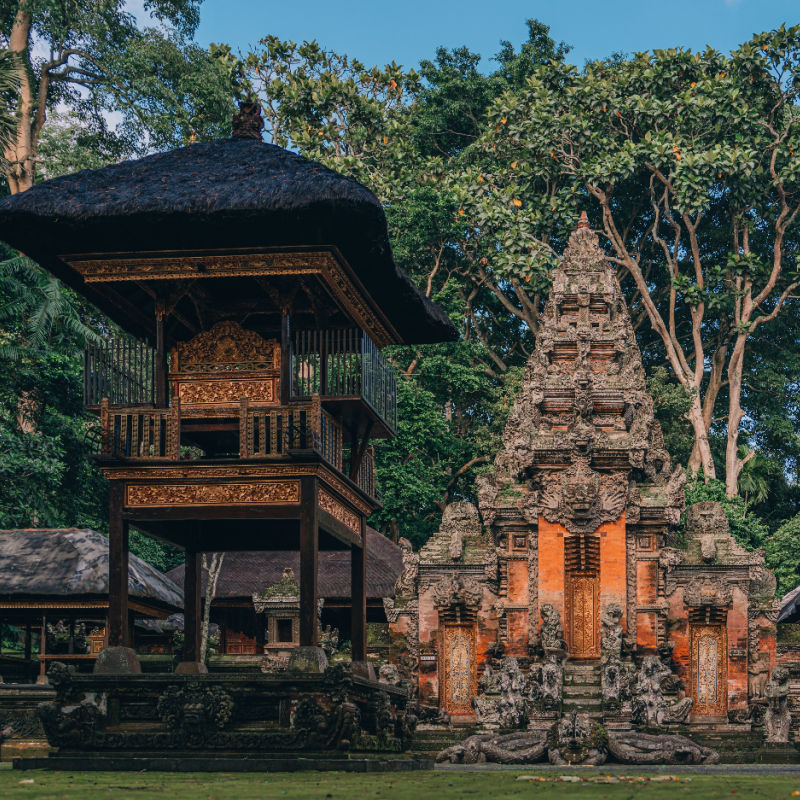
This protected forest is much more than a habitat for the approximately 1,200 Balinese long-tailed macaques; it is an important conservation area featuring ancient temples and a deep philosophical significance tied to the Tri Hita Karana concept—harmony between humans, God, and nature. A visit here requires approximately one to two hours to navigate the pathways, bridges, and temple grounds.
Tourists should be advised to secure all loose items, such as sunglasses and hats, as the resident primates are famously mischievous.
The atmosphere, however, is one of serene jungle mystery, an ideal introduction to the blend of nature and reverence that defines Ubud.

Following the jungle excursion, a shift to the human-made artistry and royalty of the town center is required.
The Ubud Royal Palace (Puri Saren Agung) stands as a monument to the island’s princely past. While much of the palace remains a private residence, the front courtyard and architectural complex are open for viewing. The palace showcases magnificent traditional Balinese architecture, characterized by intricate stone carvings and traditional wood ornamentation.
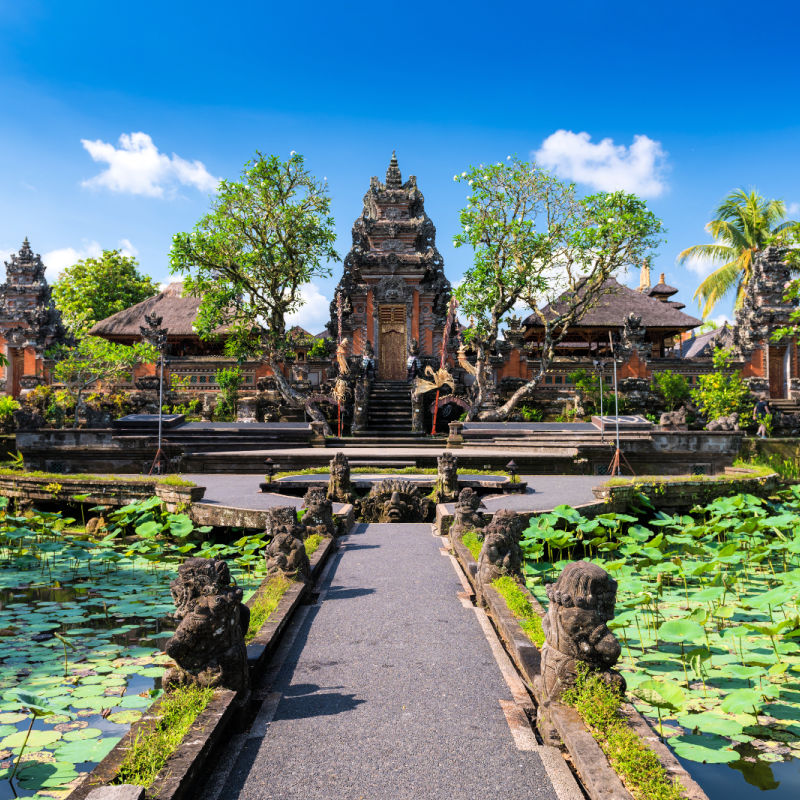
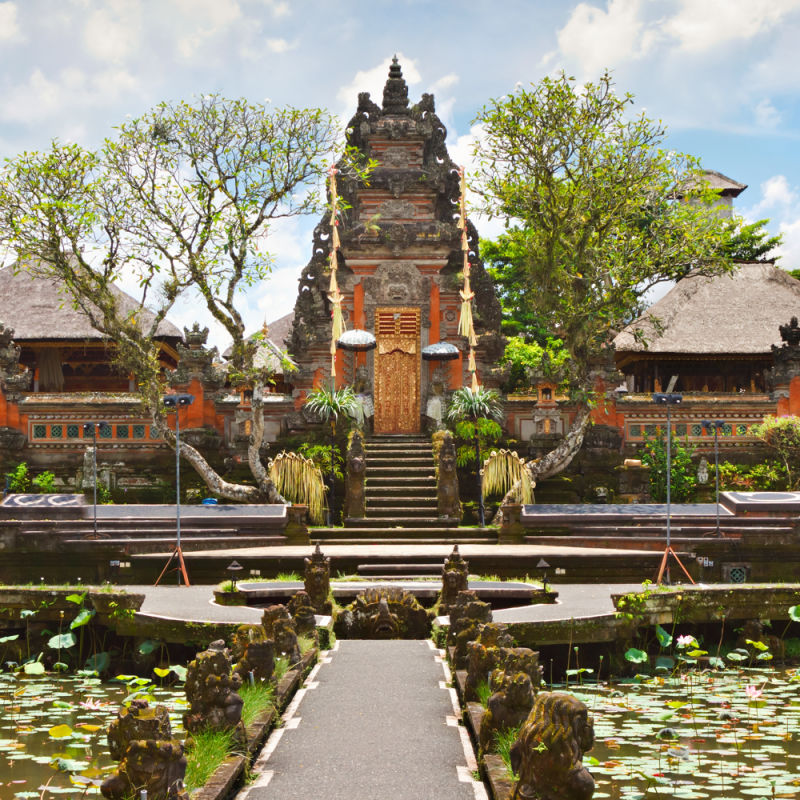
Immediately adjacent is the stunning Saraswati Temple (Pura Taman Saraswati), dedicated to the Hindu goddess of learning, literature, and art. The temple is famed for its large lotus pond, which must be crossed via a pathway leading to the main inner sanctuary. Its architecture is a breathtaking example of Balinese devotion to beauty, especially at dawn or dusk. These two sites, often visited in tandem, provide the cultural touchstones for understanding Balinese feudal history and religious artistry, consuming approximately an hour of the schedule.
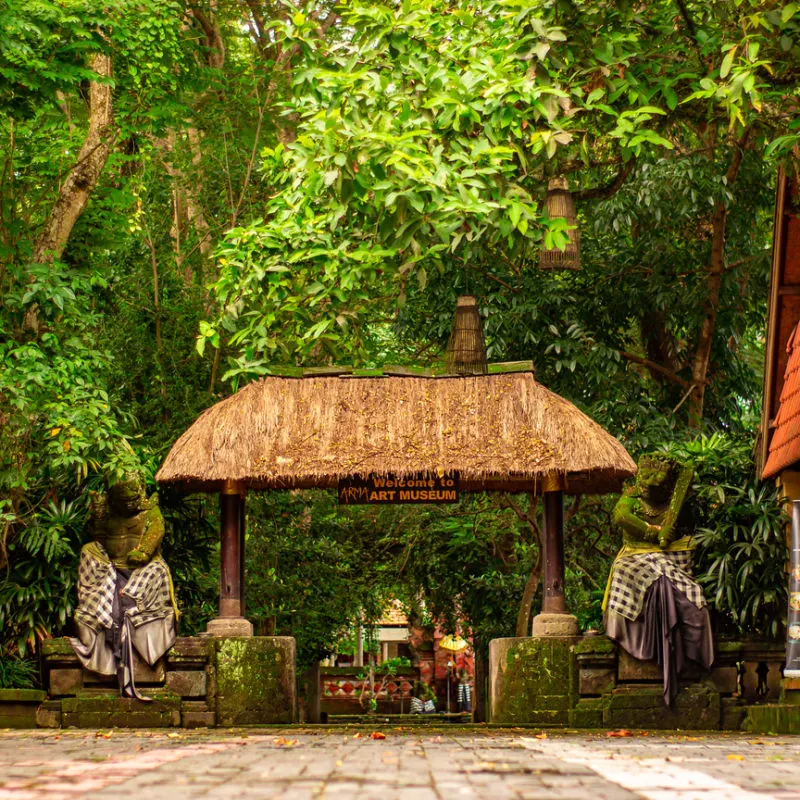
The afternoon of this demanding first day must be dedicated to the artistic lineage that elevated Ubud to global fame. The area is home to several outstanding museums, but for a 48-hour trip, selecting one for a focused visit is imperative.
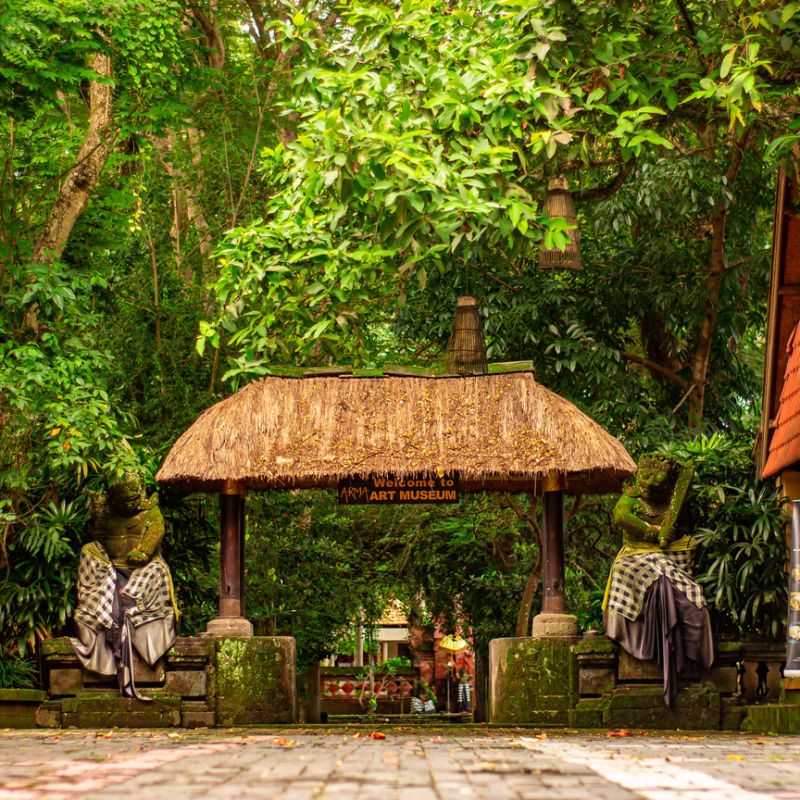
The Agung Rai Museum of Art (ARMA) or the Neka Art Museum offer excellent representations of Balinese painting and wood carving traditions, demonstrating the shift from classical religious motifs to more modern, expressive styles influenced by Western artists who settled in the region in the 20th century.
Spending two to three hours absorbing the history of Balinese visual arts is crucial for any culturally-minded tourist, anchoring the town’s reputation not just in tourism, but in genuine artistic heritage. The culmination of this day should ideally be attending a traditional Balinese dance performance, such as the Legong or Barong, which are frequently held in the Royal Palace or nearby community halls, offering a vibrant, dynamic conclusion to the cultural immersion.
Day Two: The Spiritual Periphery and Iconic Landscapes
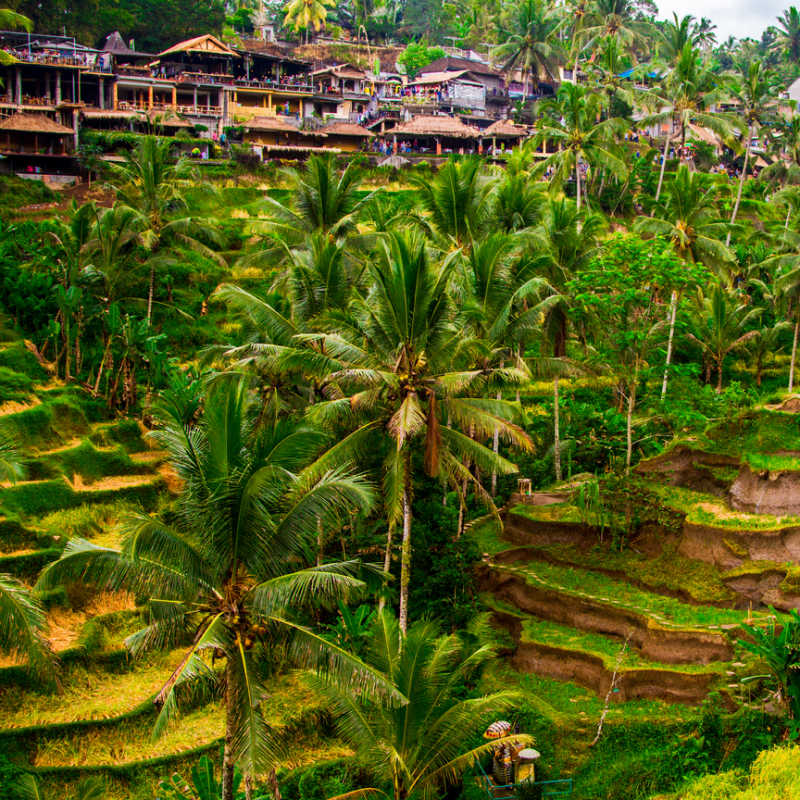
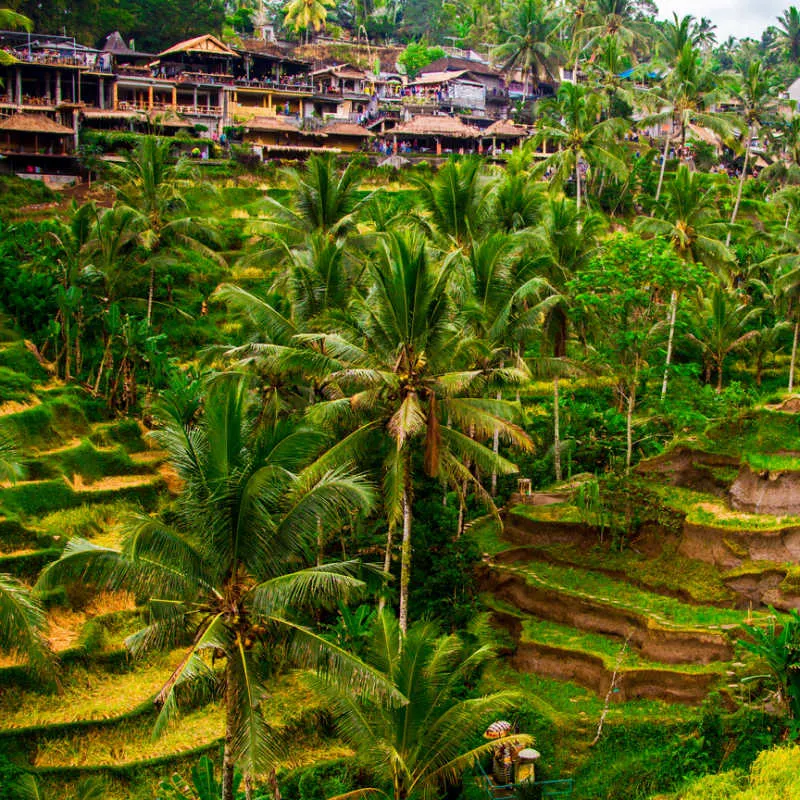
The second twenty-four hours necessitates an aggressive early start and reliance on motorized transport, as the remaining major attractions lie outside the immediately walkable central area. The day should begin well before sunrise with a trip north to the Tegalalang Rice Terraces. This area is arguably one of Bali’s most iconic, its dramatic, lush-green layered contours forming a landscape that is both photogenic and culturally profound. The reason for the early hour is twofold: to avoid the intense heat of the mid-morning sun, and crucially, to observe the terraces when the light is at its softest and the crowds are minimal.
More importantly than the aesthetics, the terraces are a living testament to the subak system, a traditional Balinese cooperative irrigation network that the United Nations Educational, Scientific and Cultural Organization (UNESCO) has recognized as a World Heritage cultural landscape. The subak system is a reflection of the Tri Hita Karana philosophy in practice, emphasizing communal responsibility and spiritual alignment in agricultural endeavors.
Tourists can spend between one and three hours walking the narrow ridges, depending on their fitness and desire for exploration, but the logistical travel time (a 20 to 30-minute drive each way, potentially longer with traffic) means this trip will consume the entire morning.
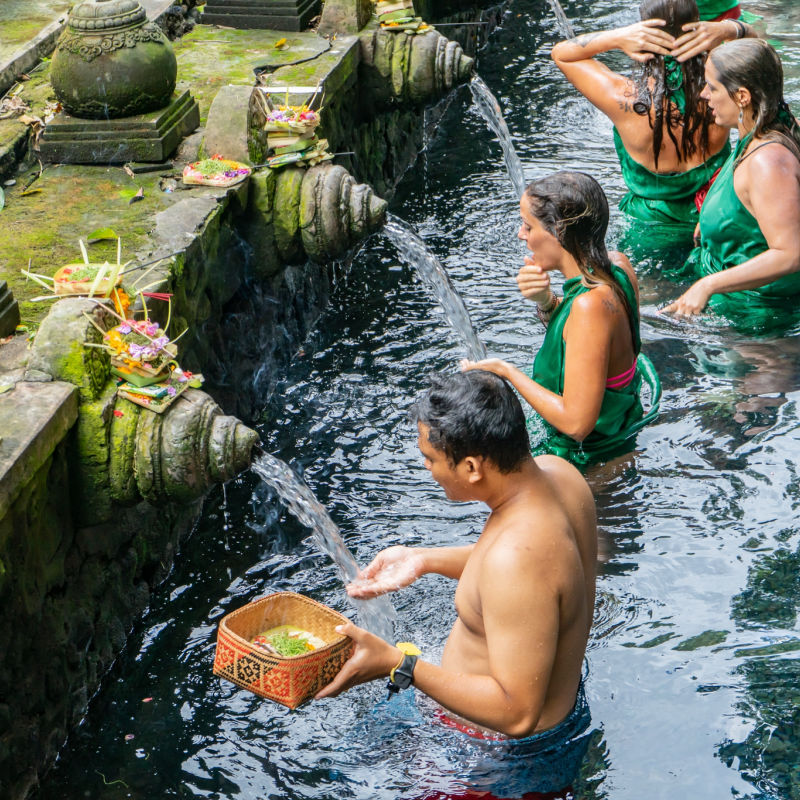
Following the agricultural immersion, the focus must shift to the island’s spiritual bedrock, embodied by the significant water temple, Tirta Empul. Located about a 40-minute drive northeast of Ubud, this temple complex is one of Bali’s busiest and most revered. It is famous for its holy spring water, which feeds into a series of purification pools. The spiritual significance is immense; Balinese Hindus visit the temple for melukat, the purification ritual involving bathing in the sacred waters under the spouts.
For tourists, a visit is possible and deeply rewarding, provided they observe strict etiquette. Wearing a sarong and sash is mandatory (which are typically available for rental), and specific instructions must be followed when entering the pools. Allocating at least two hours here is necessary—one for appreciating the temple’s architecture and historical context, and another for observing or participating in the ritual itself. The entire experience offers a profound insight into the devotional life of the island, a crucial element for anyone seeking to understand Balinese heritage.
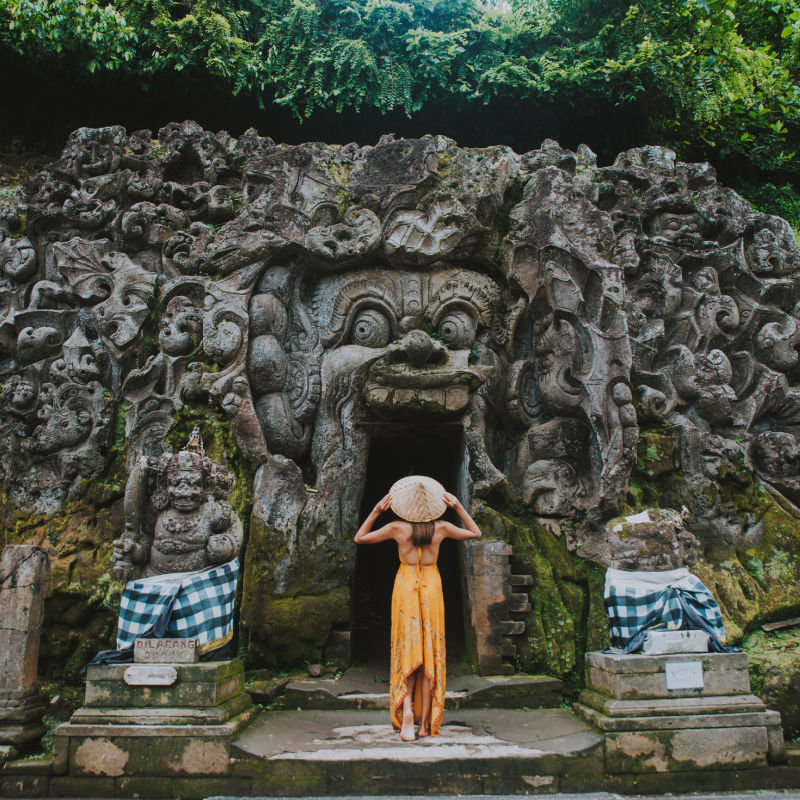
Before returning to the central area, a final historical and archaeological site can be quickly integrated: Goa Gajah, or the Elephant Cave. Located closer to the southern edge of Ubud, this site features a complex of Hindu and Buddhist relics, demonstrating the religious syncretism that characterized Balinese history centuries ago. The main attraction is the cave entrance, carved into a menacing mouth, likely representing a protective demon.
The grounds also contain rock-wall carvings, bathing pools, and shrines. A visit here is less time-intensive, requiring perhaps an hour, but it provides a valuable counterpoint to the living worship experienced at Tirta Empul, showcasing the ancient foundations of Balinese spirituality.
The Inevitable Trade-Off: Logistical Friction Versus Deep Immersion
The schedule outlined above is theoretically achievable within 48 hours but represents a tightly choreographed, highly demanding, and logistically fragile itinerary. The primary adversary to any compressed schedule in central Bali is traffic. While distances between sites like the Monkey Forest and Tegalalang appear short on a map, the reality of winding roads, narrow passages, and high vehicle density can add substantial, unpredictable friction to travel times. This makes the exclusive reliance on a dedicated driver or organized tour essential; attempting this schedule using only ride-sharing services or scooters introduces far too much risk of delay.
The fundamental trade-off is between visiting and experiencing. In 48 hours, a tourist moves at a constant, necessitated pace. They can stand at the rim of Tegalalang and admire the geometry of the rice terraces, but there is little time for the quiet contemplation or the casual interaction with the local farmers that yield deeper understanding.
Similarly, the rush to complete the purification ritual at Tirta Empul may overshadow the spiritual reflection it is meant to inspire. The cultural experience is undeniably rich, but it is executed under duress. To truly absorb the essence of Balinese culture—which prioritizes slow, deliberate processes, whether in religious ceremony or art creation—requires a less aggressive timeline.
Furthermore, a critical dimension of the Ubud experience is sacrificed entirely: the slow culture of wellness and gastronomy. Ubud is internationally renowned for its healthy eating scene, traditional Balinese cooking classes, and world-class yoga and meditation retreats.
Fitting any meaningful participation in a multi-hour cooking class, a restorative yoga session, or a deep exploration of the local warungs (small, family-run restaurants) into the existing 48-hour timeline proves almost impossible. These activities are not secondary; they are integral components of the modern Ubud identity, reflecting the Balinese commitment to holistic health and community. The tourist who leaves without engaging with the culinary landscape or taking a moment for quiet reflection misses a significant part of what makes the destination unique.
The Final Verdict for First-Time Cultural Explorers
In conclusion, for the first-time visitor with a keen interest in cultural heritage and a strict two-day limit, 48 hours in Ubud is best viewed as a profound, intensely focused appetizer.
It allows for the successful collection of visual evidence and the ticking off of the destination’s most essential boxes: the cultural geometry of the rice paddies, the sacred serenity of the water temples, and the artistry of the town center. Tourists will leave with an encyclopedic understanding of the geography and the sheer beauty of the main attractions.
However, the experience will necessarily lack the deep, unhurried immersion that Ubud truly offers. The spiritual, artistic, and natural heart of Bali beats at a slower rhythm than the demanding pace of a 48-hour itinerary allows. Tourists should be advised that while the top attractions can be reached and briefly appreciated, the full richness of Balinese ceremonies, the warmth of its community, and the tranquility of its hidden paths will remain elusive.
The two-day trip serves as an excellent reconnaissance mission, ensuring that the next visit, which must be longer, is planned with informed enthusiasm and a clear intention to settle into the island’s genuine, unhurried pace. Ubud is a place to linger, not merely to visit, and the 48-hour traveler will quickly discover why.
Discover more from The Bali Sun
Subscribe to get the latest posts sent to your email.