
A developer treating a delay as a virtue is a rare thing in Bali. At a closed pre-sale on the Seseh coast this month, that is what we watched happen. The team behind The Heights (theheights.io), a 105-unit residential and aparthotel complex a short ride from the beach, told a room of selected agencies that the project had moved from its original 2025 handover to the first quarter of 2027, and then explained why that slip should make a serious buyer more comfortable rather than less. It is not the pitch you expect. It is the one the market has started to reward.
Why the Timeline Was the Right Call
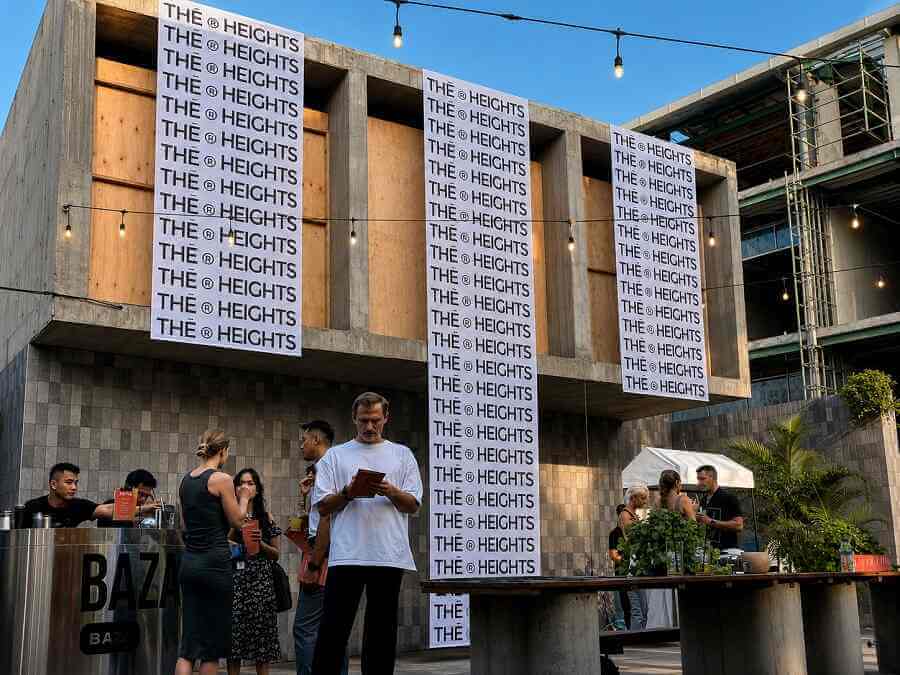
The reason for the delay sits at the centre of everything that has changed for buyers in the past two years. When Indonesia tightened its building rules, The Heights faced a choice that caught out a generation of small developers: carry on building and hope to certify the result later, or stop, secure the correct approval, and resume legally. Its developers, Alexey Kapitanov and Yulia Khludneva, chose to adjust the timeline, complete all permits legally, and continue — and said so openly to investors.
The approval in question is the PBG, the Persetujuan Bangunan Gedung, which replaced the old IMB under Government Regulation 16 of 2021. The PBG is a building approval that must be obtained before construction begins, not after. The certificate that follows completion, the SLF or Sertifikat Laik Fungsi, confirms the finished building is safe and lawful to occupy, and without it a property cannot be legally operated or rented. Build first and seek the paperwork later, and you risk an asset that can never be certified, which is precisely the trap a number of Bali owners walked into this year. Dmitrii Chernyshev, Sales Director at Bali Baza Development (balibaza.com), the project’s sales and management partner, framed the pause plainly: the team would rather absorb a delay than hand investors a building that could not earn its certificate. The partnership slogan, one product, one responsibility, is doing some real work behind that decision.
What a Buyer’s Agency Actually Checks
The pre-sale was open to a small group of agencies the developer had vetted and approved to represent the project, and we were one of them. As best we could tell, we were also the only buyer’s agency in the room. The others were traditional real estate agencies and investor advisors. That difference decides what you look at first.
We do not usually feature apartment or aparthotel projects, and the reason is structural rather than cosmetic. Most leasehold apartment schemes in Bali require each individual unit owner to renew the lease with the landowner directly once the term runs down. On a standalone villa that is manageable. Stacked inside a shared building it is not, because your exit stops being yours alone to decide. If some owners in the block extend and others do not, there is no clean way for a landowner to renew the lease on unit 310 on the third floor by itself, sitting as it does inside a structure shared with everyone else. The coordination is the risk, not the landowner.
That risk can be designed out, and a well-drafted master lease can make even a direct extension with the landowner perfectly secure. The structure we look for, and require before we will feature a project, puts the obligation on the developer: the developer commits to renew with the landowner, and individual owners extend with the developer rather than negotiating unit by unit. The Heights is built that way. The lease runs close to twenty-nine years with a contracted thirty-year extension held at the developer level, which is the distinction that decides whether you can still sell in year fifteen. Without it, an apartment project does not clear our exit and resale check. It is the kind of detail that never appears on a brochure and decides the entire investment.
There is a second compliance point, and it connects straight to how these units will actually be used. Run nightly through a hotel operator, with check-in, housekeeping and guest services, an apartment is an accommodation business, not passive rental, and it has to be classified and licensed as one. The Heights is being placed under a professional hotel operator on exactly that basis. That is the correct structure, and it is the same principle buyers were warned about when the classification rules were rewritten.
Build Quality You Can Stand Inside
Because the project sits at around eighty per cent complete, the pre-sale let us walk a building rather than admire a render. The difference matters. The concrete and the mechanical, electrical and plumbing work are among the better standards we have inspected on the island, the common and wellness areas are unusually generous for the unit count, and the design preserved as many of the site’s mature mango trees as the build allowed, some of them decades old. The team built on only around thirty per cent of a site that runs past eight thousand square metres, and gave the rest to gardens and shared space. That is the reverse of how Bali developments usually treat their land. The plot sits in a designated tourism zone, the local pink zone, which means the intended use matches the spatial plan rather than fighting it. The beach is roughly three hundred metres away, about two minutes by scooter.
The Honest Caveats
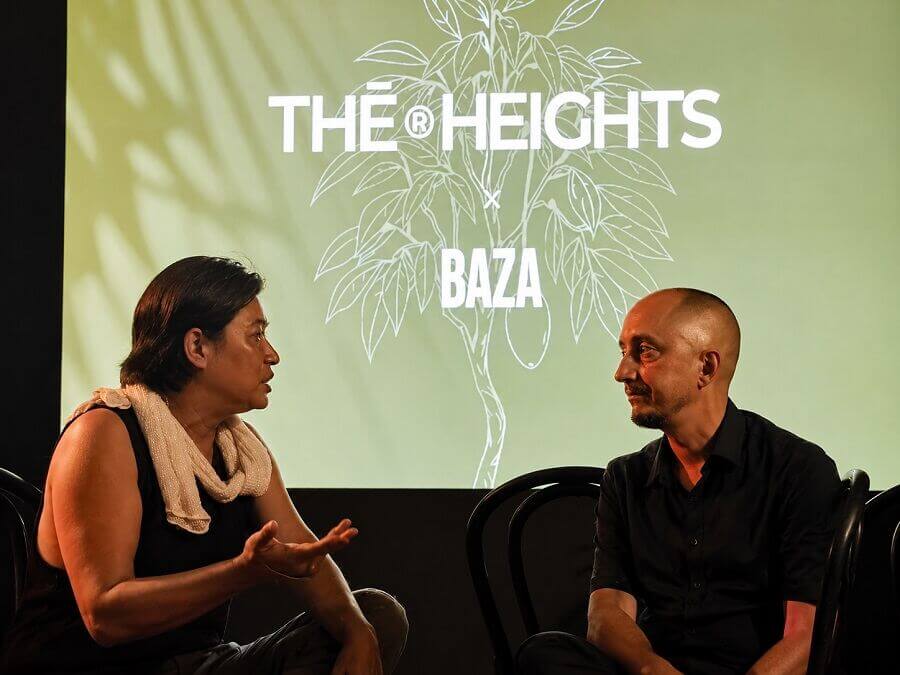
None of this erases the risks, and a buyer’s advisor who hides them is not worth the fee. A delay is still a delay: your capital is committed for longer, and this is the developer’s first completed project in Bali, so there is execution risk to price in rather than wish away. The leasehold runs to roughly fifty-nine years once the extension is counted, which is finite, and it should be weighed honestly against freehold alternatives and your own holding horizon. On returns, the corridor’s marketed projections sit in a ten to sixteen per cent band, while the operator’s own projected return opens at around eight per cent in year one, a period when any new hotel operation is still building occupancy, rising toward ten to twelve per cent by year five with a five-year average of around nine per cent. Every one of those numbers is gross of income tax and dependent on how the asset is held. We would anchor a buyer to the year-one figure and treat the trajectory as a target to be earned, not a guarantee to be banked.
Seseh’s Quiet Maturation
The location is not an accident either. As Canggu and the Bukit absorb close to a thousand new units and the price competition that comes with them, capital and residents have been moving west and quieter, and the Seseh and Cemagi stretch has been a clear beneficiary. The arrival of branded, institutional development on the same coastline validates the corridor in a way no single launch could, and the nearby Nuanu creative city continues to pull daily visitors into the area. This is a maturing pocket of the market, not a speculative frontier.
The reform of the past two years did not end Bali’s property market. It sorted it. A delay can be the best signal a buyer ever gets or the worst, and the entire job is telling the two apart: the deed that matches the operation, the approval that came before the concrete, the extension that sits where it should. The Heights earned its place among the verified properties we put in front of our buyers because it cleared that work, not because it was offered to us. That is the order we insist on, and it is the order the market now rewards.
Bali Baza https://balibaza.com/
The Heights https://theheights.io/