
This report unpacks content from Bali Business Review on YouTube and presents on-the-ground insights into Batu Bolong Street’s weekday dynamics. It focuses on foot traffic patterns, business mix, and practical data points relevant to property owners and operators evaluating revenue potential and operational strategy.
Hi, I’m Jason, a Business Journalist at Bukit Vista, and I’ll be unpacking analysis from Bali Business Review. Today, we’ll dive into Batu Bolong Street in Canggu to offer clear, data-driven insights.
Weekday Foot Traffic and Temporal Patterns
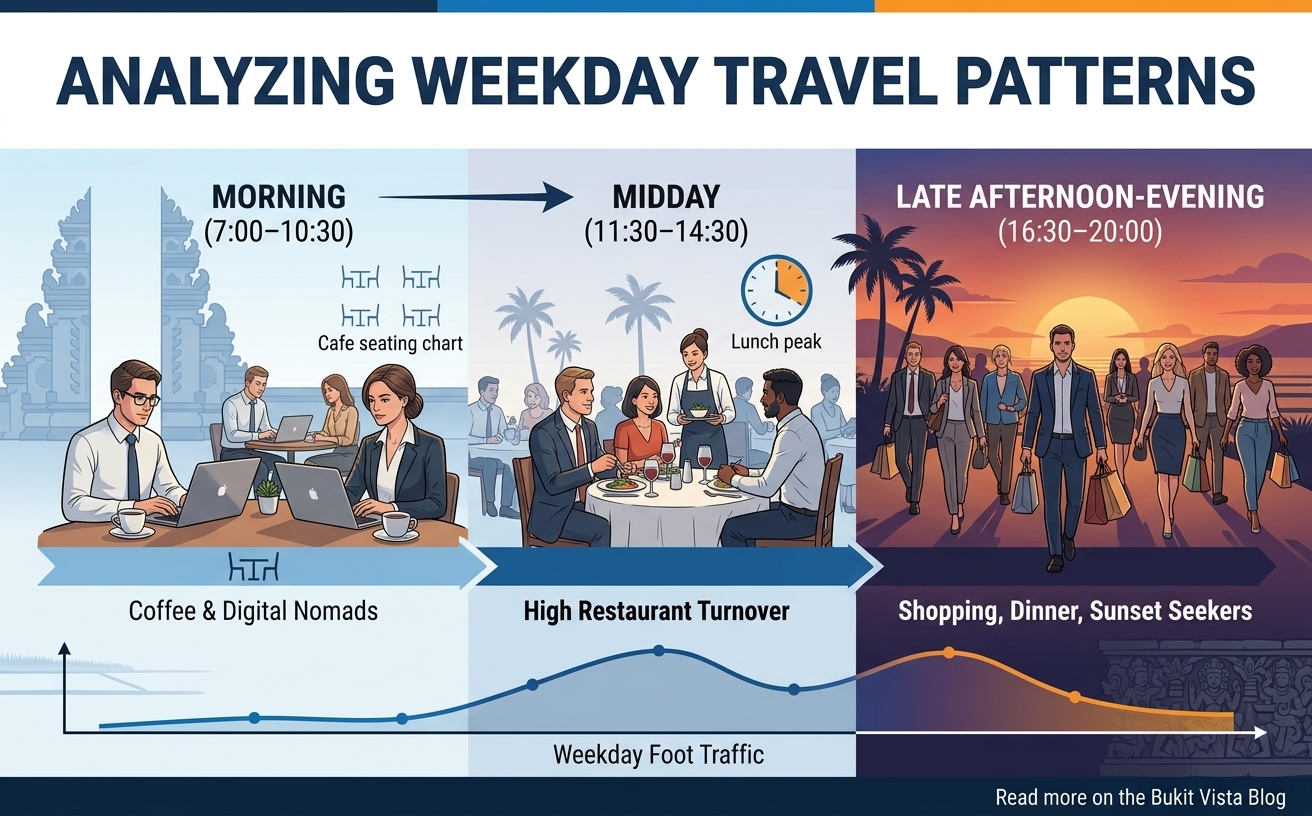
Batu Bolong Street registers steady, predictable weekday foot traffic driven by a mix of local residents, digital nomads, and tourists. Morning-to-afternoon flows tend to peak around cafe hours and lunchtime, with a secondary uptick late afternoon as shoppers and early-evening diners arrive. This pattern suggests amenable windows for businesses to target breakfast, lunch, and happy-hour promotions to maximize throughput on otherwise quieter weekdays.
Typical weekday timeline
- Morning (7:00–10:30): Coffee seekers and remote workers looking for seats and Wi-Fi.
- Midday (11:30–14:30): High turnover for lunch-focused venues; strong footfall near popular restaurants.
- Late afternoon to evening (16:30–20:00): Shopping and dinner crowds increase; leisure visitors peak before sunset.
Cafe and Retail Economics on Batu Bolong
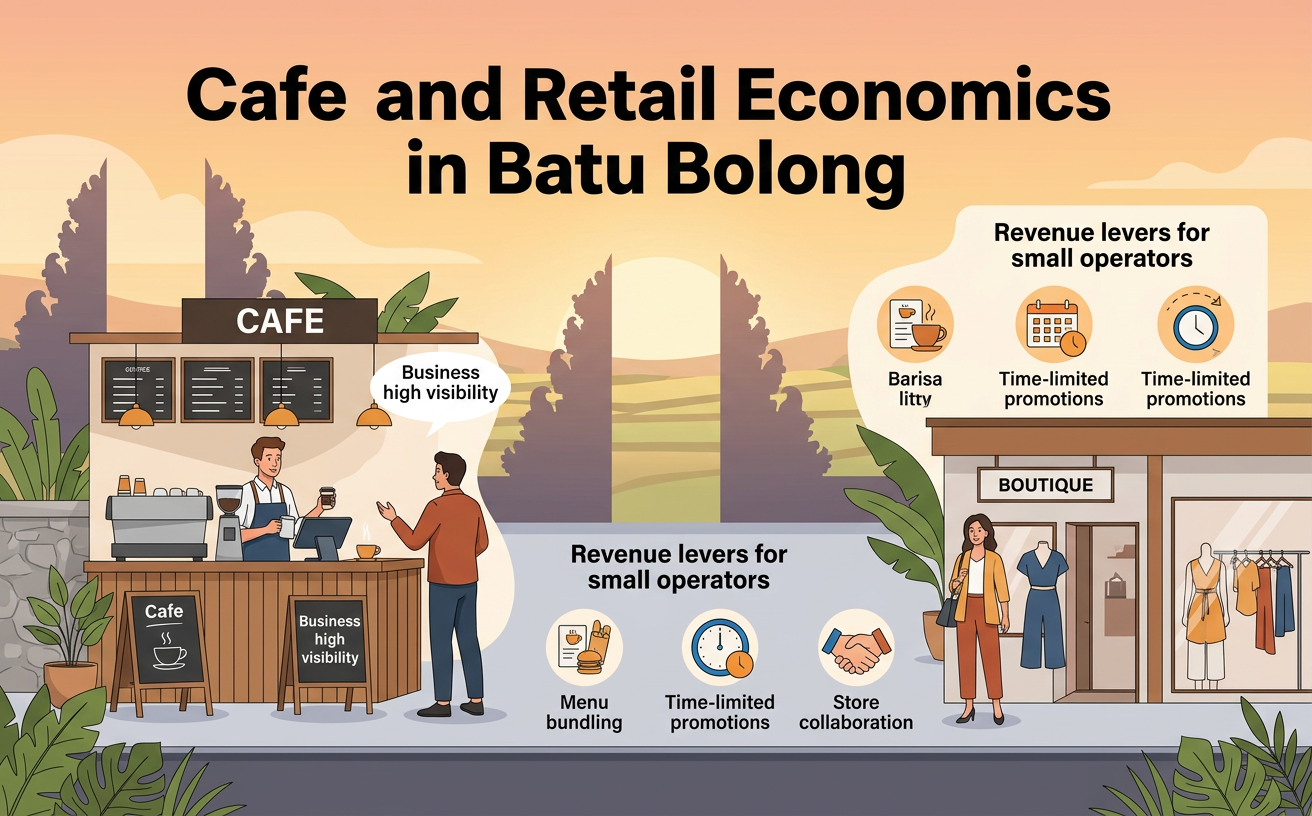
Cafes and boutique retailers along Batu Bolong benefit from high visibility and consistent pedestrian flow, but face operational trade-offs related to rent and staffing. Premium rent levels correspond to the street’s popularity, so businesses must optimize turnover, average spend, and table productivity to maintain margins. Menu engineering, targeted promotions, and efficient service cycles are essential levers for improving per-customer revenue during weekday intervals.
Revenue levers for small operators
- Menu bundling for breakfast and lunch to increase average order value.
- Time-limited promotions to convert remote workers into paying customers during off-peak hours.
- Collaboration with nearby shops to cross-promote and extend dwell time.
Impact on Property Owners & Revenue Potential
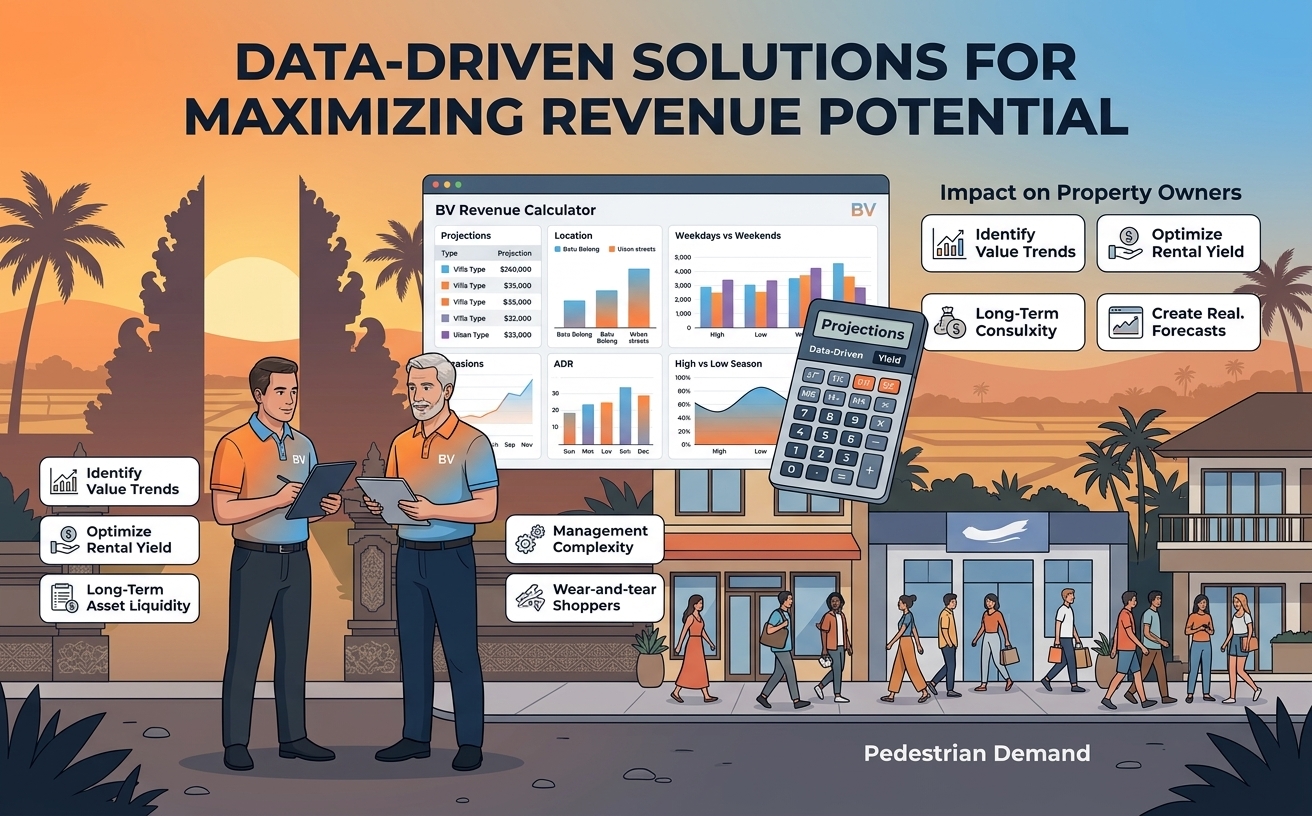
Consistent weekday activity on Batu Bolong enhances short-term rental yield and long-term asset liquidity for villa and commercial property owners. Higher pedestrian demand supports premium pricing for short-stay listings and retail leases, but owners must weigh increased management complexity and potential wear-and-tear. Using market data to model occupancy, ADR (average daily rate), and seasonal adjustments is critical for realistic revenue forecasts.
Practical tools and metrics
- Estimate occupancy by comparing weekdays vs. weekends and high vs. low season.
- Track ADR and length-of-stay trends for urban-street-facing properties.
- Use Bukit Vista’s revenue calculator to create data-driven projections for your specific property type and location.
Local Culture, Visitor Mix, and Experience Design
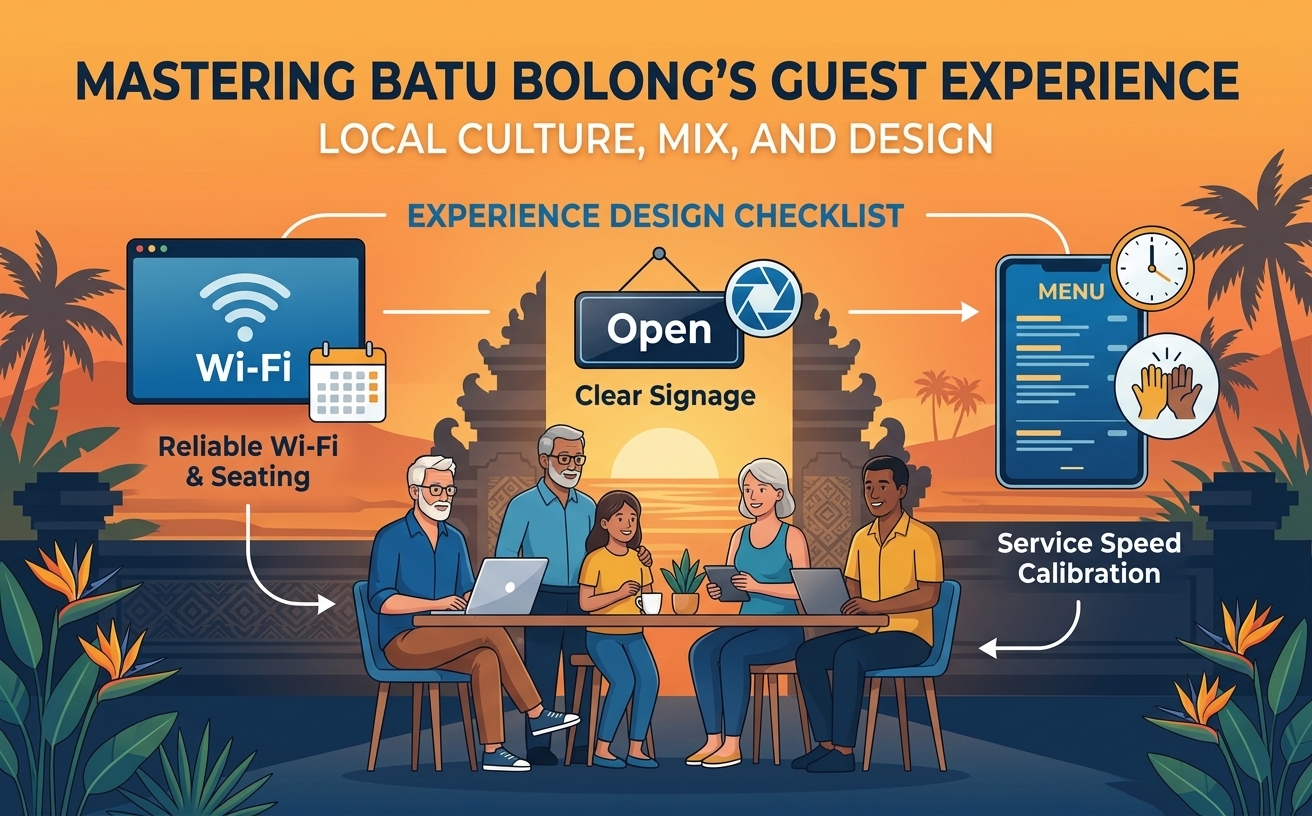
Batu Bolong’s appeal is rooted in its cafe culture, surf-adjacent lifestyle, and a blend of international and local retail offerings. The visitor mix—digital nomads, families, and short-stay tourists—creates demand for diverse experiences: reliable coffee shops, wellness spots, casual dining, and curated retail. Businesses that design friendly, Instagrammable spaces combined with consistent service capture higher engagement and repeat visitation.
Experience design checklist
- Comfortable seating and consistent Wi-Fi for remote workers.
- Clear signage and visual appeal to capture passing foot traffic.
- Menu and service speed calibrated to peak footfall windows.
Operational Considerations for Businesses on Batu Bolong
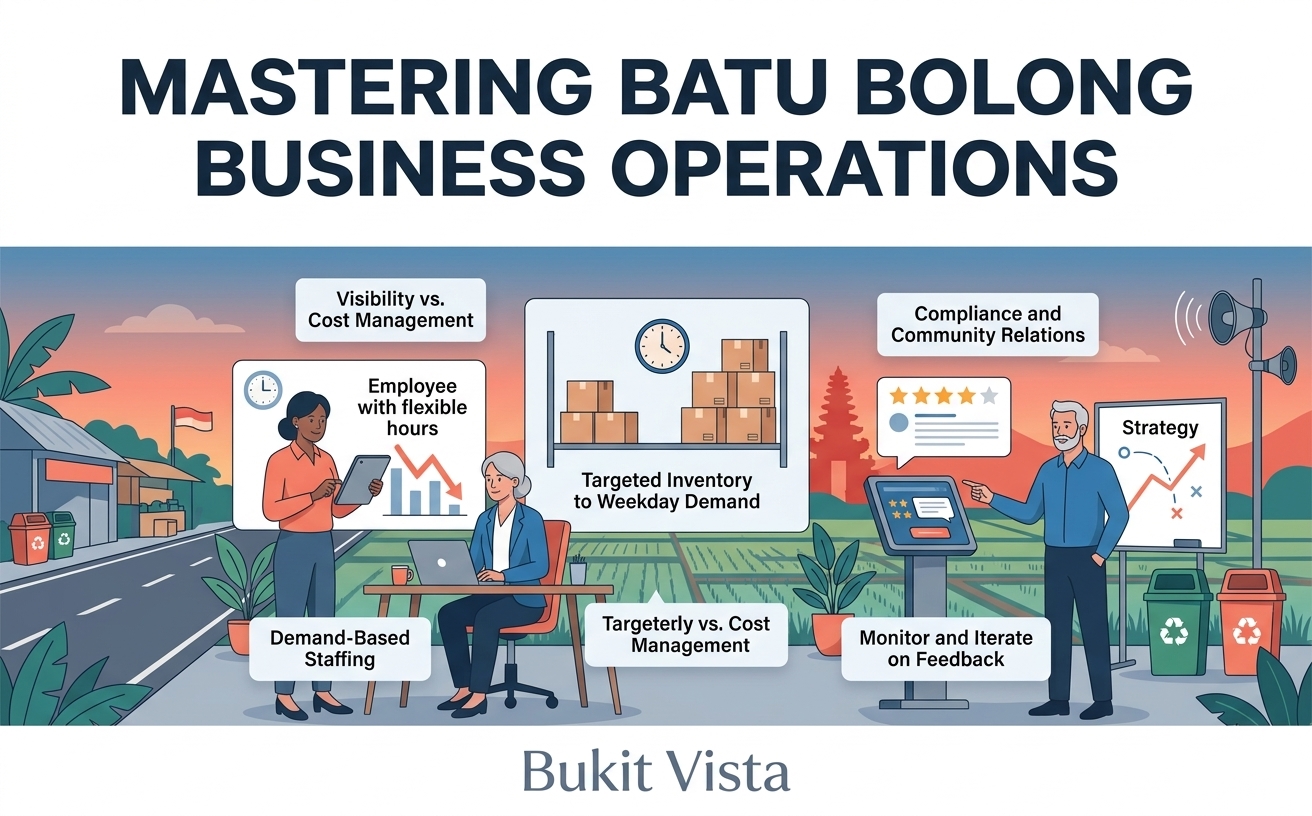
Operating on Batu Bolong requires balancing visibility with cost management: staffing must align to peak windows, inventory should anticipate weekday demand, and marketing must convert passersby into regulars. Compliance with local regulations, waste management, and noise considerations are also important for maintaining community relations and avoiding disruptions. Data-driven scheduling and regular performance reviews help businesses sustain profitability despite variable weekday patterns.
Checklist for efficient operations
- Implement demand-based staffing to reduce labor overhead outside peak windows.
- Maintain targeted inventory for high-turnover menu items.
- Monitor customer feedback channels to iterate quickly on service and menu changes.
Key Takeaways

- Batu Bolong shows steady weekday demand driven by cafes, remote workers, and diners—capitalize on breakfast and lunchtime peaks.
- High visibility supports premium pricing, but owners must model costs, occupancy, and ADR using real market data.
- Experience design and efficient operations (staffing, menu engineering) are the primary levers to convert foot traffic into sustainable revenue.
- Use data tools to forecast revenue realistically and to align property strategy with local demand cycles.
Final word: Batu Bolong Street’s vibrant weekday activity presents clear commercial opportunities for cafes, retail, and short-stay properties, but success depends on disciplined operations and data-driven revenue planning. Businesses and owners that optimize for peak windows, guest experience, and cost control will extract the most value from this high-demand corridor.
Jason, Business Journalist at Bukit Vista
You’re a property owner? Wondering What Could Your Bali Villa Really Earn?
Get a data-driven revenue projection based on your property type, area, and bedroom count. Discover your villa’s true earning potential in Bali.