
With so much to see and do in Bali, it is easy to get caught in the trap of creating a jam-packed travel itinerary that leaves you feeling more tired at the end of your vacation than you felt flying into Denpasar.
Here at The Bali Sun, we love cramming as much life into one day as possible, but we are also big fans of slowing things down a touch and really savoring the moment.
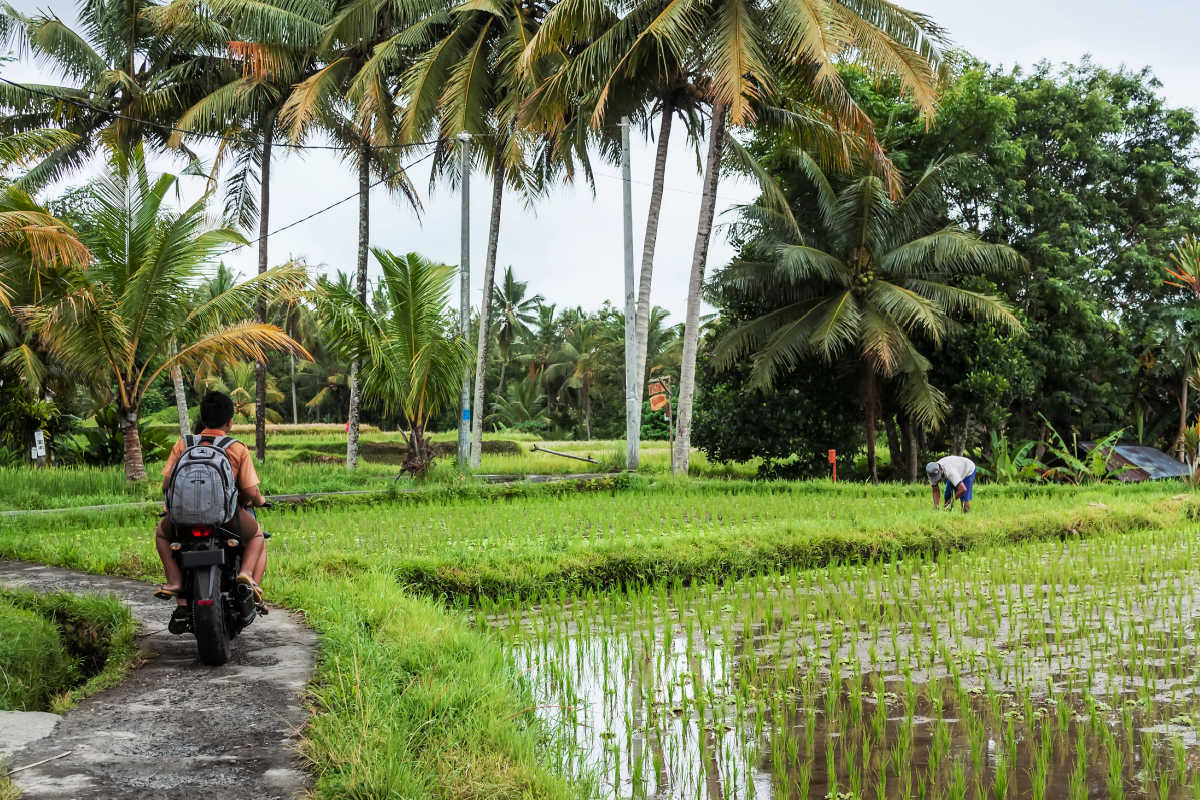
Slow travel is a trend that has been, as its name suggests, slowly gaining traction over the last few years. The trend comes in opposition and in some cases as an act of resistance against the rise of mass tourism influenced by social media. Don’t get us wrong, we appreciate how much good social media has done for the world of travel and tourism, but we can also acknowledge that in some places and in some cases, things have gotten a little out of hand.
The slow travel trend is something everyone can get on board with. In a world that is increasingly fast-paced and in destinations where travel trends come and go with the tides (hello Bali), consciously choosing to travel more slowly is both radical and rewarding.
Slow travel in Bali is incredibly easy to achieve; there are opportunities to slow down around every corner, which is in part why the island has been focusing on investing in more wellness travel experiences. Slow travel and wellness travel complement each other perfectly and have found a real home in Bali, especially if you step away from the busy tourism resorts.
Slow travel is an inherently more sustainable form of travel and can even be regenerative. Regenerative travel gives back more than it takes, in terms of economic benefits, socio-cultural benefits, and environmental benefits too. Slow and regenerative travel organisations in Bali include Astungkaraway, which is pioneering regenerative travel and regenerative agriculture in Bali, bringing tourists to off-path destinations and weaving together trails that help preserve and uplift local communities, culture, and the environment, including farming landscapes.
A slow travel itinerary in Bali may look different to different people. One of the joys of slow travel is that it offers tourists a wide framework to work within and a simple set of principles to follow.
Core principles of slow travel, as widely agreed by travel experts around the world, include: quality over quantity, seeking out local knowledge and everyday experiences, support for local communities and local economies, prioritising meaningful and intentional moments, and, perhaps most importantly, seeing the journey as part of the experience itself.
In many parts of the world, slow travel focuses on slower modes of transport, like boats and trains. In Bali, slow travel looks more like staying longer in each location, supporting local taxi drivers and guides, traveling at off-peak times so as not to contribute to traffic, and for those on multi-province itineraries, traveling overland where possible, rather than flying.
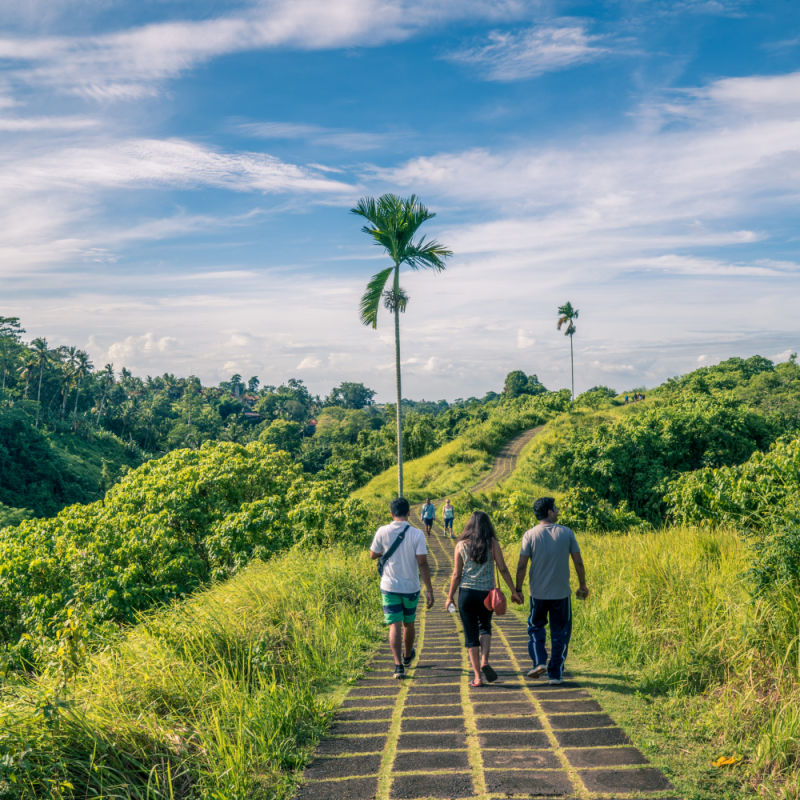
Slow travel in Bali has a strong focus on staying longer in each destination. For most tourists visiting Bali, the average stay is just 5 days, or up to 14 days for long-haul travellers. Slow travelers tend to stay as long as possible in each destination, planning trips of 3-4 weeks where they can.
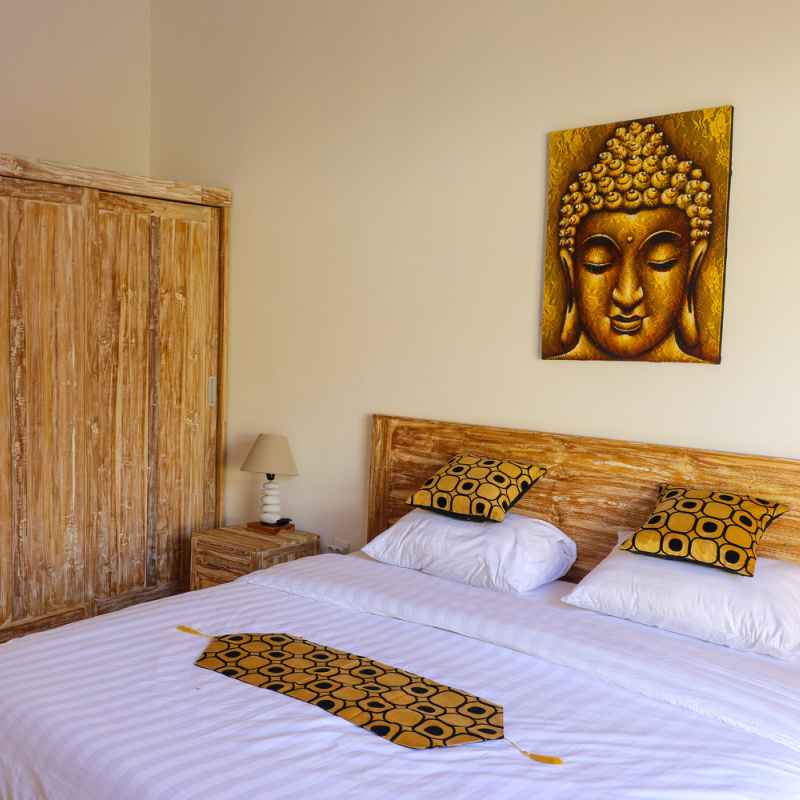
This also opens up a different collection of accommodation providers, and often means travellers stay in locally run homestays or private villas owned by local people who prefer longer-staying guests. Areas in Bali that are particularly popular for slow travellers are Penestanan outside Ubud, which is a home away from home for many long-stay tourists in Bali.
Cultural slow travel experiences that are not to be overlooked include organisations like Ubud Story Walks, which host guided walks through the historical centre of Ubud, offering tourists an unseen and more intimate look at the island’s heritage.
For an even more immersive experience, slow travelers love heading out to the Samsara Living Museum in Karangasem Regency for a real hands-on day out learning everything from traditional gamelan orchestra to arak liquor making.
The biggest benefit of slow travel in Bali is the way in which it encourages tourists to slow down, be more attentive to the little details, make genuine connections with local people and fellow travellers, which in turn naturally leads to encounters with hidden gems that even we here at The Bali Sun don’t yet know about!
Discover more from The Bali Sun
Subscribe to get the latest posts sent to your email.