
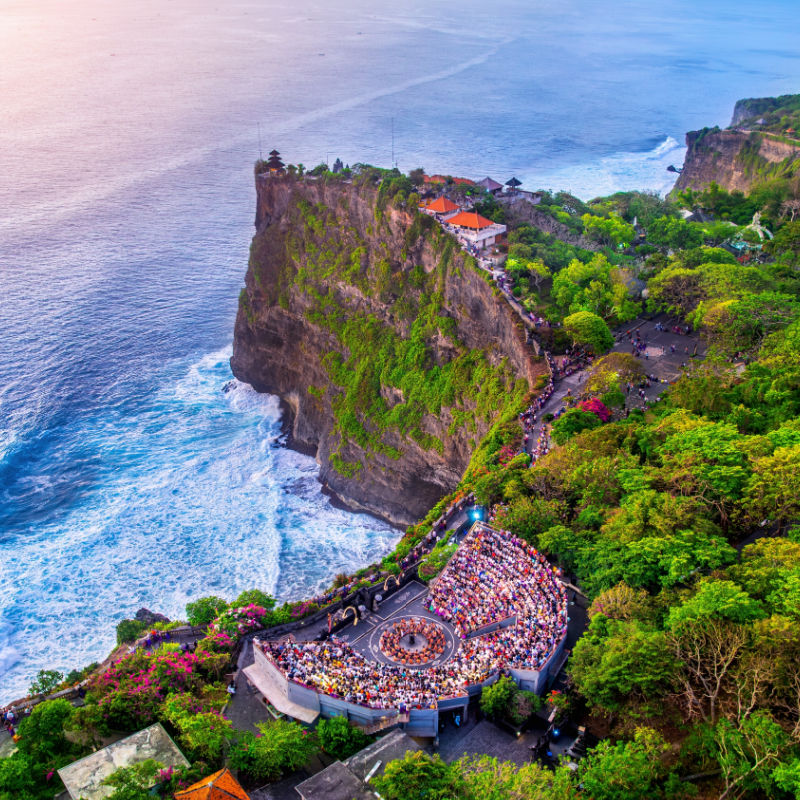
Uluwatu is one of Bali’s most popular tourist destinations right now. Much of what tourists call Uluwatu is actually known locally as Pecatu, with Uluwatu making up only a small section.
As the area grapples with rampant development, local residents are voicing their concerns about what is happening in their communities.
This week has seen the Pecatu Traditional Village Community Meeting (Paruman) attended by hundreds of villagers.
While the meeting served as a forum for evaluating and presenting traditional village programs, it also provided a platform for local community members to publicly voice their concerns about how tourism development is affecting their lives and the environment.
The Head of Pecatu Traditional Village, I Made Sumerta, explained that development in Pecatu has affected the environment and the community’s social life.
He explained that the traditional village believes anticipatory measures are necessary to maintain the area’s balance. Sumerta noted that one important area of concern that will be a focus for the collection of traditional villages is environmental rehabilitation through reforestation of areas affected by development.
Environmental degradation caused by both tourism and infrastructure development has been a major concern for local communities and regular international visitors to Uluwatu.
Uluwatu has a large community of international folks who have a deep vested interest in the area, not only economically but also for vacations.
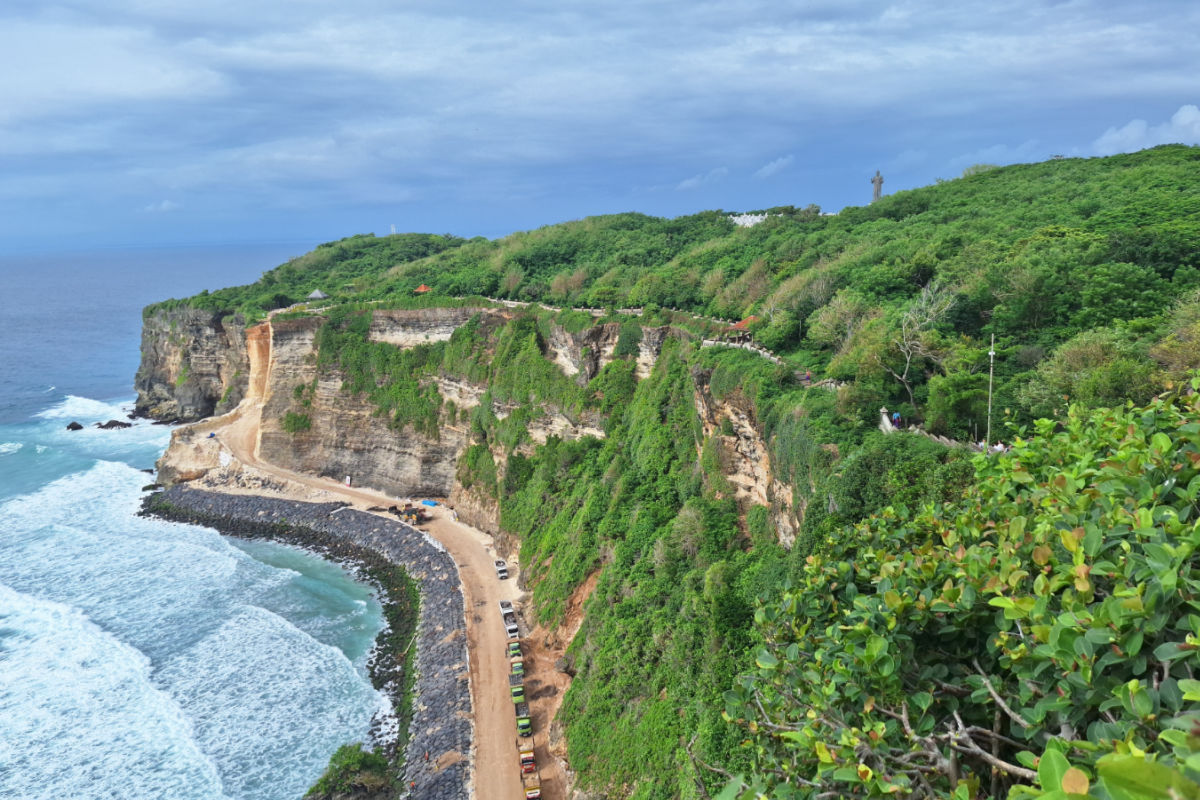
Many foreigners, especially international surfers, have been coming to the Uluwatu area for decades and have been shocked by how the environment has been degraded to make way for development. One such contentious project that led to huge deforestation in the area was the Uluwatu Sea Wall Project, as well as the demolition work at Bingin Beach.
Sumerta told reporters, “Our focus is on rehabilitating plants that have been displaced or cut down due to development. Empty spaces must be reforested to maintain the village’s natural environment.”
Sumerta noted that it is not only land conversion that is a concern, but traffic congestion too. As tourist visits increase and development booms,
Uluwatu’s narrow roads are struggling to support both tourist vehicles and the increased number of construction vehicles passing through the area, resulting in massive traffic jams and persistent congestion. He shared, “We can’t just claim that things are better now than they were during the COVID-19 pandemic. We must continue to find solutions to ensure public safety.”
He called on traditional and community leaders to take their responsibilities for data collection and community participation seriously.
Data collection is considered crucial to ensure that all residents have clear administrative records and fulfill their obligations under customary village regulations. He shared, “We are no longer a homogeneous village; we are now very heterogeneous. Therefore, everyone must be registered. Their obligations must be fulfilled, but their rights, including security, must not be neglected.”

Many feel that Uluwatu has a small window of opportunity to curb development and to find a balance between the needs and rights of local communities and the natural landscape, and the demands of the tourism and investment sector.
Many are looking to Canggu, an area that has also undergone rapid development over the last decade and is experiencing similar issues with residents feeling pushed out, traffic congestion, and unsustainable land conversion.
In 1965, 76% of Canggu Village was mapped as ricefields. By 2025, this dropped to just 44%, with the vast majority of that land transfer happening in the last 10-15 years. A trend that could be mapped almost exactly to Uluwatu and the broader Pecatu area of the Bukit Peninsula.


It remains to be seen if the Pecatu Traditional Village, along with the Badung Regency Government and Bali Provincial Government, can achieve balance in Uluwatu.
One thing is for sure, all eyes will be on the redevelopment work at Bingin Beach as leaders seek to re-establish the beloved surf hangout as a whole ‘new destination’ that does not marginalize the community and caters to tourists.
Discover more from The Bali Sun
Subscribe to get the latest posts sent to your email.