
Unpacking content from Bali Business Review on YouTube, this report compares Ubud’s daytime and nighttime crowd dynamics and quantifies their implications for property revenue. Key data points include average visitor dwell time, peak footfall hours, spending patterns across dayparts, and correlations between activity type and occupancy rates.
Hi, I’m Jason, a Business Journalist at Bukit Vista, and I’ll be unpacking analysis from Bali Business Review. Today, we’ll dive into Day vs Night: Solving the Mystery of Ubud’s Crowd to offer clear, data-driven insights.
Daytime Visitor Profile and Economic Activity
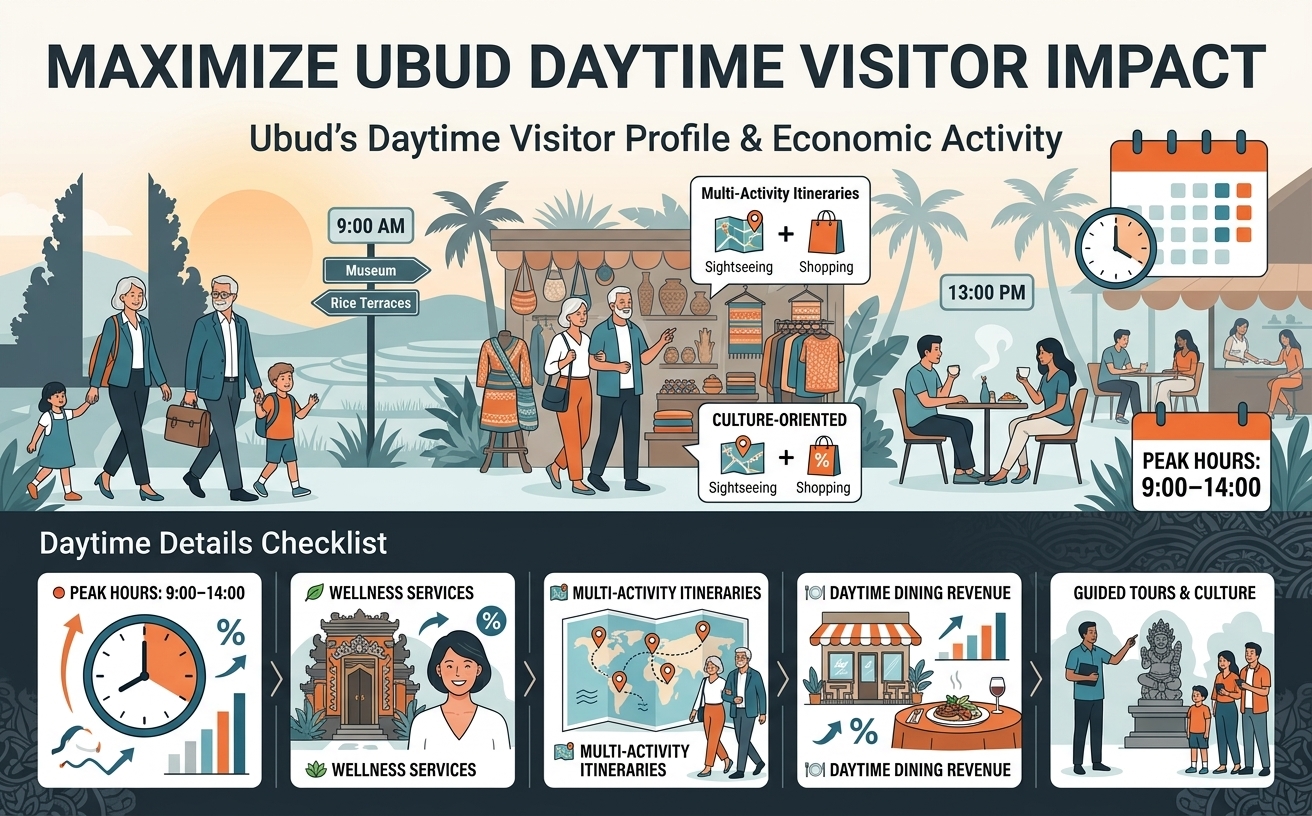
Ubud’s daytime economy is driven by cultural tourists, wellness seekers, and families who typically arrive between 9:00 and 15:00. Data shows longer dwell times in daytime venues—museums, rice terraces, cafes and spas—resulting in higher per-visit retail and F&B spend versus quick evening transactions. Day visitors also skew toward multi-activity itineraries, combining sightseeing with shopping and wellness services, which boosts micro-economies along main streets and hubs.
Daytime details and checklist
- Peak hours: 9:00–14:00; higher foot traffic near cultural sites.
- Revenue drivers: guided tours, wellness services, daytime dining.
- Visitor profile: couples, families, and culture-oriented travelers.
Nighttime Dynamics: Footfall, Entertainment, and Shorter Visits
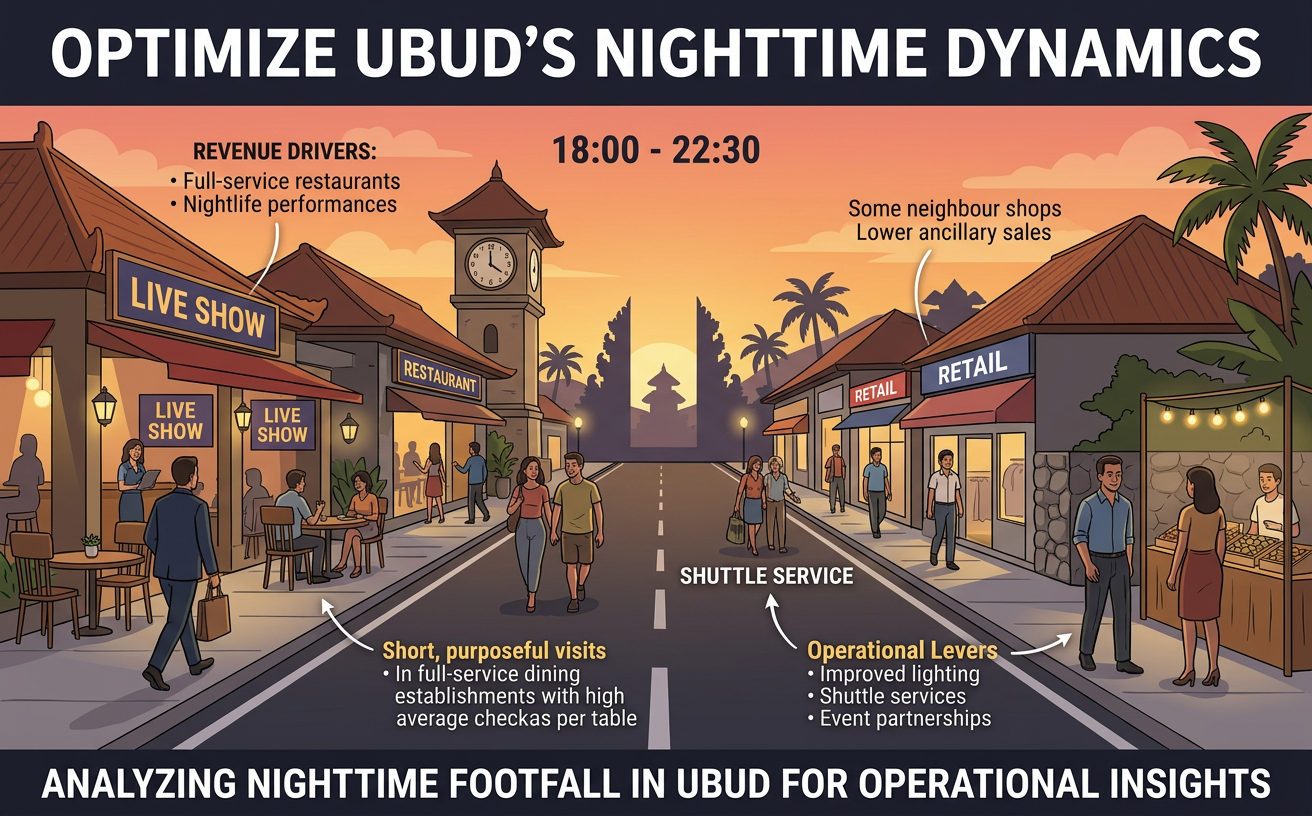
Nighttime patterns in Ubud show concentrated activity around dining, live performances, and evening markets, with most footfall occurring between 18:00 and 22:30. Visits are typically shorter, focused on a single purpose—dinner or a performance—resulting in lower ancillary retail sales but higher average checks per restaurant table. Safety perception, lighting, and event scheduling heavily influence night attendance and can create sharp micro-peak times that properties can leverage for late check-ins or themed offerings.
Nighttime operational notes
- Peak hours: 18:00–22:30; concentrated near dining and performance venues.
- Revenue drivers: full-service restaurants, nightlife performances, night markets.
- Operational levers: improved lighting, shuttle services, partnerships with nightly events.
Implications for Property Owners: Occupancy, Pricing, and Experience Design
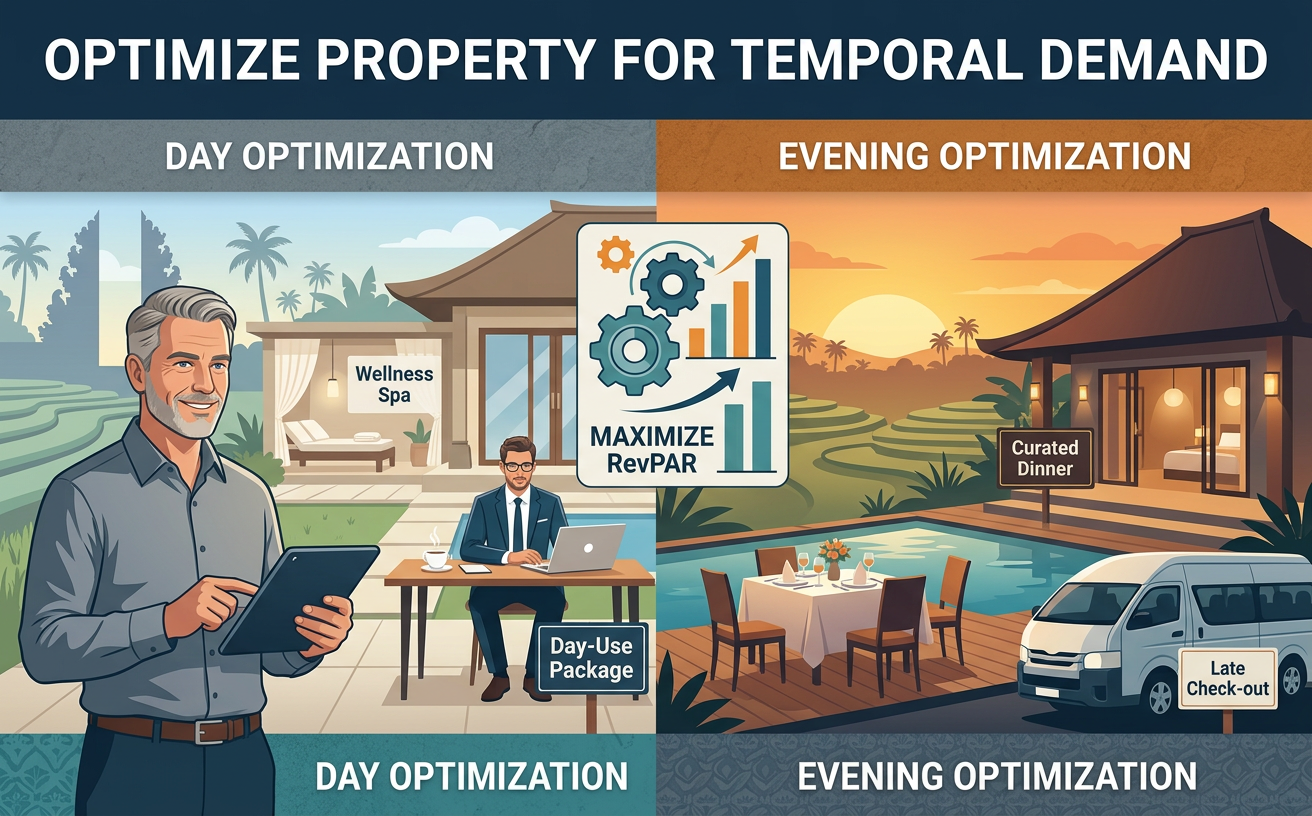
Timing-dependent demand means properties that optimize day-use experiences—early check-ins, day-use packages, and wellness add-ons—capture more daytime spend and extend length of stay. Conversely, properties that tailor evening experiences—dinner packages, late check-out, and in-house entertainment—can increase ADR (average daily rate) and reduce distribution reliance during off-peak occupancy. Strategic packaging aligning with Ubud’s temporal demand profile improves RevPAR more effectively than simple rate discounts.
Property-focused strategies
- Day packages: wellness sessions, guided tours, co-working passes for digital nomads.
- Night packages: curated dinner experiences, shuttle to performances, late check-out bundles.
- Pricing tactics: dynamic rates tied to event calendars and daypart demand patterns.
Operational Tactics and Partnerships to Capture Day and Night Revenue
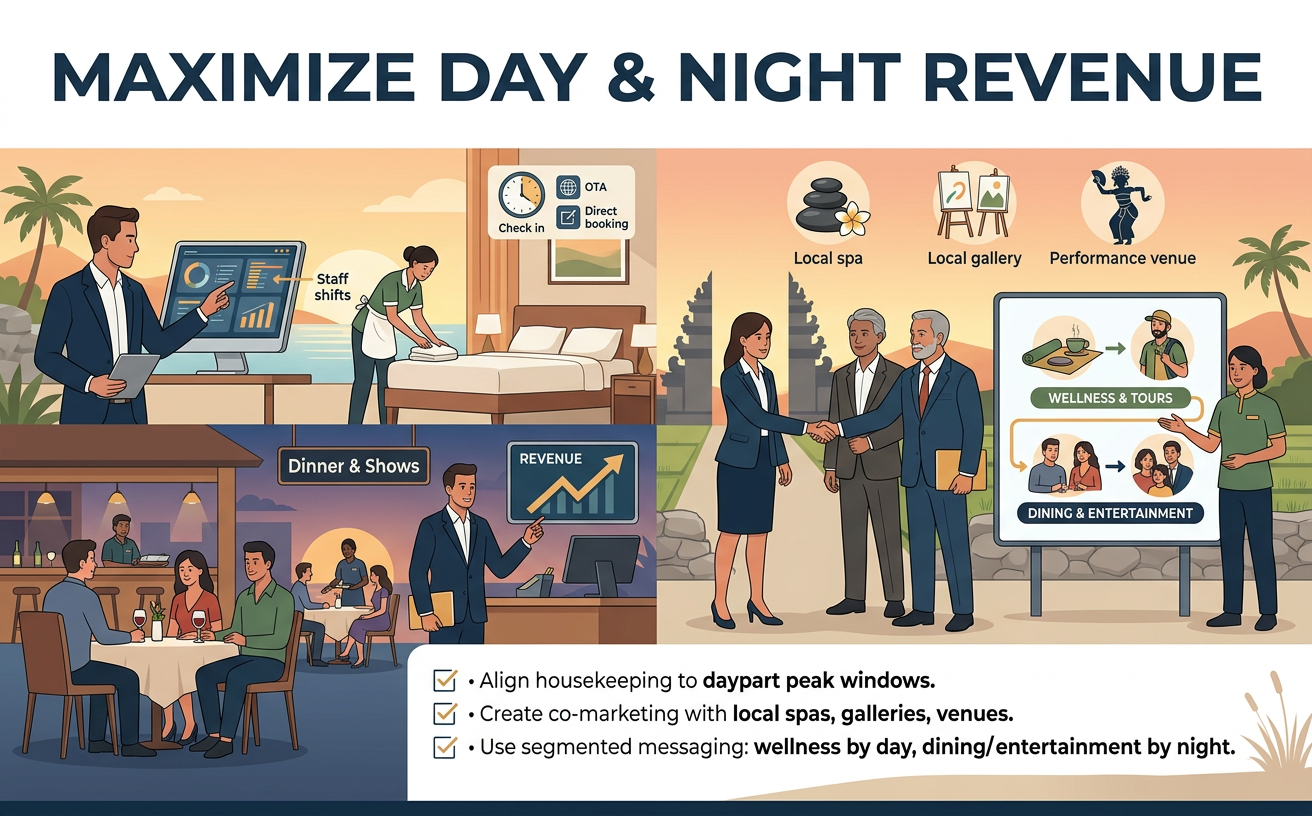
Operational readiness—staffing patterns, F&B scheduling, and transport partnerships—translates crowd patterns into measurable revenue. Properties that synchronize housekeeping schedules with daytime check-ins, promote daytime experiences through OTA and direct channels, and partner with local event organizers capture both day and night spend. Additionally, investing in targeted promotions for specific segments (wellness tourists by day; couples and groups by night) enhances conversion without broad rate erosion.
Checklist for implementation
- Align housekeeping and staff shifts to daypart peak windows.
- Create co-marketing agreements with local spas, galleries, and performance venues.
- Use segmented messaging: promote wellness and tours to daytime visitors, dining and entertainment to evening guests.
Data, Measurement, and Revenue Tools
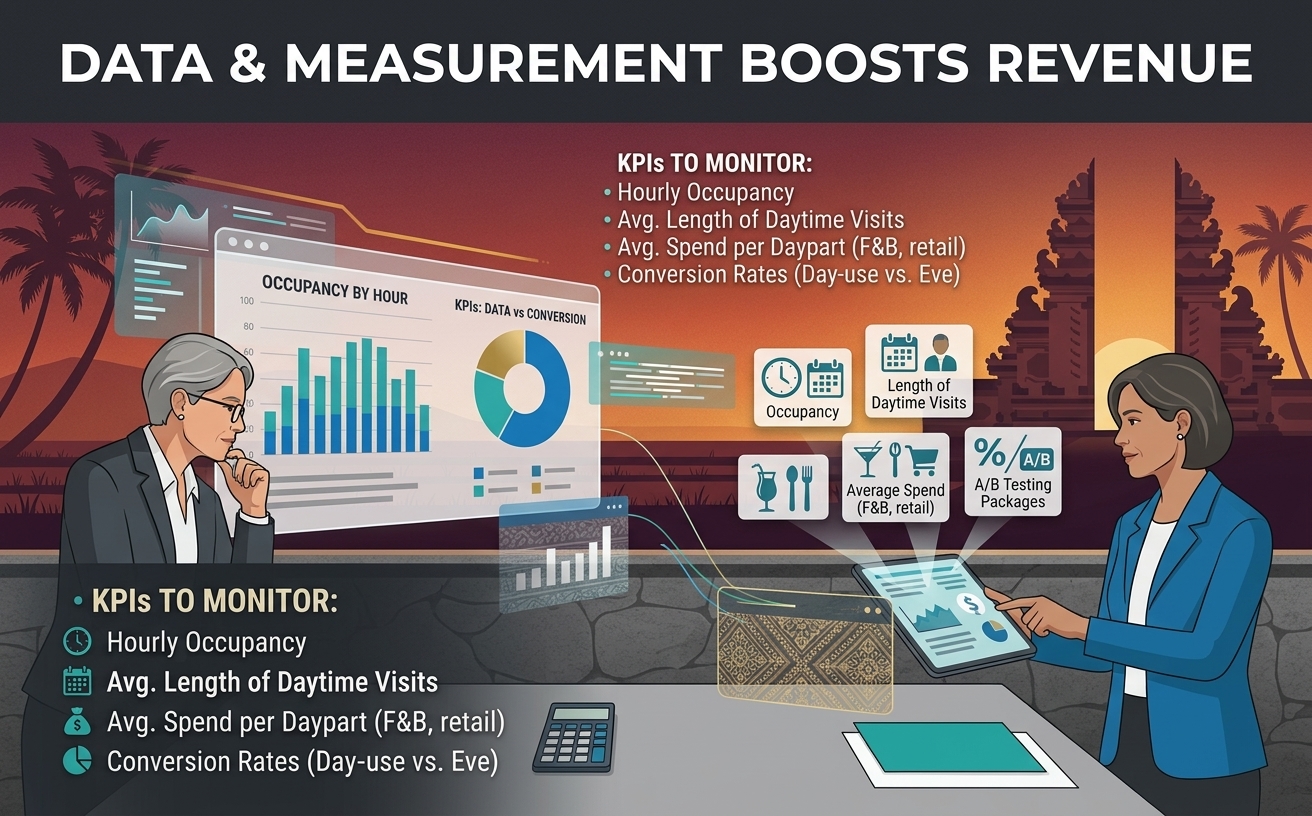
Effective monetization requires continuous measurement of occupancy by arrival hour, average spend per guest by daypart, and conversion rates for day-use versus overnight packages. A revenue calculator and periodic A/B testing of packages help quantify uplift from daypart-specific offers. By tracking these KPIs, managers can shift inventory, adjust OTA content, and implement price fences that reflect the different willingness-to-pay profiles between daytime and nighttime visitors.
KPIs to monitor
- Occupancy by hour and average length of daytime visits.
- Average spend per guest by daypart (F&B, experiences, retail).
- Conversion rates for day-use packages and evening promotions.
Key Takeaways
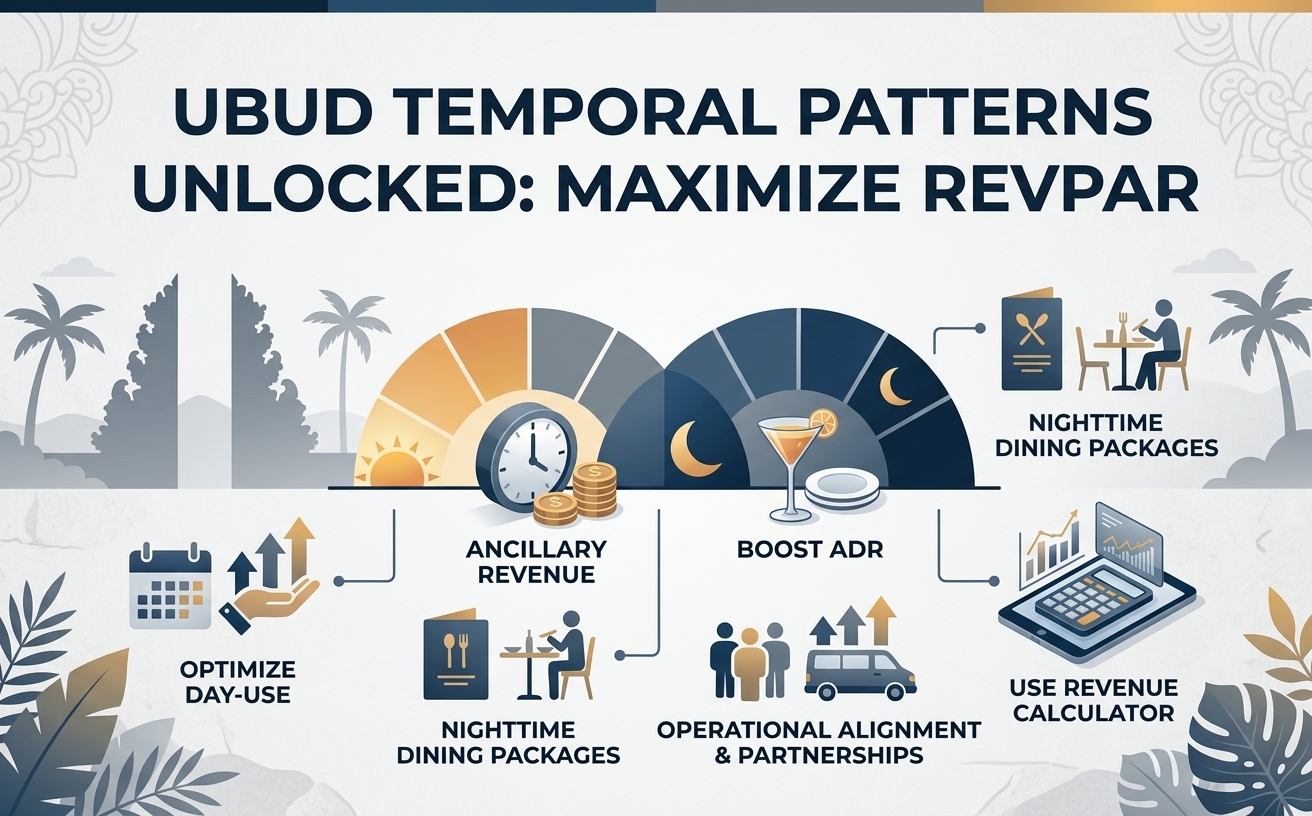
- Ubud’s daytime visitors drive longer stays and diversified spend; optimize day-use offers to increase ancillary revenue.
- Nighttime demand is concentrated and purpose-driven; leverage dining and entertainment packages to boost ADR.
- Operational alignment—staffing, transport, and partnerships—turns temporal patterns into measurable revenue gains.
- Use segmented marketing and a revenue calculator to quantify uplift from daypart-specific packages.
- Track hour-based occupancy and spend metrics to make dynamic pricing and package decisions that maximize RevPAR.
Final word: understanding Ubud’s dual rhythms—days of exploration and nights of focused entertainment—lets property owners design offers that match visitor intent and willingness to pay. When operations, partnerships, and pricing align with daypart behavior, properties capture higher lifetime value per guest and reduce reliance on discounting.
Jason, Business Journalist at Bukit Vista
You’re a property owner? Wondering What Could Your Bali Villa Really Earn?
Get a data-driven revenue projection based on your property type, area, and bedroom count. Discover your villa’s true earning potential in Bali.