
We are unpacking content from Bali Business Review on YouTube to document an unusually low turnout at the Arjuna section of the Ubud Art Market. Observers report sparse footfall, shuttered stalls, and quieter streets than typical for Ubud, raising immediate concerns for vendors, local supply chains, and the broader tourism-linked economy.
Hi, I’m Jason, a Business Journalist at Bukit Vista, and I’ll be unpacking analysis from Bali Business Review. Today, we’ll dive into why the Arjuna section of the Ubud Art Market is so empty to offer clear, data-driven insights.
Current Footfall & On-the-Ground Observations
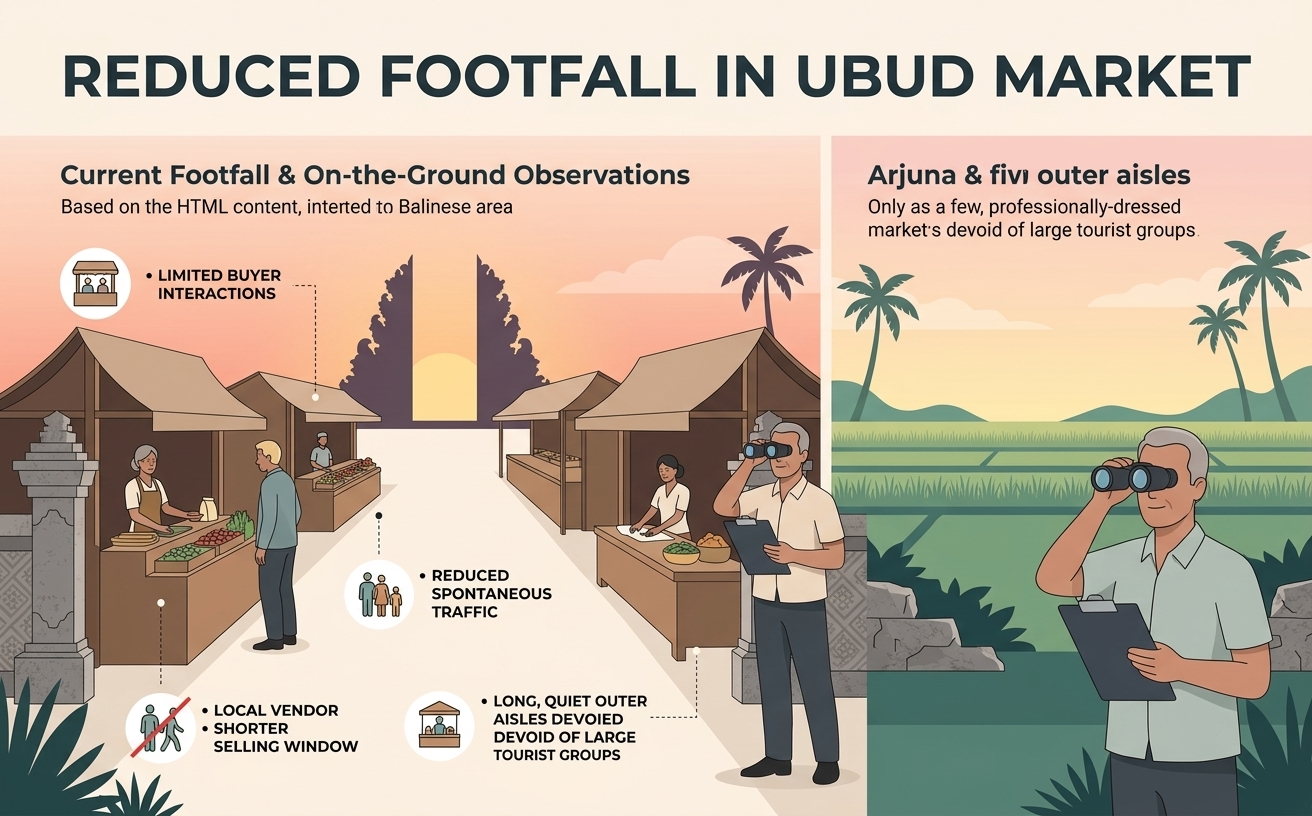
Field reporting in the Arjuna area reveals significantly reduced pedestrian activity compared with historical norms for Ubud’s market precincts. Stalls are open but understaffed, shoppers are scarce, and many outer aisles remain quiet for long stretches of the day. These on-the-ground conditions suggest a real-time drop in casual tourism traffic and a mismatch between vendor expectations and actual visitor behavior.
Observed details
- Numerous stalls with limited buyer interactions during peak midday hours
- Fewer tour groups and reduced spontaneous foot traffic on the main pathways
- Local vendors reporting shorter selling windows and increased downtime
Likely Causes Behind the Low Visitor Numbers

Multiple factors appear to be converging to depress visitor numbers in the Arjuna section, including seasonal tourism shifts, rerouted tour itineraries, and greater competition from online marketplaces that reduce in-person sales. Infrastructure and access changes—such as temporary roadworks or alternative pedestrian flows—may also divert typical traffic away from the market. Additionally, evolving traveler preferences favor curated experiences and private villa stays, which can shift spending away from traditional open-air markets.
Key contributing factors
- Seasonal and post-peak tourism patterns reducing day-trip traffic
- Greater online purchasing options for handcrafted items
- Routing changes and localized access issues affecting pedestrian flow
Economic Impact on Local Vendors and Artisans
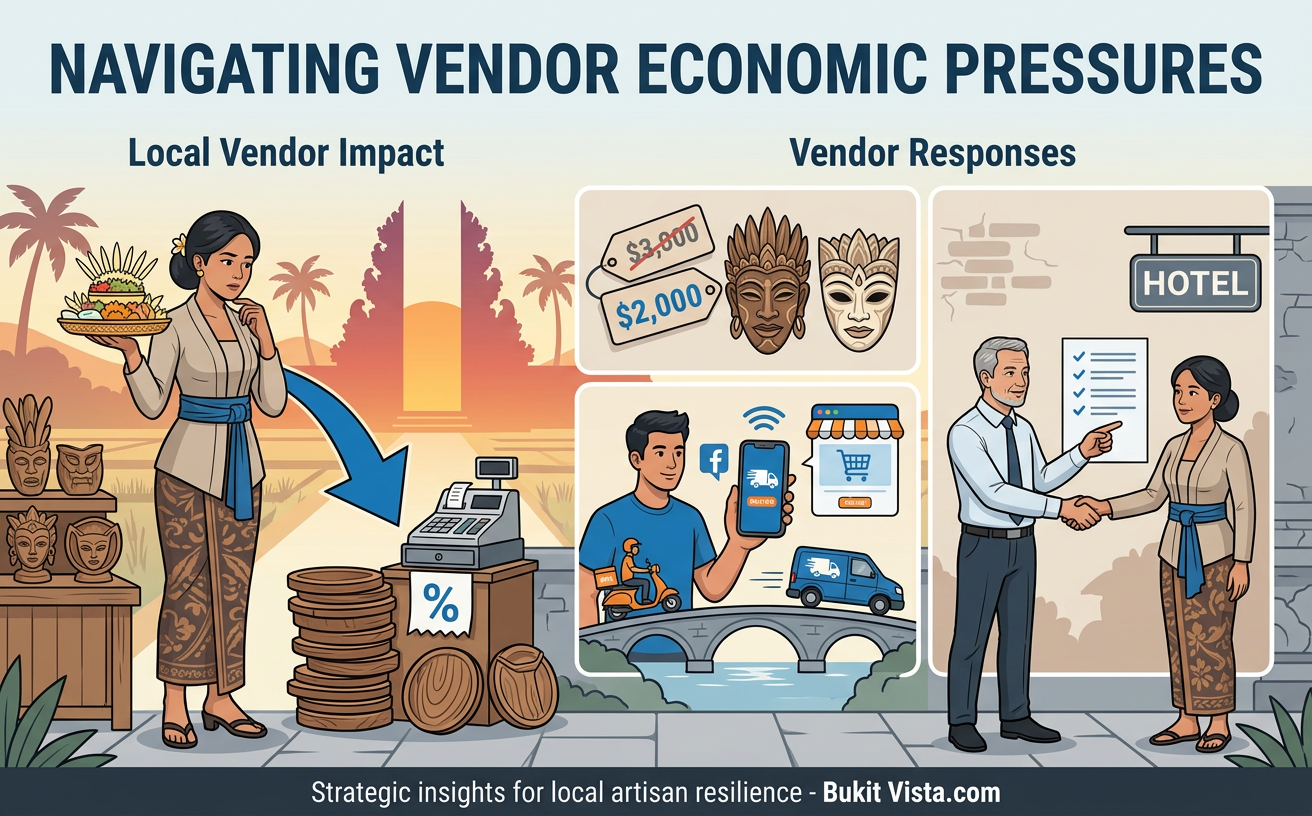
Reduced customer volumes translate directly into lower daily takings for stallholders, creating cashflow pressure for artisans who rely on market sales as a primary income source. Short-term coping strategies include discounted pricing, bundled offerings, and reliance on repeat local customers rather than tourists. If the trend persists, vendors may pivot inventory toward wholesale, online channels, or collaborative pop-up events to stabilize earnings.
Vendor responses and adaptations
- Discounts and bundled promotions to entice the limited foot traffic
- Shifts toward social media sales and delivery services
- Partnerships with nearby accommodations to drive direct customer referrals
What This Means for Property Owners and Investors
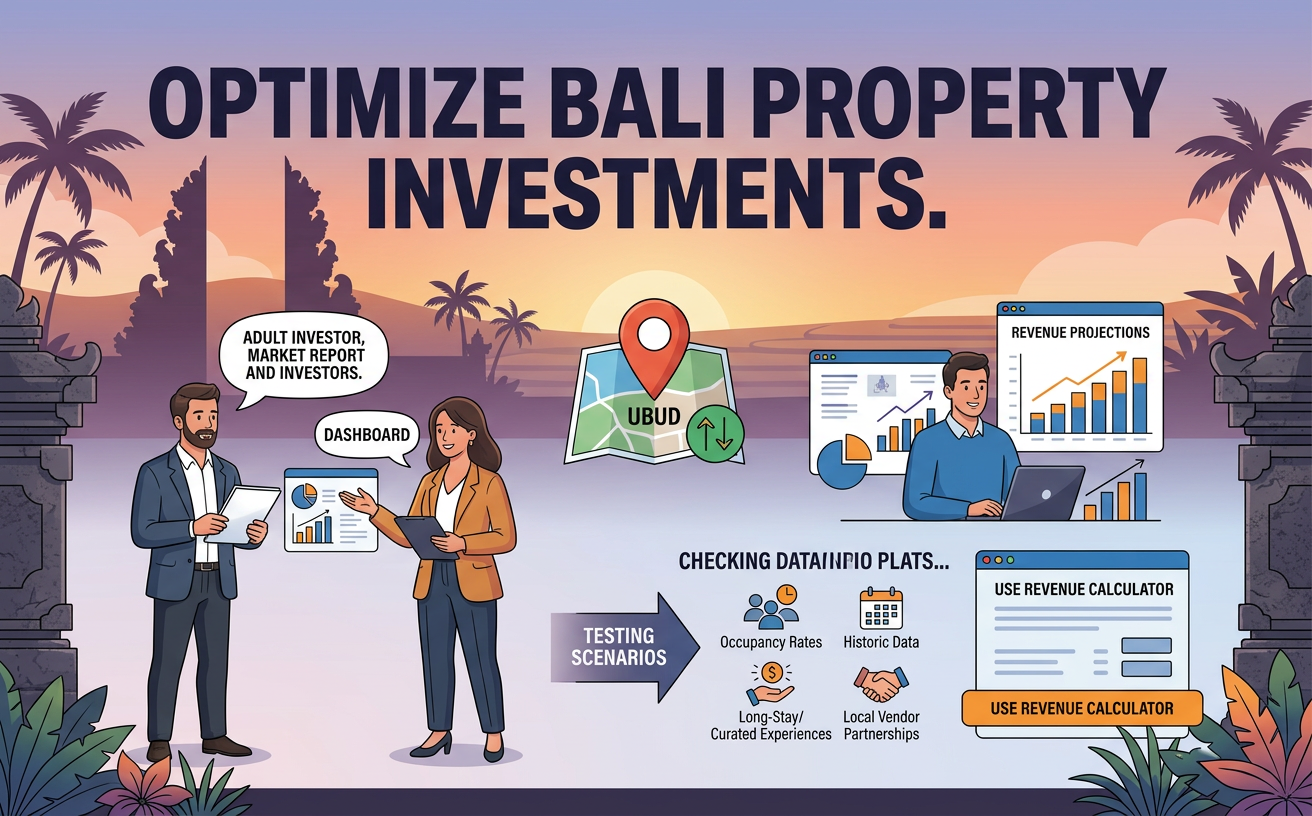
Lower market activity in a high-profile tourist area like Ubud can signal broader shifts in tourist routing and spending behavior, which has direct implications for short-term rental performance and long-term property valuations. Owners should reassess yield assumptions and consider scenario planning that accounts for uneven footfall across micro-neighborhoods. For those evaluating investment decisions or rental strategies, a data-driven projection tool can quantify potential revenue impacts and compare alternative management approaches.
Actionable step for investors
- Run a revenue projection using a Bali property revenue calculator to test occupancy and rate scenarios (Bali Property Revenue Calculator)
- Compare historic performance data for nearby properties to assess micro-location variance
- Model diversification strategies: long-stay guests, curated experiences, and direct partnerships with local vendors
Practical Tips for Market Recovery and Vendor Strategy
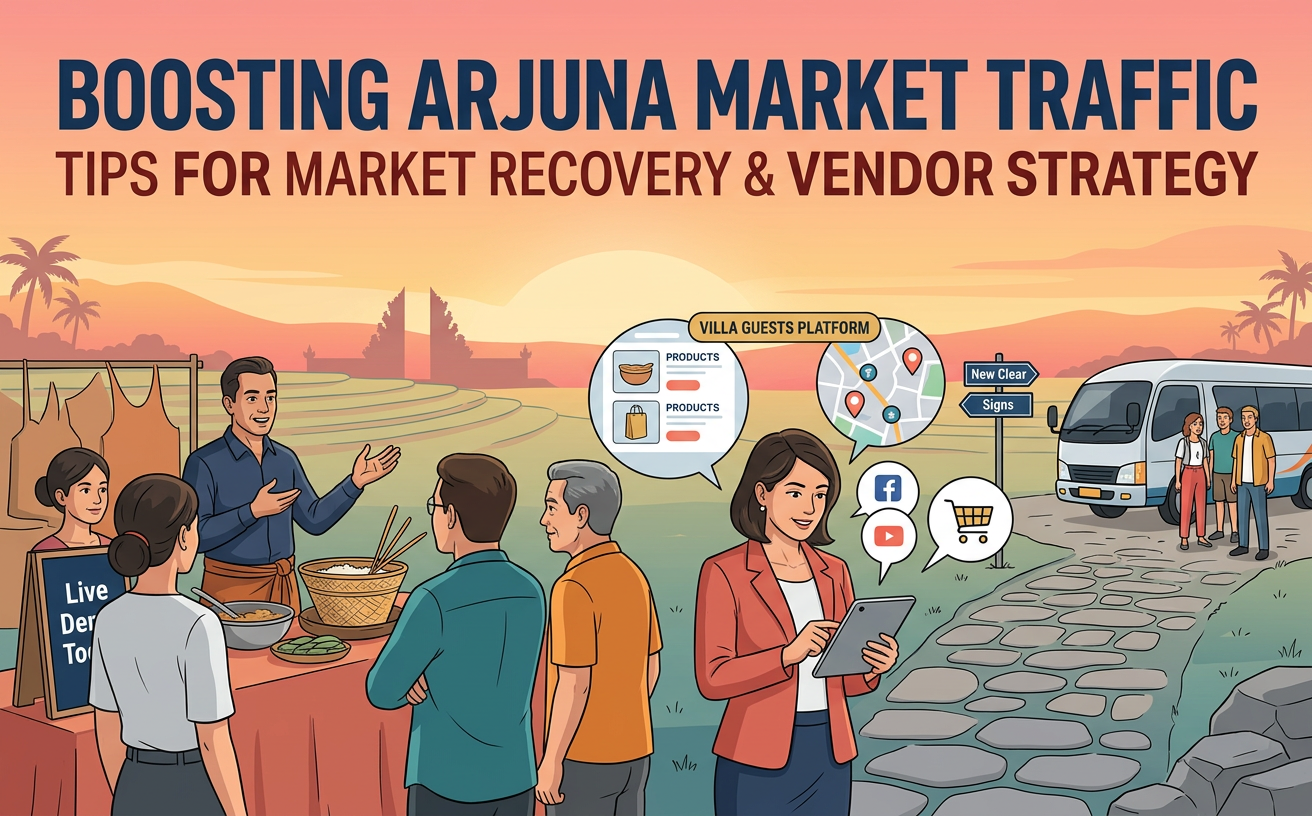
To counteract low footfall, stakeholders should prioritize experience-led activations that attract both nearby villa guests and day visitors—think live demonstrations, scheduled artisan workshops, and coordinated market-wide events. Digital integration is essential: an online storefront and a visible social presence can capture purchases from those who avoid in-person browsing. Public-private collaboration on signage, routing improvements, and bundled visitor experiences with local accommodations can help restore pedestrian flows to Arjuna’s stalls.
Checklist for immediate interventions
- Organize weekly market events or demonstrations to create appointment-based traffic
- Promote vendor listings on villa guest platforms and social channels
- Engage local tourism operators to reintroduce the Arjuna market into curated itineraries
Key Takeaways
- Arjuna’s low footfall is observable and likely driven by a mix of seasonal, routing, and structural changes in tourism patterns.
- Local vendors face immediate revenue pressure and should accelerate digital sales and collaborative activations.
- Property owners should reassess revenue projections for nearby listings and use data tools to model downside scenarios.
- Coordinated local actions—events, partnerships, and improved routing—can help re-attract customers to the market.
Final word: the emptiness observed in Arjuna is a signal to re-evaluate both micro-location assumptions and broader tourism-driven revenue strategies. Property owners and tourism stakeholders can turn this insight into action by using data-backed revenue tools and targeted local interventions to rebuild sustainable demand. To test how these local shifts could affect your asset, run a tailored projection with the Bali Property Revenue Calculator linked above and compare scenario outcomes.
Jason, Business Journalist at Bukit Vista
You’re a property owner? Wondering What Could Your Bali Villa Really Earn?
Get a data-driven revenue projection based on your property type, area, and bedroom count. Discover your villa’s true earning potential in Bali.