
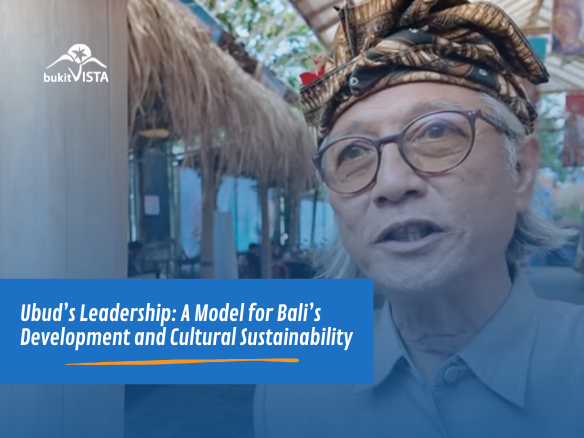
Topic 1: Introduction & Purpose of Ubud’s Development
Speaker 1: The conversation begins by addressing the common feeling of confusion in how to handle the development of Bali, particularly in dealing with foreign influence. Locals and foreigners alike often look to the government to take action, but the government is ultimately made up of the people. Ubud is highlighted as a place that has managed to navigate modern growth while preserving its identity through cultural practices and religious activities.
Topic 2: Ubud’s Leadership & the Role of the King
Speaker 1: Ubud’s growth has been significantly shaped by its monarchy. The King of Ubud, a central figure in guiding the local culture, has been an example of leadership in a place where leadership is often lacking. This contrasts with other parts of Bali where development is often driven by outside forces, leading to a lack of direction and the ‘bystander effect’—where no one takes charge because everyone expects someone else to lead.
Topic 3: Cultural Clashes & the Bystander Effect
Speaker 1: The bystander effect is discussed in relation to the development challenges faced in Bali. Many Balinese landowners look to Westerners or developers to lead the way, but neither side is equipped to take full responsibility. This often results in buildings that lack cultural integration, such as bland, white Mediterranean designs that ignore traditional Balinese principles like Tri Hita Karana.
Topic 4: Ubud’s Adaptive Culture & Monarchy Influence
Speaker 2 (King of Ubud): Ubud’s culture remains strong due to a balance between preserving tradition and adapting to modern influences. The King talks about the continuous integration of foreign influences while maintaining the core aspects of Balinese tradition. He stresses that the local community remains open to innovation while also being protective of their spiritual heritage.
Topic 5: The Role of Leadership in Balinese Development
Speaker 2 (King of Ubud): Leadership is essential to guide development in Bali. The King reflects on the importance of having a clear vision for development that honors the past while embracing modernity. Ubud’s success in navigating these challenges is attributed to having a figure who leads with both cultural understanding and strategic vision. This allows Ubud to remain an example of how to manage modernization and preserve identity.
Topic 6: Cultural Transmission & Wisdom for Future Generations
Speaker 2 (King of Ubud): The King emphasizes the importance of teaching future generations to value their culture and integrate modern elements carefully. He also discusses the role of technology and critical thinking in preserving wisdom. He believes that culture should be transmitted not only through Western institutions but also by maintaining strong village traditions that emphasize collective wisdom.
Topic 7: Conclusion & Reflection on Bali’s Future
Speaker 1: The discussion concludes with reflections on how Bali’s future development can be steered in a way that honors both its cultural heritage and the needs of modernization. There is a call for more sustainable growth that protects the integrity of Balinese culture, ensuring that the island remains a beautiful and inspiring destination for both locals and visitors.