
We are unpacking content from Bali Business Review on YouTube to report on a sudden rainstorm that destroyed a camera during an outdoor shoot, causing immediate equipment loss and production downtime; the incident highlights quantifiable risks for property owners and managers, including replacement costs, interrupted operations, and the need for resilient property maintenance and insurance planning.
Hi, I’m Jason, a Business Journalist at Bukit Vista, and I’ll be unpacking analysis from Bali Business Review. Today, we’ll dive into rainstorm camera damage and property-management preparedness to offer clear, data-driven insights.
Incident Overview: Immediate Damage, Direct Costs, and Operational Disruption
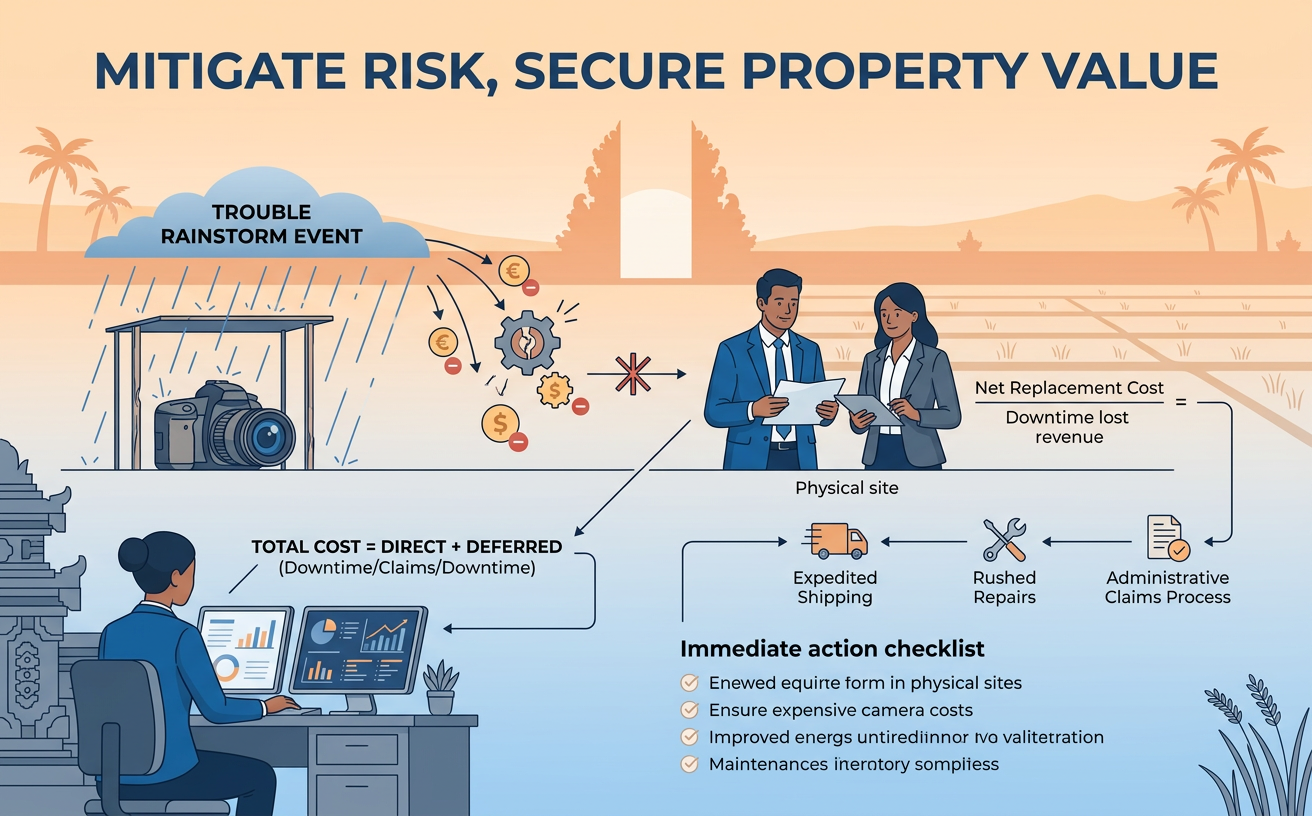
The footage captured at YouTube documents a sudden tropical rainstorm that rapidly overwhelmed on-location protective measures and resulted in a high-value camera being rendered inoperable; the immediate financial loss includes the camera replacement cost, emergency equipment rentals, and lost productive hours for the shoot, while secondary losses include potential reshoots and reputational impacts for the crew and location. For property owners, this single incident provides a clear data point: when outdoor infrastructure and equipment are not secured against extreme weather, a modest weather event can cascade into equipment damage, guest dissatisfaction, and unexpected liability claims. The incident underlines that direct replacement costs are only part of the economic equation—downtime, expedited shipping, rushed repairs, and the administrative burden of insurance claims materially increase the total cost of an avoidable event.
Operationally, the shoot’s interruption demonstrates how exposure points—uncovered equipment, inadequate shelter, and lack of rapid drainage—translate to immediate business interruption that can ripple across booking schedules and vendor commitments; for property managers, the constructive lesson is to quantify worst-case timelines and costs so that contingency budgets and operational playbooks can be calibrated to minimize service disruption. Practical data to capture after any similar incident includes time to recovery, net replacement cost, subcontractor charges for emergency response, and the measurable impact on guest or client scheduling, all of which inform an evidence-based approach to mitigation investment decisions. Documenting these metrics enables managers and owners to compare the marginal cost of preventive upgrades against the expected annualized loss from weather-related incidents, turning a subjective risk into a quantifiable business case.
Immediate action checklist
- Secure and inventory high-value equipment and document replacement values.
- Establish emergency shelter points and tested procedures for rapid weather events.
- Assign a single incident lead for coordination with vendors, insurance, and guests.
- Capture repair and downtime costs to inform risk-cost modeling.
Risk Mitigation and Maintenance: Practical Measures to Prevent Weather-Related Loss
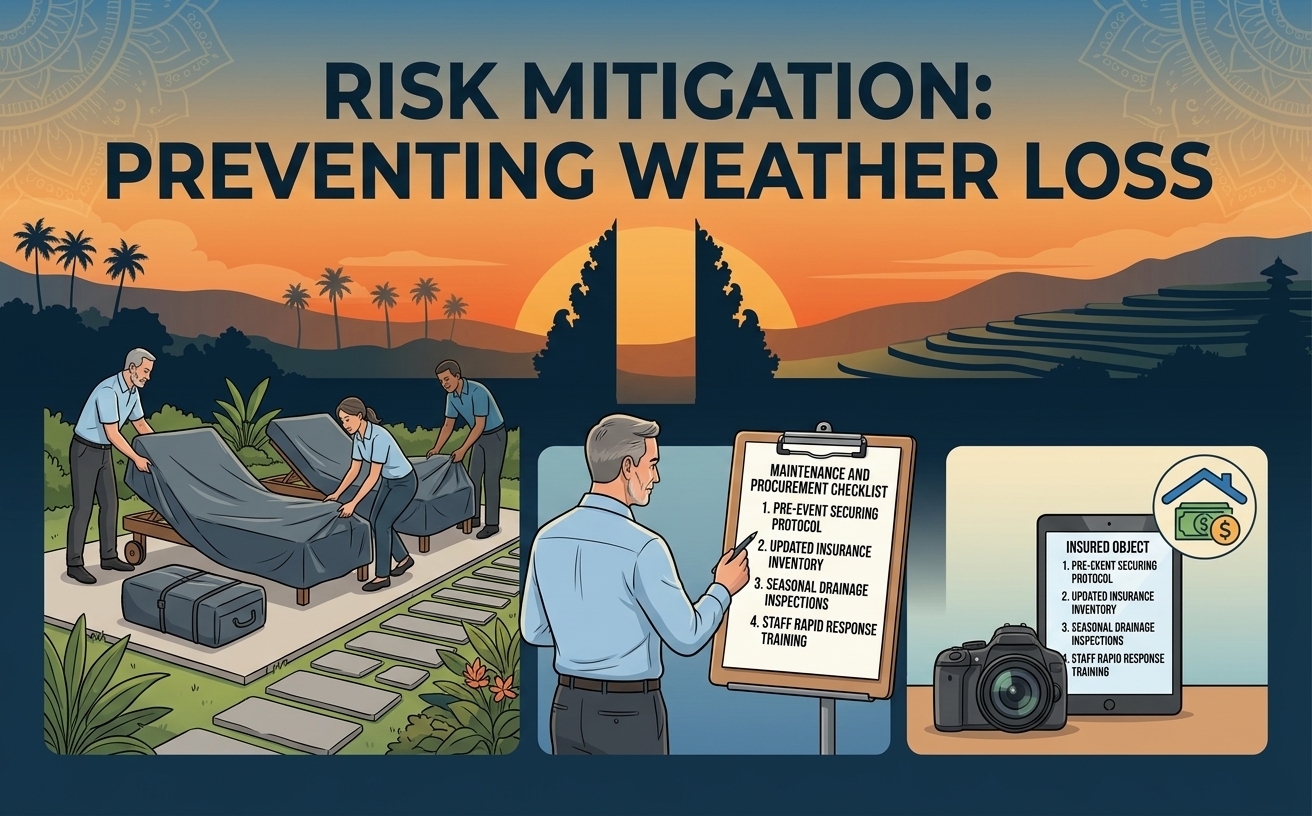
Preventing a repeat of the camera-destruction incident requires a layered maintenance and operational strategy that anticipates extreme weather as a routine rather than a rare exception; for tropical properties, this means integrating structural resilience, equipment protocols, and staff training into standard operating procedures to reduce both the probability and the impact of damage events. Physical measures like reinforced outdoor coverings, fast-drain landscaping, and designated, weatherproof storage areas for equipment reduce exposure, while operational controls—clear checklists for securing outdoor assets when the forecast changes, pre-storm inspection routines, and on-call contractors—tighten response times and lower the odds of catastrophic loss. The economics of these measures are straightforward: investments in preventative infrastructure and processes typically return value by reducing expected annualized losses and preserving income streams from bookings, shoots, and events that depend on reliable conditions.
Maintenance planning must also account for human factors: clear responsibilities, regular drills, and an easily accessible inventory with serial numbers and insurance valuations expedite claims and replacements. Insurance remains a critical component of a complete risk-transfer strategy, but policies must be matched to realistic exposures and supported by documented preventive practices to avoid claim disputes or coverage gaps. From a management perspective, a prioritized list of upgrades tied to the greatest estimated risk-adjusted returns helps owners decide between low-cost operational fixes versus capital improvements; for example, adding retractable awnings and weatherproof covers may yield faster payback than major structural work, while targeted drainage projects can reduce both immediate water damage risk and long-term maintenance costs for foundations and landscaping.
Maintenance and procurement checklist
- Implement a pre-event securing protocol for outdoor equipment and guest areas.
- Maintain an up-to-date insurance inventory with values and serial numbers.
- Schedule seasonal inspections for roofing, drainage, and outdoor furniture.
- Train staff in rapid response and guest communication during weather incidents.
Revenue Impact and Strategic Tools: How Bukit Vista’s Approach and the Revenue Calculator Help Owners Prioritize Protection
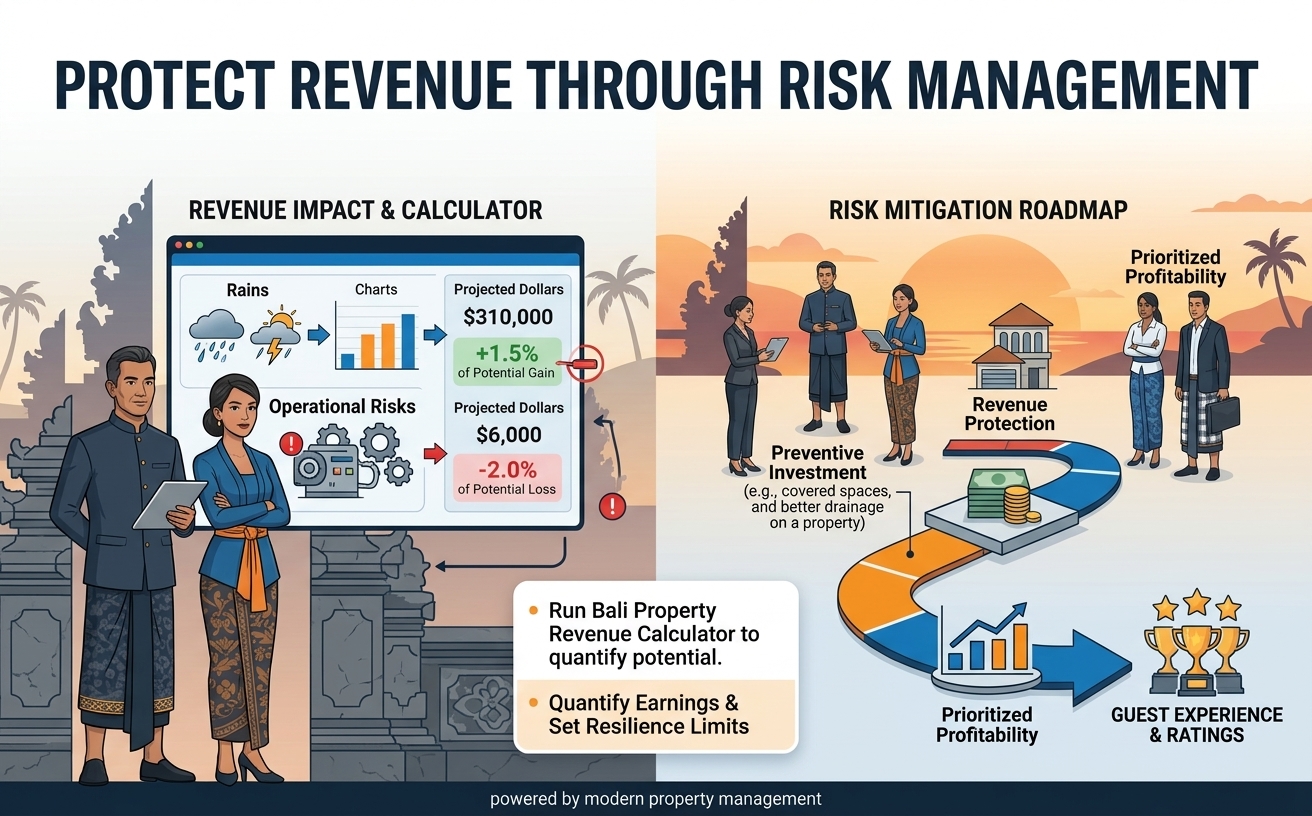
Equipment damage and operational downtime are symptoms of broader vulnerability that can erode a property’s revenue performance over time, making it essential for owners to understand the financial trade-offs between preventive investment and expected losses; Bukit Vista’s property management approach uses performance data and operational risk assessments to guide owners on where to allocate capital for the greatest revenue protection. The Bali Property Revenue Calculator provides an immediate, data-driven snapshot of potential earnings and seasonality, allowing owners to model net income under different maintenance and operational scenarios so they can see when preventative spending is justified by the protection of future revenue streams. By translating physical risks into projected revenue impacts, the calculator helps owners convert intuitive concerns about weather and equipment into concrete dollars and percentages, enabling prioritized decision-making that preserves profitability and guest experience.
From a strategic standpoint, integrating a revenue projection with a risk mitigation plan creates a defensible roadmap: owners can identify critical revenue thresholds where investments in property resilience—improved drainage, covered outdoor spaces, insured equipment stocks, and staff readiness—become necessary to avoid net-negative outcomes. Bukit Vista’s management services overlay these analyses with on-the-ground execution, from vendor relationships that speed repair response to housekeeping and guest-communication protocols that reduce reputational fallout after incidents. For owners evaluating where to focus immediate improvements, the combined insight of a revenue projection and a targeted risk plan makes it possible to calculate payback periods, adjust pricing to reflect enhanced resilience, and ensure that occasional storms do not translate into material declines in occupancy or guest ratings.
Strategic action checklist
- Run the Bali Property Revenue Calculator to quantify earnings potential and set resilience budget limits.
- Prioritize preventive measures with the highest revenue-protection ROI.
- Engage a management partner like Bukit Vista to implement rapid-response and maintenance programs.
- Document improvements and protocols to strengthen insurance claims in future incidents.
Key Takeaways
- Single weather events can cause outsized financial and operational losses; quantify both direct and indirect costs to prioritize prevention.
- Layered prevention—structural, operational, and insurance—reduces both probability and impact of damage and limits downtime.
- Use the Bali Property Revenue Calculator to translate maintenance investments into revenue protection and to justify capital allocation.
- Documented protocols and inventories accelerate recovery and strengthen insurance outcomes after incidents.
The rainstorm that destroyed expensive equipment is a stark reminder that proactive maintenance, clear operational protocols, and data-driven revenue planning are essential to protect both assets and income; owners who combine preventive investments with tools like the Bali Property Revenue Calculator and professional management will be better positioned to reduce losses, maintain guest trust, and preserve long-term profitability.
Jason, Business Journalist at Bukit Vista
You’re a property owner? Wondering What Could Your Bali Villa Really Earn?
Get a data-driven revenue projection based on your property type, area, and bedroom count. Discover your villa’s true earning potential in Bali.