
Bali is sometimes known as the Island of A Thousand Temples…in fact, the island is home to many more temples than that!
There is one very special temple that, for Balinese Hindus, holds more spiritual significance than any other, and, generously, the Balinese people allow tourists and non-Hindus to visit.
In Bali, the tenets and values of Balinese Hinduism touch every part of daily life. Balinese Hindus live by the principle of Tri Hatha Karana, which, as a huge philosophy, can be oversimplified into the notion of three pillars of prosperity, wellbeing, and harmony. These three pillars are harmony with the Gods, harmony amongst people, and harmony with nature and the non-human world.
Balinese Hindus all over the island will make daily offerings to the Gods in the form of small baskets known as canang sari. Every home in Bali has its own temple, every family compound of houses has its own temple, and every village or community has at least three temples.
There are many different religious holy days observed in Bali, from Nyepi Day, a day of silence, to Galungan and Kuningan, which honour specific gods and goddesses, such as Saraswati Day.
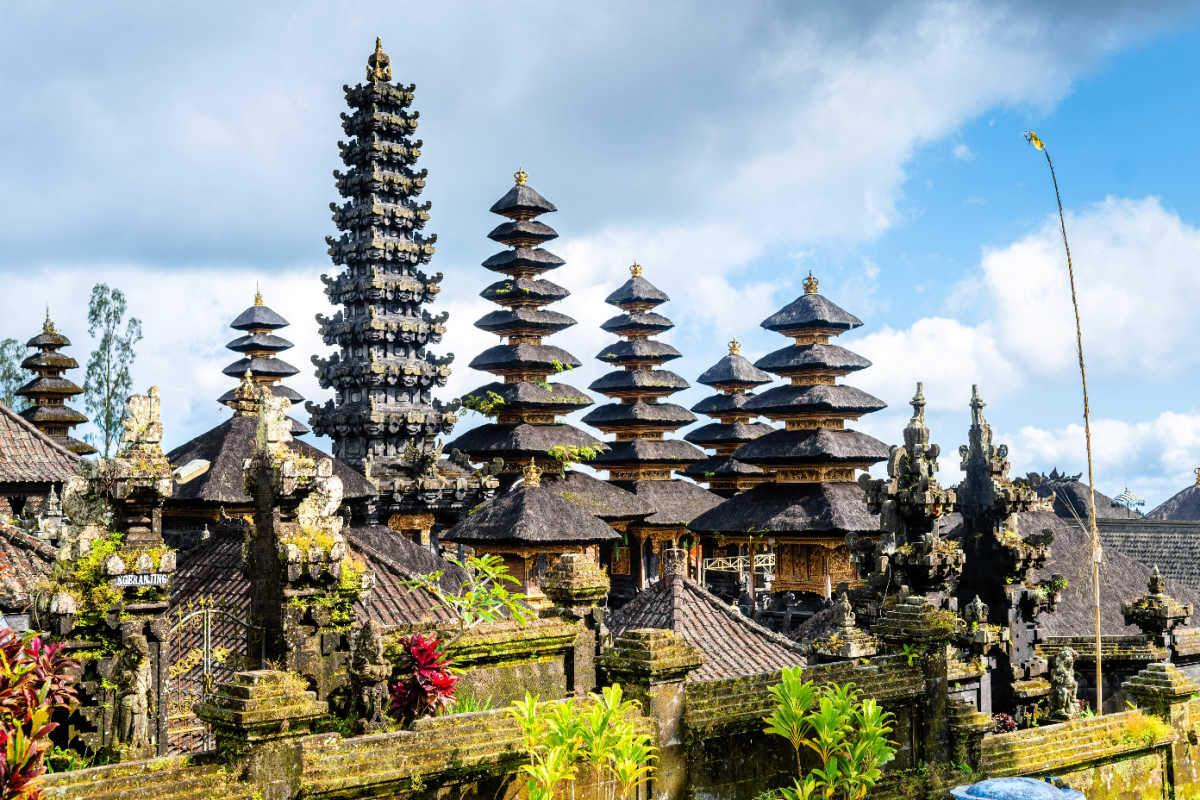
While many Balinese Hindus across the island practice daily worship, there is one very special temple that is considered the Mother Temple, and this is Pura Besakih, located in the heart of Karangasem Regency.
For culturally curious travellers and spiritually inclined tourists, a visit to Pura Besakih during a visit to Bali is essential. This sprawling temple complex holds huge spiritual significance to the Balinese people, and it is an honour to be able to enter the space and bear witness to the sanctity that it holds.
Pura Besakih is considered to be the oldest temple in Bali. Believed to have been built in 1284 by Rsi Markandeya, after the enlightenment of the Dieng Plateau. The temple complex is home to megalithic remains, including menhirs and a pyramid terrace.
Pura Besakih also feels particularly special due to its location within the wider landscape. The Mother Temple can be found at the foot of Mount Agung, Bali’s most sacred peak. On a clear day, Mount Agung casts a shadow over Pura Besakih, offering some shade in the heat of the day.
The temple complex is vast, impressively so. However, there is something of an urban myth that says that Pura Besakih is the largest temple complex in Southeast Asia; this is not the case.
The largest temple complex in Southeast Asia can be found at Angkor Wat in Cambodia, which spans over 402 acres.
In fact, Pura Besakih is not even the largest temple complex in Indonesia; it is pipped to the post by the Buddhist Muaro Jambi Temple Complex in Sumatra, the Parmbanan Temple Complex in Yogyakarta, and the Borobudur Temple in Central Java.
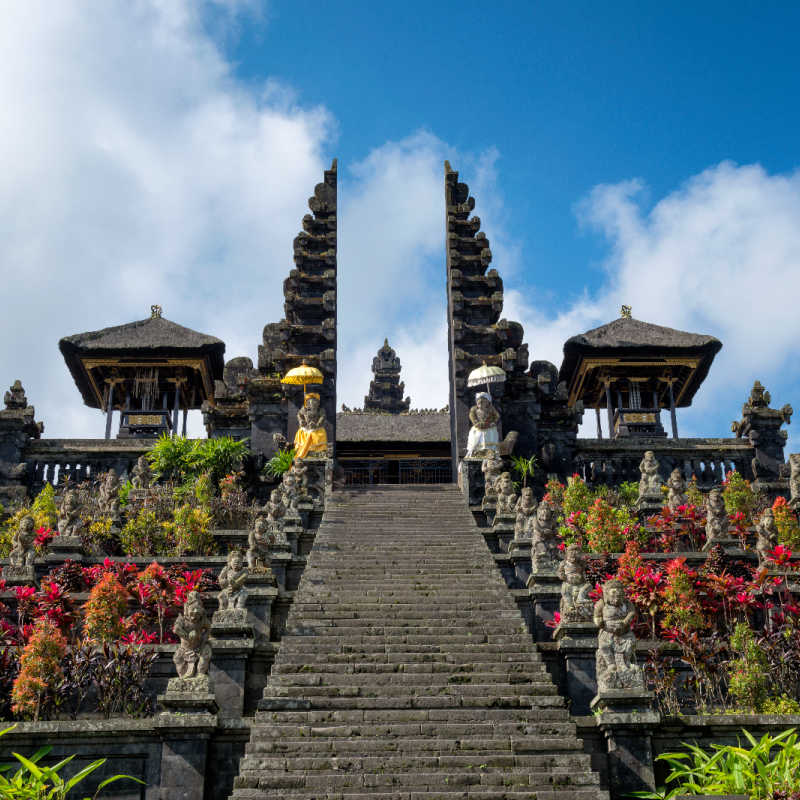
Size aside, it is the spiritual significance and majesty of the temple complex that is nothing shy of awe-inspiring for visitors. Those visiting the temple must adhere to all temple etiquette, whether visiting to worship or not. Tourists must don a sarong and sash and wear a modest top or shirt. Those who are menstruating are not permitted to enter Pura Besakih, nor any temple on the island.
Shoes are permitted in most areas of the temple, as are photos; however, there are areas of the temple complex where worshippers are not permitted to visit and not permitted to take photos. If in doubt, don’t take a photo or ask a member of the temple staff for permission.
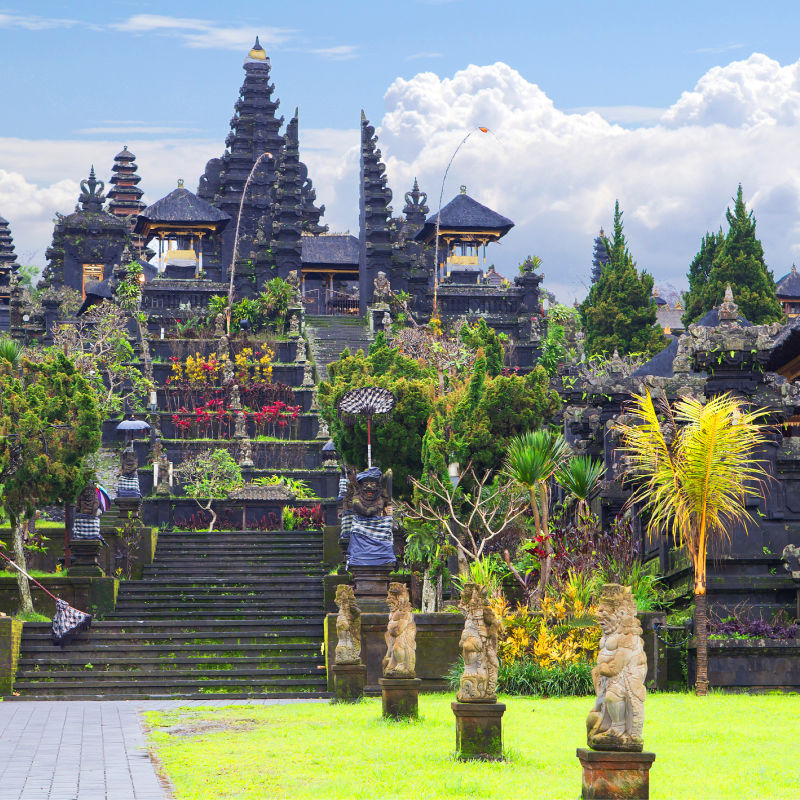
Tourists are also reminded that worship is a deeply personal and intimate practice, and to be mindful not to take photos of those who are praying or taking part in a ceremony without asking permission first.
Pura Besakih is open from 7 am to 6 pm daily, though it is closed periodically to visitors and non-worshippers in order to prioritise access for those taking part in ceremonies, rituals, and parades.
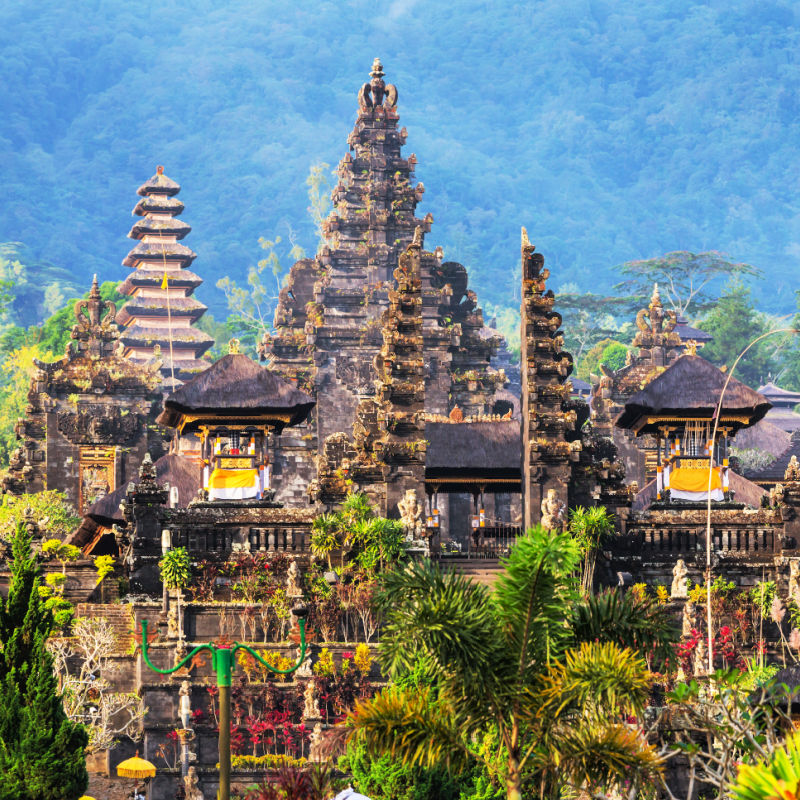
Tourists should check in with their tour guide or accommodation provider to double check before arranging a visit. The entry fee is IDR 150,000 per person and includes the rental of a sarong and sash for those who do not bring their own.
Discover more from The Bali Sun
Subscribe to get the latest posts sent to your email.