

For much of hospitality’s history, success was measured through location, pricing, and scale. But increasingly, one factor is becoming more valuable than all three. Community. Around the world, hospitality environments are evolving beyond transactional spaces into social ecosystems where people seek connection, familiarity, and belonging. This shift is changing how successful hospitality is built.
Beyond Transaction
Consumers today have more options than ever before. Restaurants, bars, hotels, beach clubs, and entertainment venues compete within increasingly saturated markets. As a result, product alone is no longer enough. People may visit a venue once because of curiosity. But they return because of connection.
The Desire for Belonging
Modern consumers increasingly seek environments where they feel understood and emotionally connected. Hospitality spaces are becoming extensions of identity. People align themselves with certain venues, communities, and atmospheres because those spaces reflect how they see themselves and how they want to experience life. This creates loyalty that extends far beyond price or convenience.
Hospitality as Social Infrastructure
In many ways, hospitality now functions as a form of social infrastructure.
It creates gathering spaces for:
• creativity
• networking
• culture
• relationships
• collaboration
Some of the most successful hospitality ecosystems today are not built around individual transactions, but around recurring participation. People return because the environment itself becomes part of their social world.
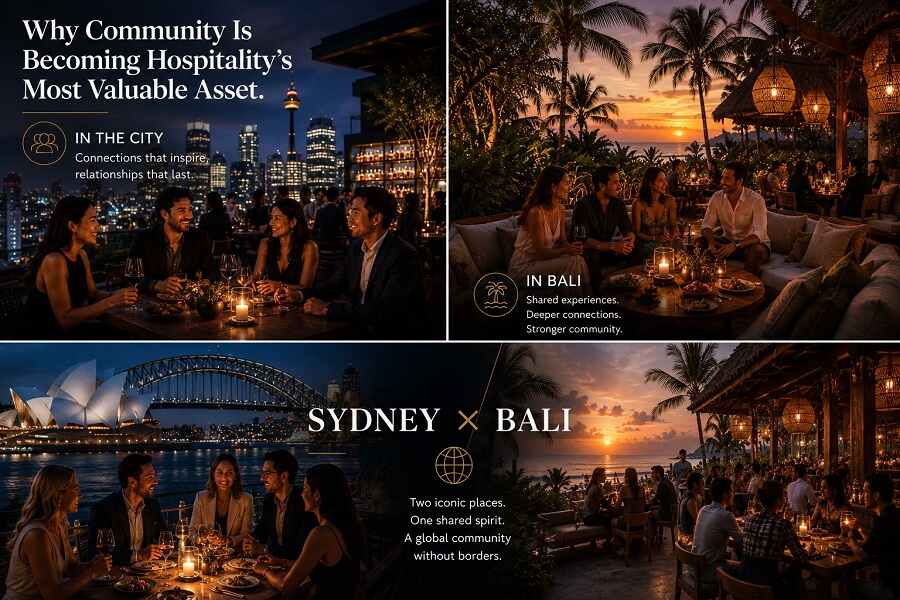
Sydney and Bali
Both Sydney and Bali offer strong examples of this evolution. Sydney’s leading hospitality environments increasingly operate as lifestyle ecosystems that integrate food, entertainment, culture, and social interaction. Bali demonstrates how atmosphere, openness, and community can create globally magnetic environments where people feel emotionally connected to place. In both markets, the most enduring hospitality brands are often those that build community naturally.
The Long-Term Value of Community
Community creates resilience. Markets fluctuate. Trends change. But environments that foster genuine connection tend to sustain relevance over longer periods. People support places where they feel a sense of belonging. This is becoming one of hospitality’s greatest long-term advantages.
Conclusion
Hospitality is no longer simply about serving people. It is about creating environments where people want to remain connected. As the industry continues to evolve, community may prove to be hospitality’s most valuable asset of all. Because in the end, the places people remember most are rarely just venues. They are the environments where relationships, memories, and identity were formed.
Website: www.robertianbonnick.com
PT Karya Lyfe Group – Gateway To Indonesia
RiB & Associates | SpeakuP Monday – Destination Indonesia #1 Entrepreneurship & Social Impact TalkShow | Tourism Architect – Co Building Legacy
Strategy | Connector | Market Access | Cultural Integration | Business Growth | Private Public Partnerships