
I’m unpacking content from Bali Business Review on YouTube to present a concise update on traffic conditions in Canggu. The report documents persistent congestion on main corridors, frequent bottlenecks at intersections, and how short trips can stretch from five to thirty minutes during peak periods.
Hi, I’m Jason, a Business Journalist at Bukit Vista, and I’ll be unpacking analysis from Bali Business Review. Today, we’ll dive into Canggu traffic congestion and its business impact to offer clear, data-driven insights.
Root Causes: Why Congestion Builds Quickly in Canggu
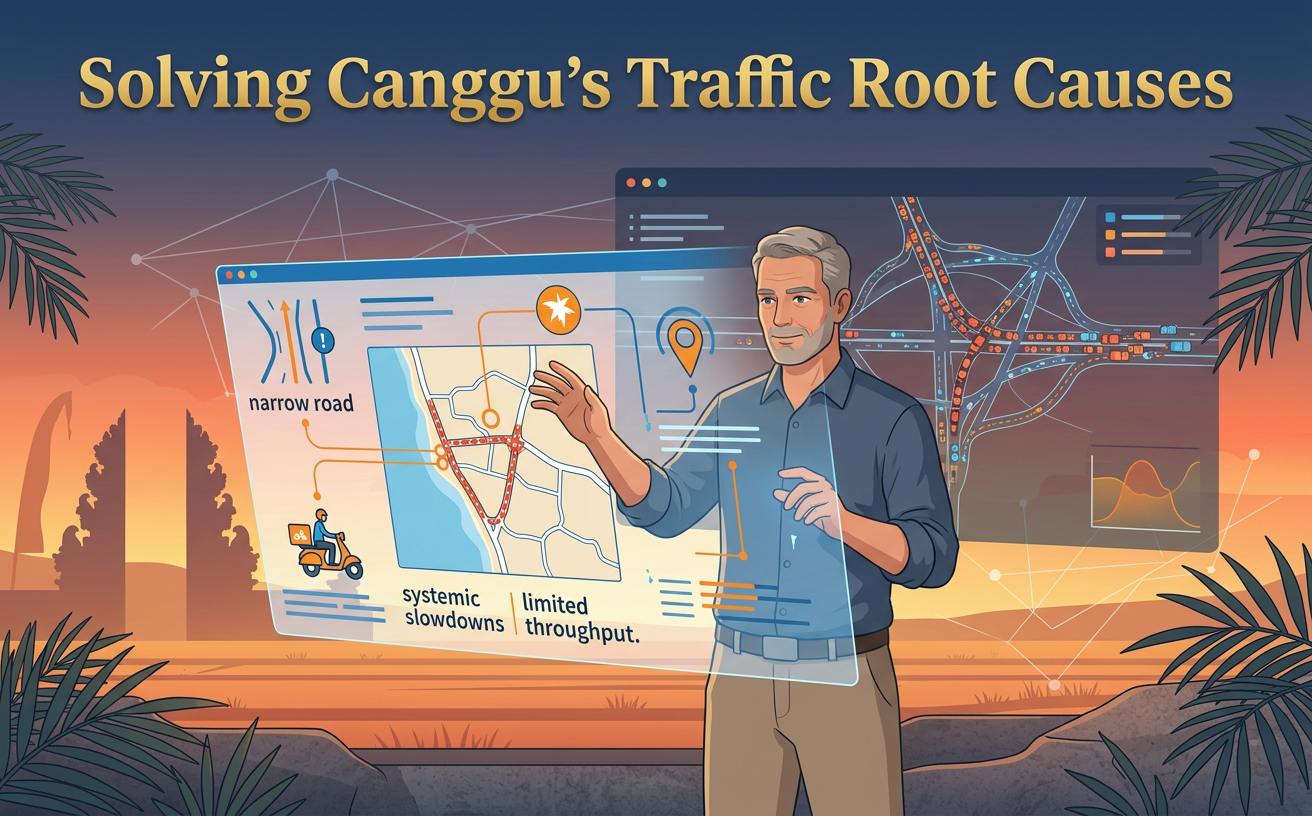
Canggu’s road network combines narrow two-way streets, increasing vehicle numbers, and frequent pedestrian and scooter movements, which together reduce throughput and amplify delays. Key intersections and chokepoints—especially near beach access roads and popular cafes—see vehicles stacking back into adjacent streets, creating systemic slowdowns rather than isolated jams. Seasonal tourism spikes and mixed vehicle types (cars, scooters, delivery vans) further lower average speeds and increase intersection wait times.
Primary contributing factors
- Limited road width and inadequate turning lanes at major junctions
- High density of short, local trips combined with tourist traffic
- Insufficient signal coordination and ad-hoc parking that blocks flow
Economic and Social Impact on Residents and Businesses
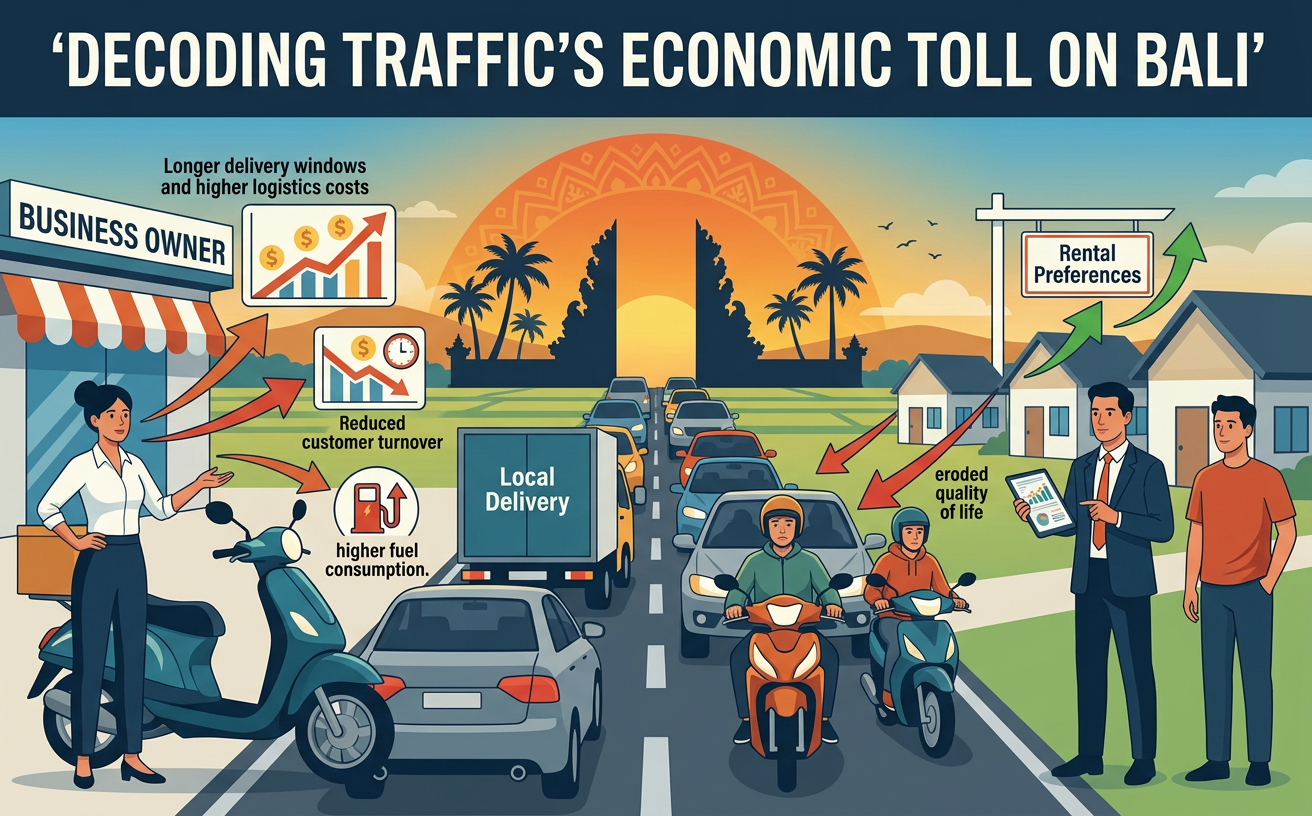
Daily traffic delays increase operational costs for local businesses through longer delivery times, reduced customer turnover for hospitality venues, and higher fuel consumption for transport operators. Residents experience reliability issues for commutes and service access, which erodes quality of life and can push property demand to less congested areas. For tourism-dependent businesses, unpredictability in travel time can reduce bookings and deter repeat visits when transport becomes a consistent friction point.
Business consequences to monitor
- Longer delivery windows and higher logistics costs
- Reduced walk-in customer frequency for time-sensitive outlets
- Potential shift in rental and property preferences toward quieter zones
Short-Term Mitigations and On-the-Ground Responses
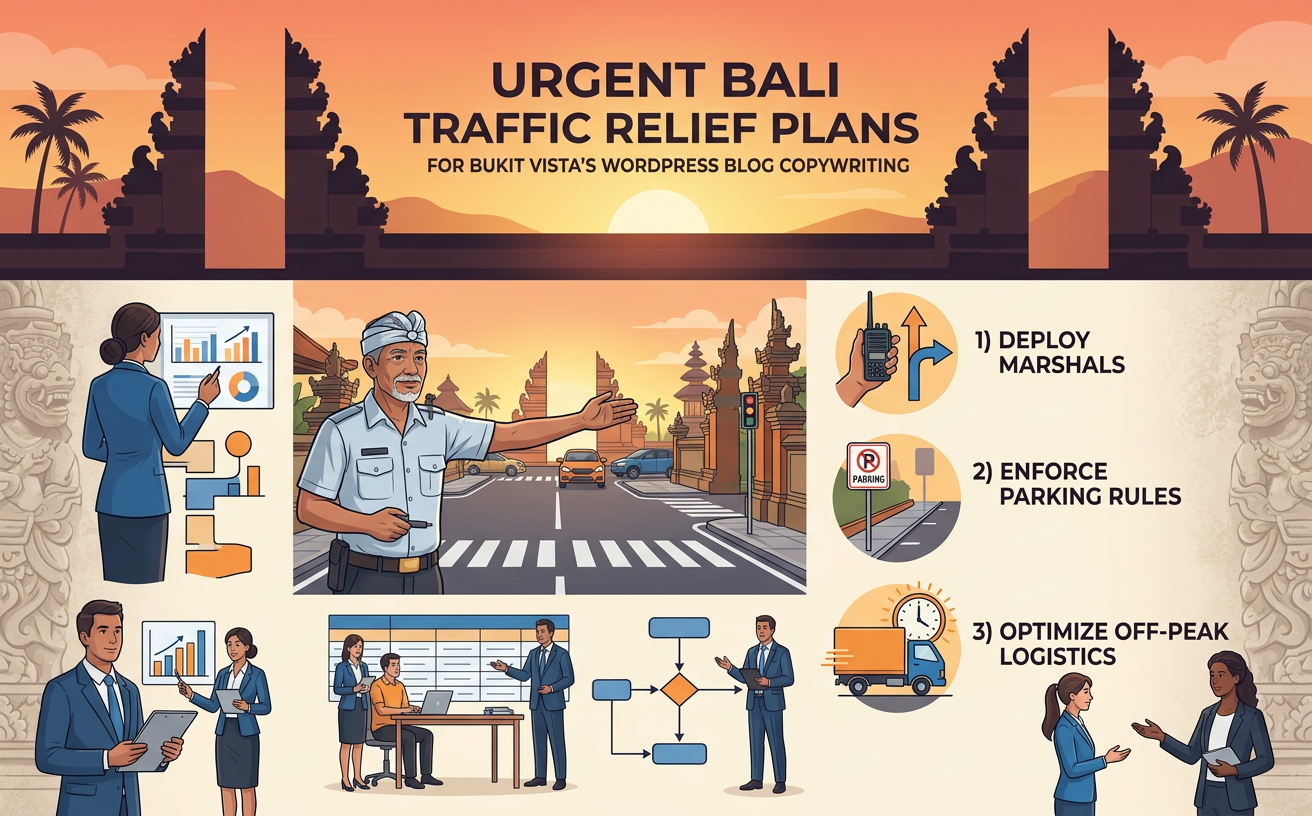
Short-term fixes observed and recommended include temporary traffic marshals at peak intersections, clearer enforcement of parking restrictions, and targeted one-way schemes during busy hours to improve flow. Local businesses and operators can stagger shift times and delivery windows to avoid peak periods and use micro-distribution hubs to reduce heavy vehicle presence in narrow streets. These measures provide immediate relief but require coordination between local authorities, businesses, and community groups to be effective.
Practical steps for quick relief
- Deploy traffic control during morning and late-afternoon peaks
- Enforce no-parking zones near junctions and narrow stretches
- Encourage off-peak deliveries and consolidated logistics
Long-Term Solutions: Planning for Sustainable Traffic Flow
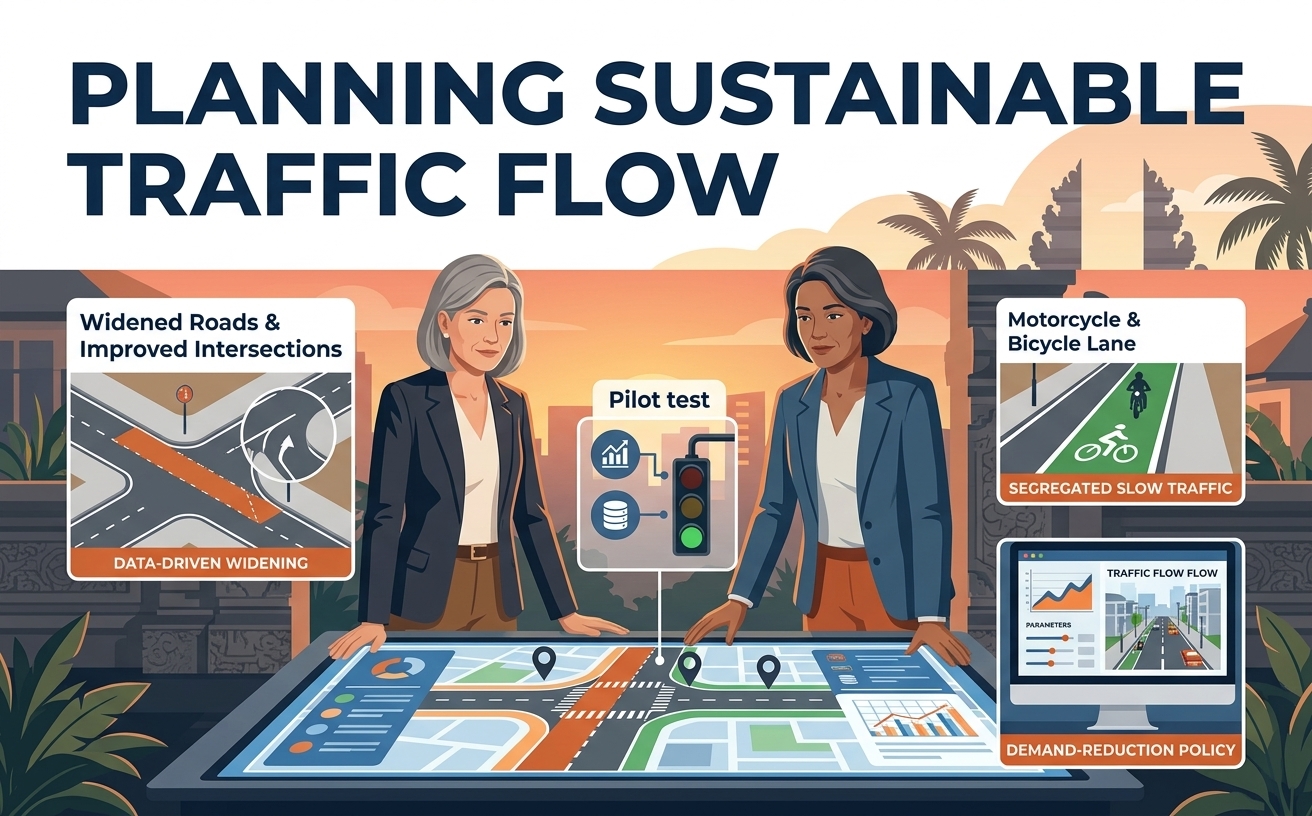
Long-term resilience depends on integrated planning: road upgrades where feasible, dedicated corridors for public transport and bicycles, and intelligent traffic signal systems tailored to local movement patterns. Urban design that reduces trip demand—such as mixed-use development, better pedestrian infrastructure, and decentralized services—can lower peak vehicle volumes. Investment decisions should be guided by data collection (traffic counts, origin-destination surveys) and staged pilots to test interventions before full rollout.
Strategic investments to consider
- Targeted road widening and improved intersection design
- Dedicated motorcycle and bicycle lanes to segregate slower traffic
- Data-driven traffic management and demand-reduction policies
Key Takeaways
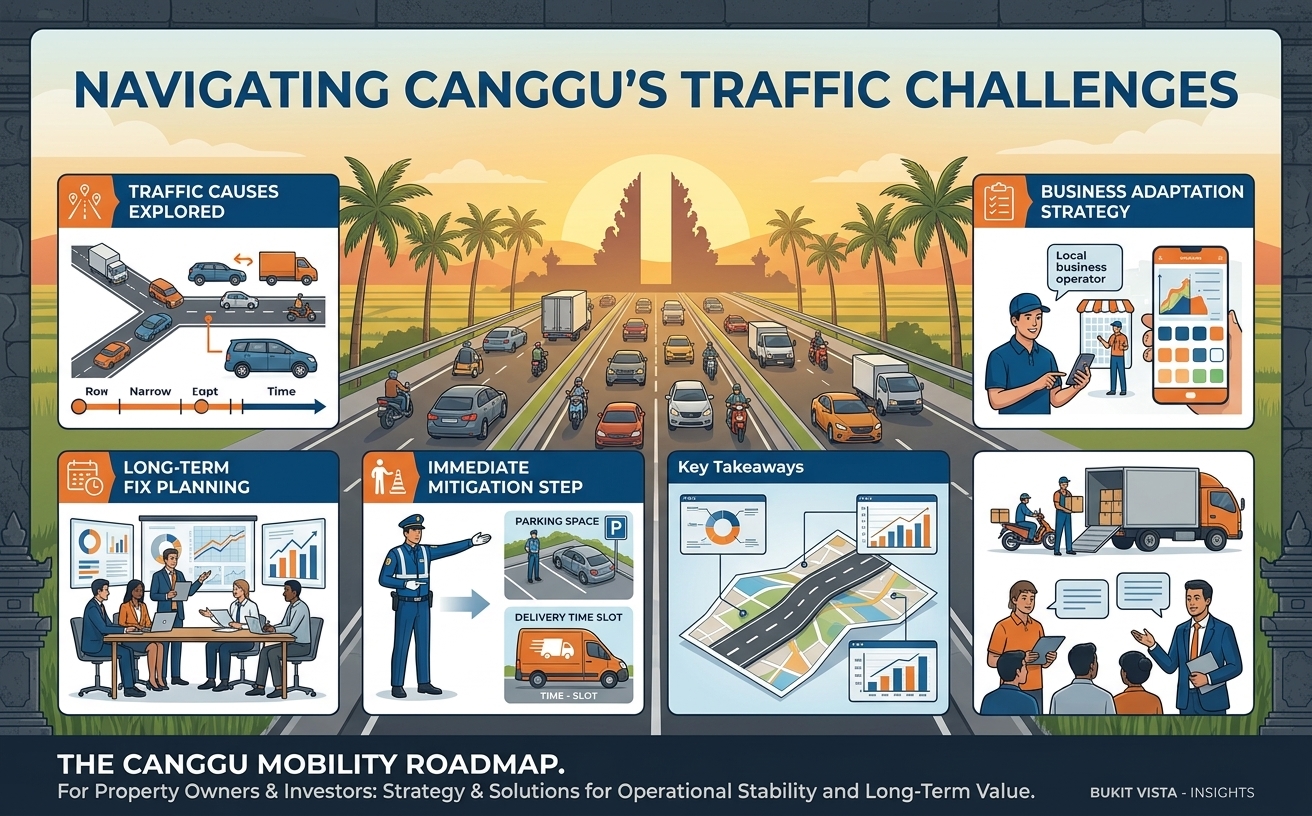
- Canggu congestion is driven by narrow roads, mixed vehicle types, and tourist peaks—short trips can multiply into long delays.
- Immediate measures (traffic marshals, parking enforcement, staggered deliveries) can reduce daily friction and protect business operations.
- Long-term fixes require coordinated planning, targeted infrastructure, and data-led traffic management to shift demand and improve flow.
- Businesses should adapt logistics and scheduling now to limit cost impacts while advocating for systemic changes.
Final word: Traffic in Canggu is a clear operational and economic challenge that affects residents, hospitality operators, and property owners. Short-term mitigations can buy time, but meaningful improvement requires coordinated infrastructure investment and policy that reduces vehicle demand and prioritizes efficient mobility. For property owners and investors, understanding these dynamics is essential for long-term planning and revenue projections.
Jason, Business Journalist at Bukit Vista
You’re a property owner? Wondering What Could Your Bali Villa Really Earn?
Get a data-driven revenue projection based on your property type, area, and bedroom count. Discover your villa’s true earning potential in Bali.