
By Pramod Kanakath
They love Kuta. They loathe Kuta.
The 1970s ushered in a wave of hippie surfers drawn by the breaks and the pristine, palm-fringed white-sand beaches. Browse through archival photographs from the 1970s and 1980s, and you will encounter a Kuta that feels almost unrecognizable today. The shoreline stretched endlessly, lined with rows of coconut trees mirroring the sweep of the coast. A handful of vendors wandered by, offering drinks and traditional snacks. Other images reveal the streets of Kuta and Legian dotted with a few modest bars and warung (small local eateries), with only the occasional motorcycle passing through.
Compare these scenes with present-day snapshots from Jalan Pantai Kuta or Jalan Legian, and the transformation is so profound that the streets themselves seem almost unfamiliar.
Each decade since the 1970s has brought sweeping change. Bars multiplied, cafés emerged, and hotels rose rapidly. The 1980s, in particular, marked a surge of modernization on a scale that proved unstoppable for nearly two decades, slowing only during periods of economic and social uncertainty, including the 1998 reform era and the aftermath of the 2002 Bali bombings.
During this period, Kuta played a pivotal role in Bali’s economic growth. Budget accommodations began to proliferate, democratizing tourism that had once been largely the preserve of the affluent. Gradually, the focal point of tourism shifted from the upscale enclaves of Sanur and Nusa Dua to Kuta’s diverse and accessible range of lodging options.
Over the past two decades, debates about the future of Kuta have grown increasingly intense. What stands today is a dense mosaic of hotels, villas, nightlife venues, and tourist-oriented businesses. Construction has consumed much of the open space, while the environmental pressures associated with mass tourism have become more visible. Concerns about crime and public order have also become part of broader discussions surrounding Kuta’s development.
Amid all this, how should we view Kuta? Do we join the chorus lamenting its decline, or remain loyal to an old companion that can still offer the experiences we seek? Ultimately, the answer lies in perspective.
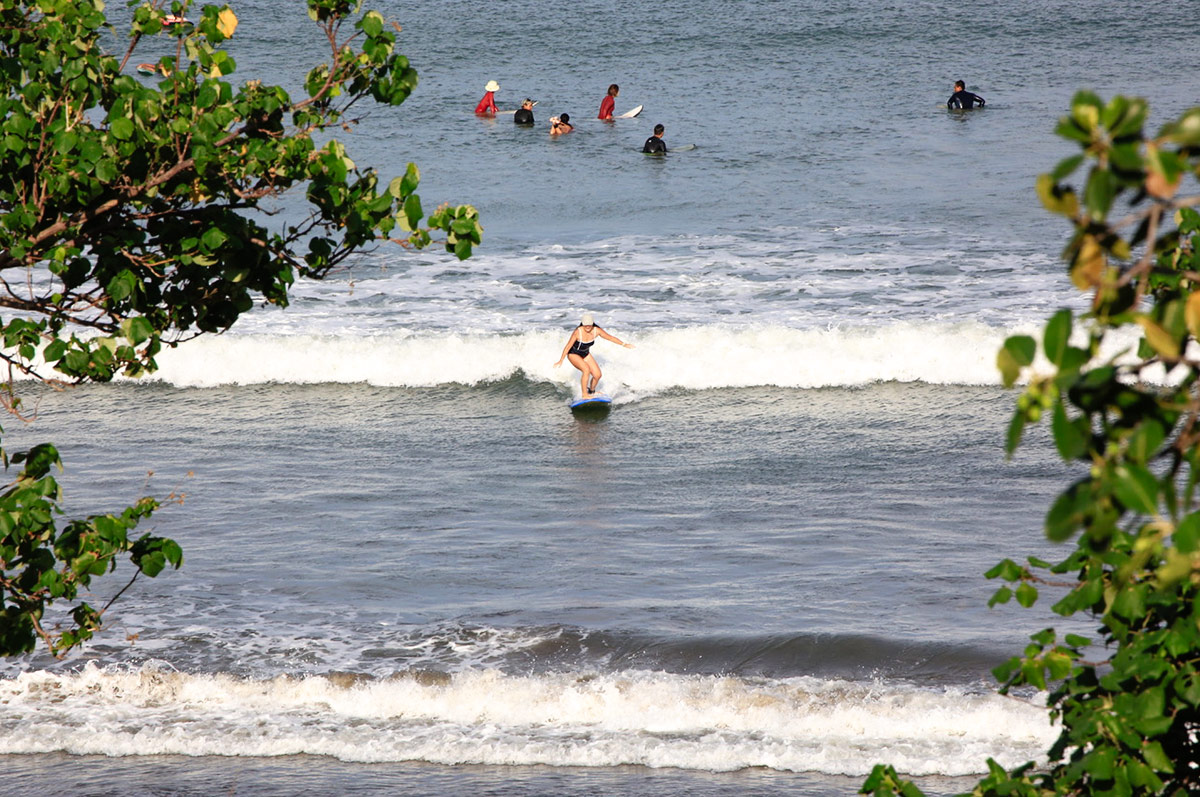
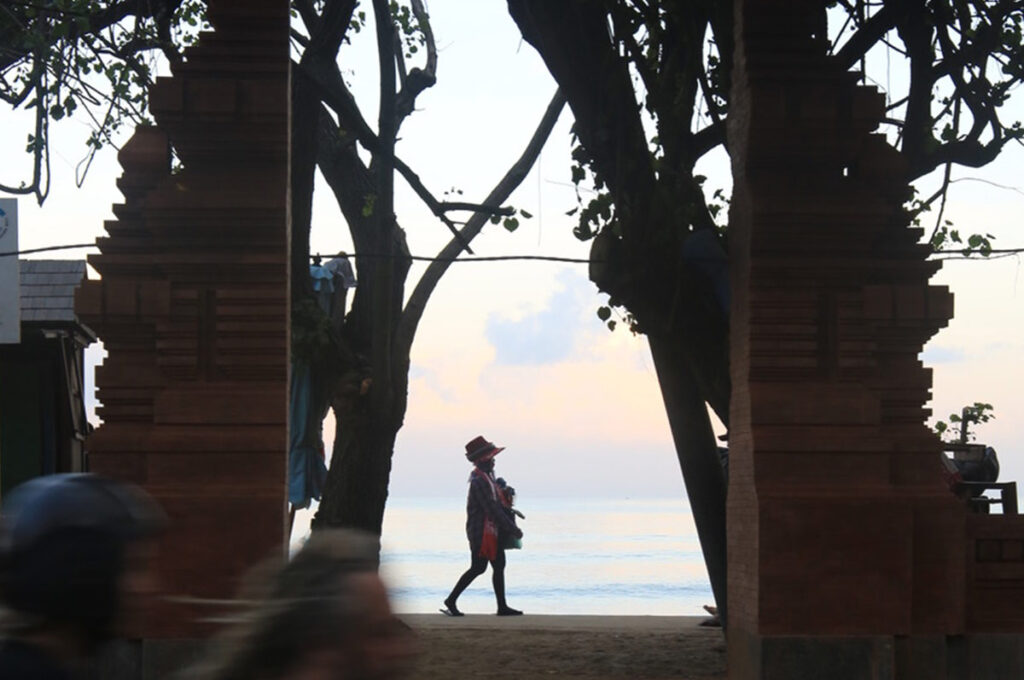
On a calm morning, while much of the island is still asleep, I stroll along Kuta Beach. A lone surfer weaves through the waves beneath a cloudy sky. I watch his aqua dance through the silhouette of a gapura, a traditional Balinese entrance gate, standing quietly against the dawn. He disappears beyond the breakers, hoping to return with an even better ride.
A vendor appears, carrying forward one of Kuta’s enduring traditions. She balances clothes on her head while carrying armfuls of sarongs and souvenirs. Around her, the day slowly comes to life.
On the road, business begins to stir. There is the cleaner, the stationery supplier on his motorcycle, joggers, and early-rising tourists and expatriates making their way home, perhaps after a long night. Yet among all this activity, I often find myself noticing the small temples tucked away between hotels, convenience stores, and cafés. Balinese residents visit them daily, offering prayers and conducting rituals. During festivals, penjor—decorated bamboo poles—rise above the streets, making these sacred spaces visible once again.
Nearby, a Balinese woman pauses in the morning light to place a canang sari, a traditional daily offering, on a small shrine overlooking the sand. It is a quiet act of devotion that feels almost defiant against the backdrop of the waking town.
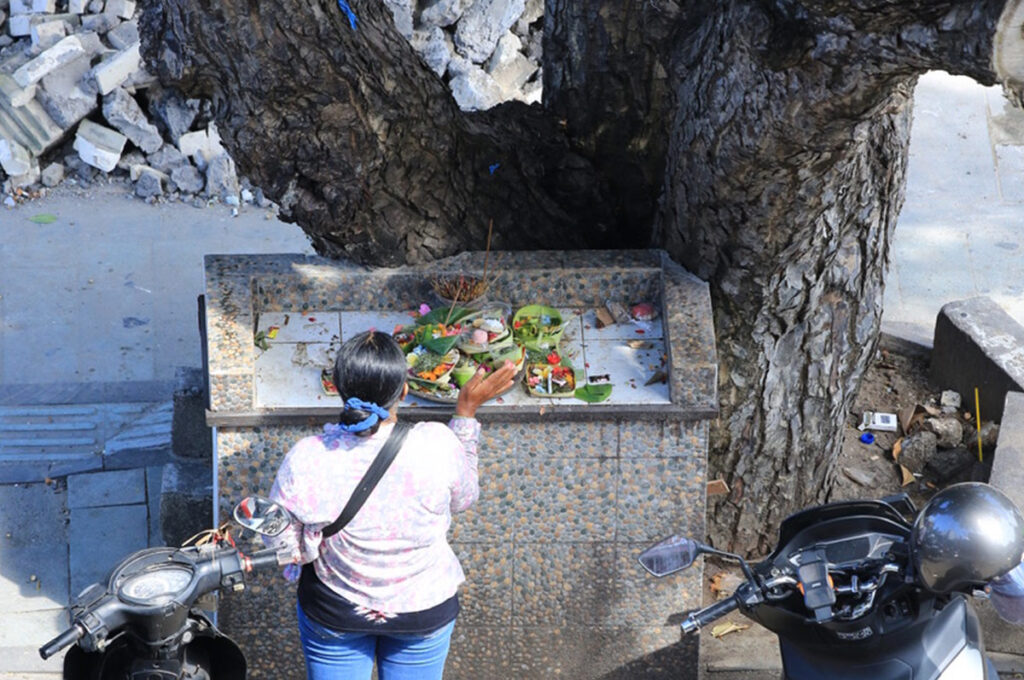
These palm-leaf offerings, filled with colourful petals and trailing incense, are the heartbeat of a hidden Kuta. They rest on the doorsteps of boutiques, line the pathways of luxury resorts, and sit beside the neon-lit entrances of bustling nightlife venues. This juxtaposition—the scent of incense mingling with sea air and city life—defines modern Kuta. The penjor may lean over asphalt and glass, but they still point toward the same heavens, anchoring the town’s spiritual identity even as its physical landscape continues to evolve.
The sensory overload intensifies as holidaymakers flood the streets and beaches. International surf brands dominate the storefronts, their polished façades casting shadows over the humble warung hidden in the alleyways. Yet it is often in these narrow passages, between bars and restaurants, that Kuta’s local soul remains most visible.
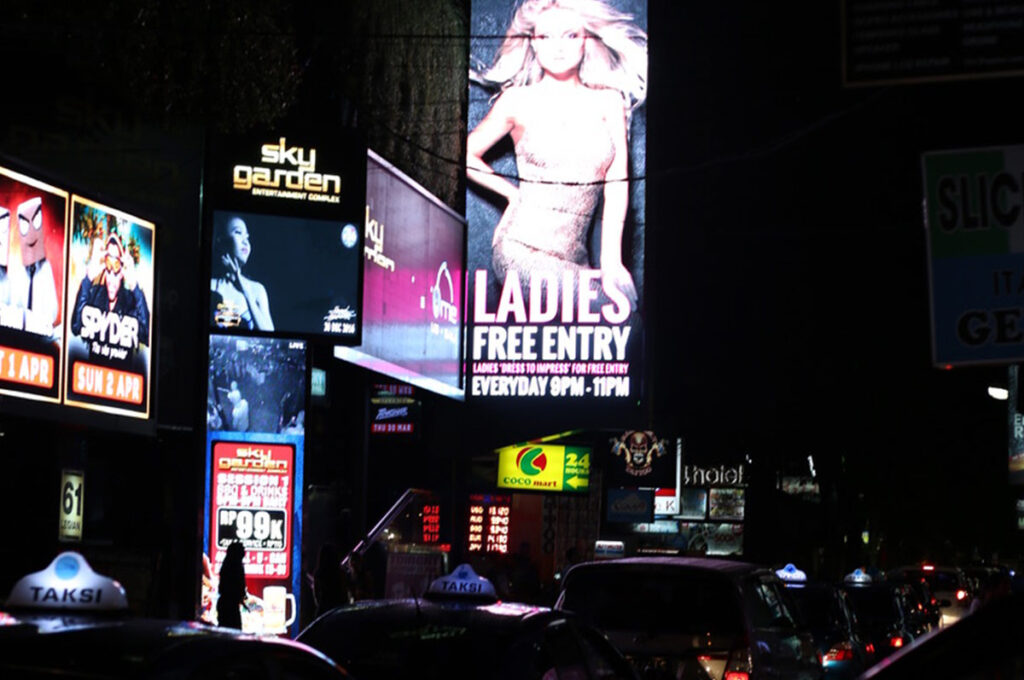
It survives in the clatter of a wok inside a family-run kitchen squeezed between a tattoo parlour and a burger joint. It survives in conversations between neighbours, in offerings placed at dawn, and in traditions that continue despite the constant flow of visitors. The traditional Balinese way of life has not disappeared; it has simply adapted and learned to share space with a rapidly changing world.
Ultimately, the soul of Kuta is not lost; it has become more layered and complex.
Listen closely through the roar of motorbikes and the pulse of nightlife, and you may still hear the delicate notes of bamboo music drifting from a nearby courtyard. Traditional dance has not stopped; it simply shares the stage with modern life.
Kuta may no longer resemble the pristine postcard images of the 1970s, but it has evolved into a place where different worlds coexist. It remains a destination for travellers seeking the energy of the contemporary world and for those who continue to preserve Bali’s enduring cultural rhythms.
In the end, Kuta is whatever you go looking for—a town where the sacred and the modern continue to walk side by side along the same crowded streets.
Text and Photos by Pramod Kanakath
Disclaimer: While every effort has been made to ensure accuracy, this article may contain minor inaccuracies
in names, locations, or event details. Readers are welcome to contact the editorial team for any clarification.