
Parents and guardians traveling to Bali with children this high season are being warned, once again, about the dangers of black henna.
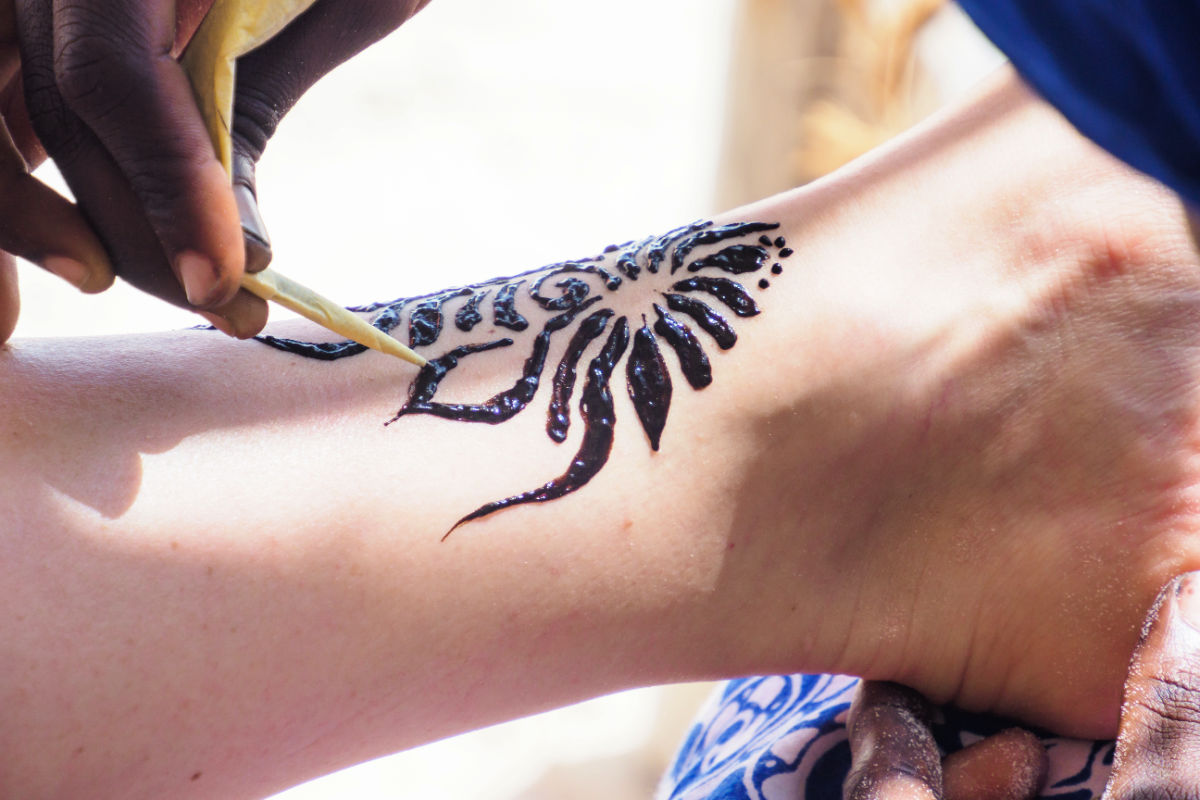
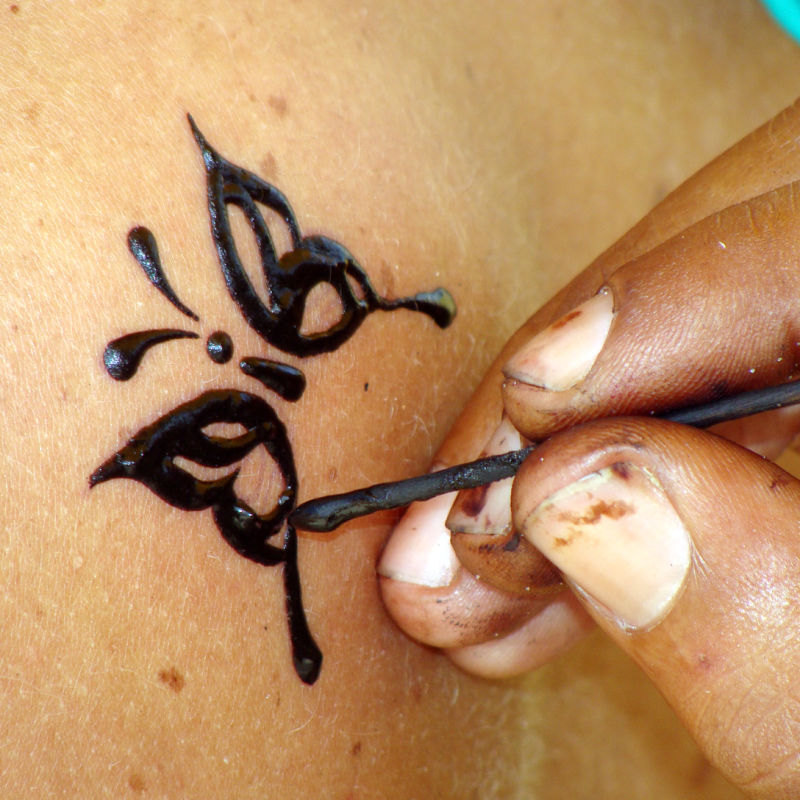
All along Bali’s most popular beachfronts and resort areas, temporary henna tattoos are offered to passing tourists. However, in some tragic circumstances, these moments of temporary holiday fun can turn into lifelong scars.
An Australian mother has spoken to reporters about her and her family’s vacation nightmare during a holiday in Bali. The Sydney-based Mum of four had taken her family on vacation to the popular resort of Seminyak and shared details of her son’s ordeal on the Facebook travel advice group Bali Bogans.
In the post, the holidaymaker shared graphic images of chemical burns on her son’s right arm, caused by an allergic reaction to henna. What has shocked many is that the young man’s allergic reaction did not present symptoms until a week after the henna had been applied to his skin.
She wrote, “My kiddo got a henna tattoo at Seminyak beach and had this reaction…It happened about a week later once we got back home thank goodness. It may not happen to you but just wanted to share anyway.”
One traveler commented, “Myself and many people I know have had them with no reaction … my daughter, however, had a reaction when she was young.”
The mother acknowledged it could be an allergic reaction unique to her son, and potentially nothing to do with the quality or type of henna used. The use of black henna, which often causes chemical burns, is acknowledged to be widely used in Bali.
Typically, natural henna, which has a brown to orange pigment, does not cause chemical burns or allergic reactions.
Black henna is a synthetic body paint that often contains paraphenylenediamine (PPD) and any number of other unknown ingredients that can cause serious allergic reactions, chemical burns, infections, and in some cases, lifelong scarring.
The Department of Health for the Government of Western Australia has even issued warnings to the public regarding the risks of black henna, at home and on vacation.
The Department of Health explains, “Black henna is not a natural substance – it is mixed with paraphenylenediamine (PPD) which changes the color and reacts more quickly on the skin.”
“PPD is a toxic substance often used in black hair dye which causes the color of the dye to be nearly black, much darker than natural henna. It is illegal to use this substance on a client’s skin in Australia, but is more likely to be used in some overseas holiday destinations, such as Bali.”
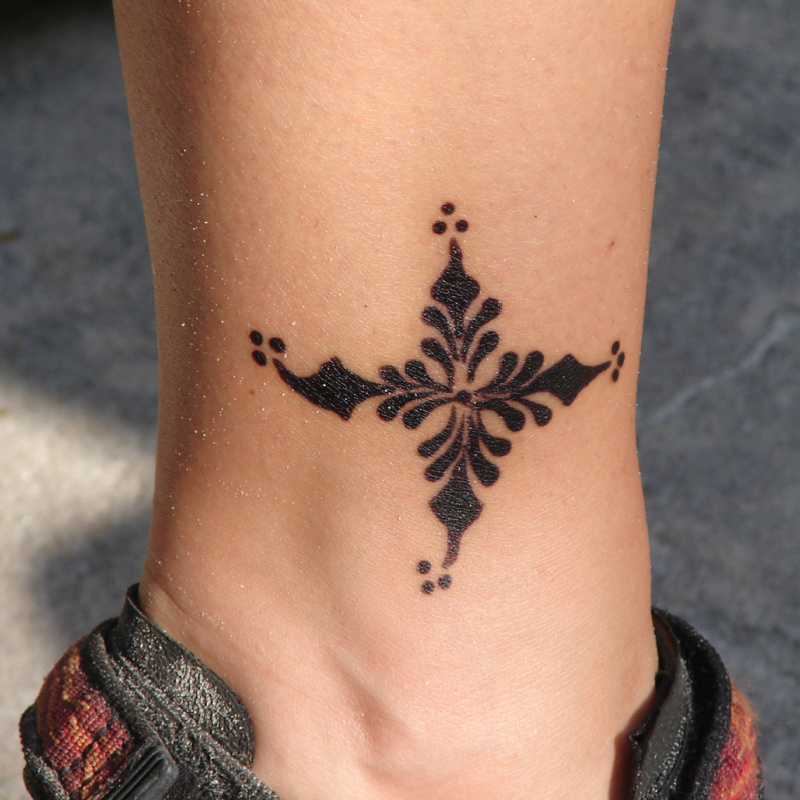
Every year, stories such as this hit headlines from travelers visiting Bali, and parents’ advice to other families is always the same…just don’t risk it. Back in Elena Kovalenko and her husband Phillip Saenko shared their story with the world in hopes of protecting other children from the ordeal their two young sons experienced as a result of black henna chemical burns.
The mother of two told reporters ‘’They [Luke and Adrian] have done it before in Russia, Thailand, and the Gold Coast, so we didn’t think twice and agreed…Luke and Adrian chose their tattoo designs and sat down ready for their tattoos’.
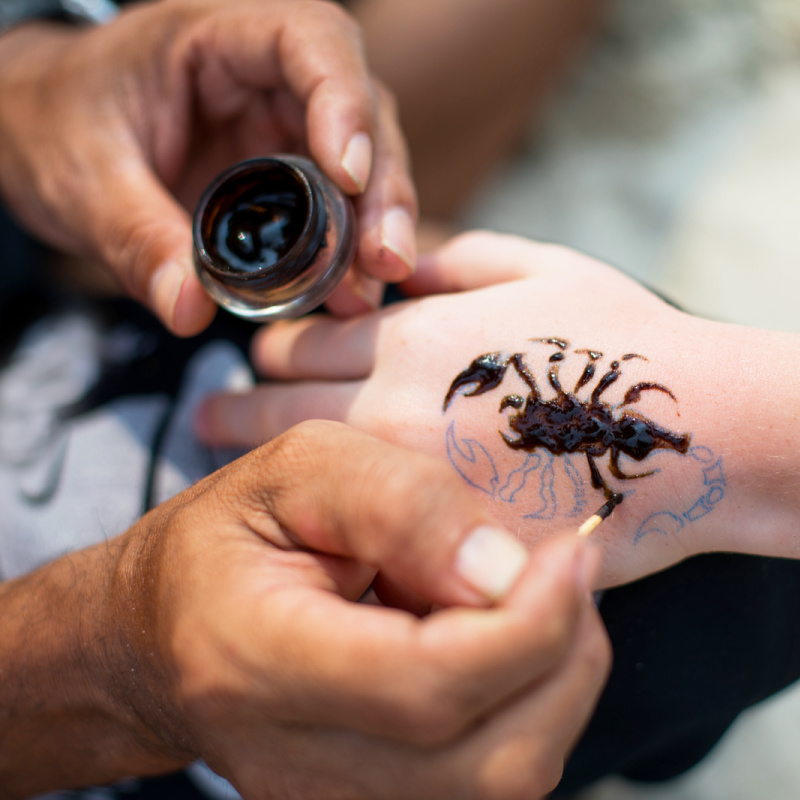
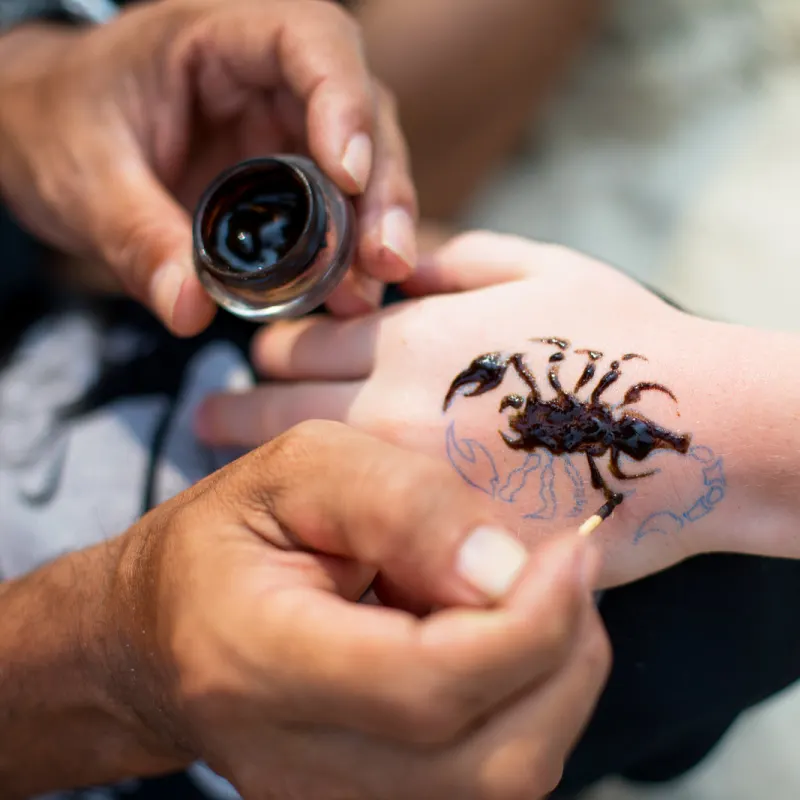
It was only in the days that followed when the ink started to fade that the boys started experiencing redness, itchiness, and welts at the tattoo sites.
Kovalenko told reporters ‘If it was just one child, I would think it’s some kind of allergy, but because it’s two kids with two different skin types, I’m just shocked…My kids don’t have any allergies, but they will have horrible scars forever.
She concluded, ‘We all know not to drink tap water in Thailand or Bali, and we know about robbery facts in the countries too…the media screams about foot and mouth disease, but I never heard anything about it [black henna]…It’s a dangerous thing. It might even be life-threatening. People should be aware of it, and it should be banned.’
Discover more from The Bali Sun
Subscribe to get the latest posts sent to your email.