
Unpacking content from Bali Business Review on YouTube, this report examines the rise of integrated gym-hotel-cafe properties across Bali. The model consolidates fitness facilities, boutique accommodation, and cafe operations under one roof, appealing to wellness-minded travelers and local regulars. Early adopters highlight stronger weekday occupancy, diversified revenue streams, and enhanced guest loyalty. Coverage is available at this link.
Hi, I’m Jason, a Business Journalist at Bukit Vista, and I’ll be unpacking analysis from Bali Business Review. Today, we’ll dive into The New Bali Trend: The All-in-One Gym-Hotel-Cafe to offer clear, data-driven insights.
Why the Gym-Hotel-Cafe Model Works in Bali

Bali’s tourism profile increasingly emphasizes wellness, experiential travel, and longer stays, making the gym-hotel-cafe hybrid a timely innovation. By combining fitness amenities, comfortable short-stay accommodation, and quality food and beverage services, operators capture multiple guest needs in a single transaction. This convenience reduces friction for guests who prioritize one-stop solutions—travelers can train, relax, and dine without leaving the property. The model also leverages cross-selling: gym members sample the café and consider the rooms for future stays, while overnight guests use the fitness facilities as a value-add to their reservation.
The local market benefits from this convergence as well: residents gain access to premium facilities without traveling to larger urban centers, and specialty classes or wellness events create community draw. Operators report that weekend events and weekday co-working or fitness packages extend revenue beyond standard room nights. For Bali’s boutique hospitality sector, the hybrid model offers a way to stand out from commodity hotels and restaurants by creating a cohesive lifestyle brand rather than a single-purpose venue.
Guest Experience: Seamless Wellness, Leisure, and F&B
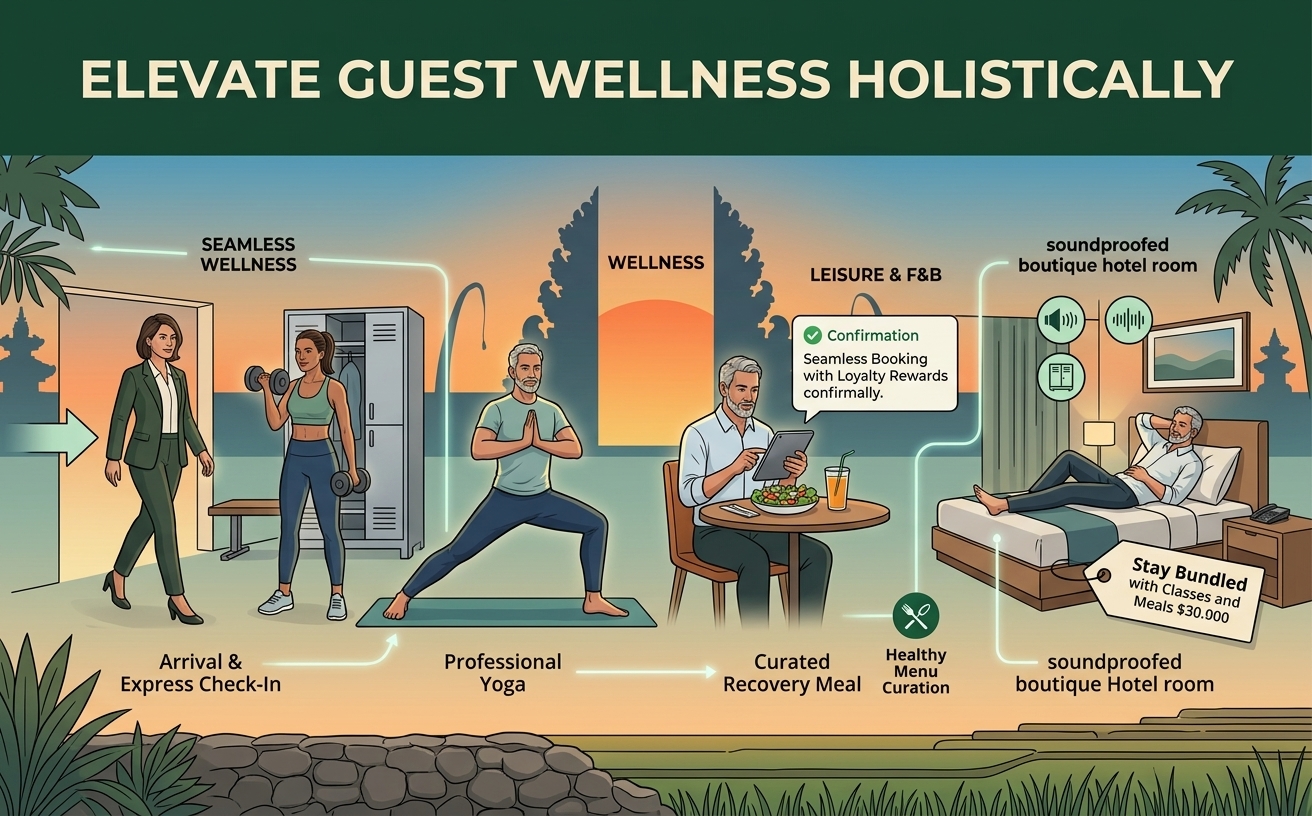
The integrated guest experience is the central selling point: guests expect continuity across fitness programming, room comfort, and café quality. A well-executed property coordinates scheduling, nutrition options, and recovery services so guests can move from a morning class to a healthy lunch and an afternoon rest without operational friction. This continuity supports higher perceived value and often justifies premium pricing for packages that bundle classes, meals, and stays. Attention to detail—soundproofing, locker availability, healthy menu curation, and quick check-in—directly impacts guest satisfaction and repeat visitation.
Beyond individual stays, the hybrid format encourages habitual use by local customers, creating a reliable base income outside of tourism seasons. Members who visit regularly become brand ambassadors, driving word-of-mouth and incremental bookings. Properties that emphasize seamless booking, loyalty rewards for combined services, and transparent pricing for bundled offers tend to see stronger conversion and longer guest lifecycles. The result is a guest experience that blurs the line between a lifestyle club and a boutique hotel.
Typical guest journey
- Arrival and express check-in with immediate access to locker and gym amenities.
- Structured fitness or wellness class followed by a curated recovery meal at the café.
- Relaxation in a boutique room or participation in evening community events hosted on-site.
Design and Operations: Making Multi-Use Spaces Run Smoothly
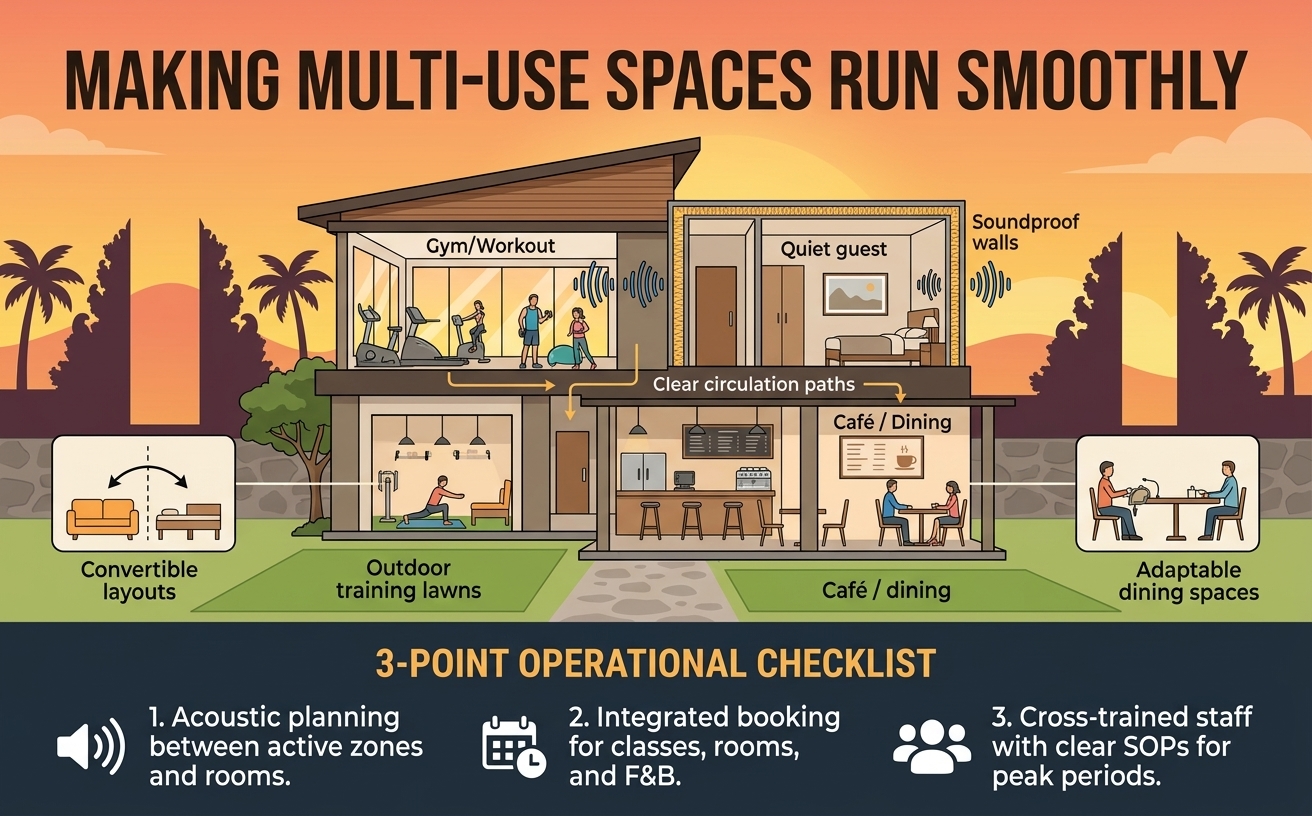
Designing for multiple functions requires deliberate zoning and operational protocols. Acoustic separation between workout spaces and guest rooms, clear circulation paths for public and private areas, and strategically placed service points for the café all reduce friction. Flexible layouts—convertible studios, outdoor training lawns, and adaptable dining zones—allow operators to scale offerings for events or peak seasons without major renovations. Thoughtful design improves guest perception of quality and supports efficient staffing models.
Operationally, integrated properties must synchronize schedules, housekeeping, food service, and class programming to avoid conflicts and ensure hygiene and safety standards. Staff cross-training is a common strategy: front-desk personnel versed in membership sign-ups, café staff who understand guest dietary needs, and fitness instructors aware of room availability. Technology plays a key role: booking engines that handle class reservations, room stays, and café pre-orders streamline operations and enhance data collection for revenue management and guest personalization.
Operational checklist
- Acoustic and privacy planning between active fitness zones and guest rooms.
- Integrated booking system for classes, rooms, and F&B to minimize double-booking.
- Cross-trained staff and clear SOPs for peak periods and event handling.
Commercial Impact: Revenue, Occupancy, and Marketing
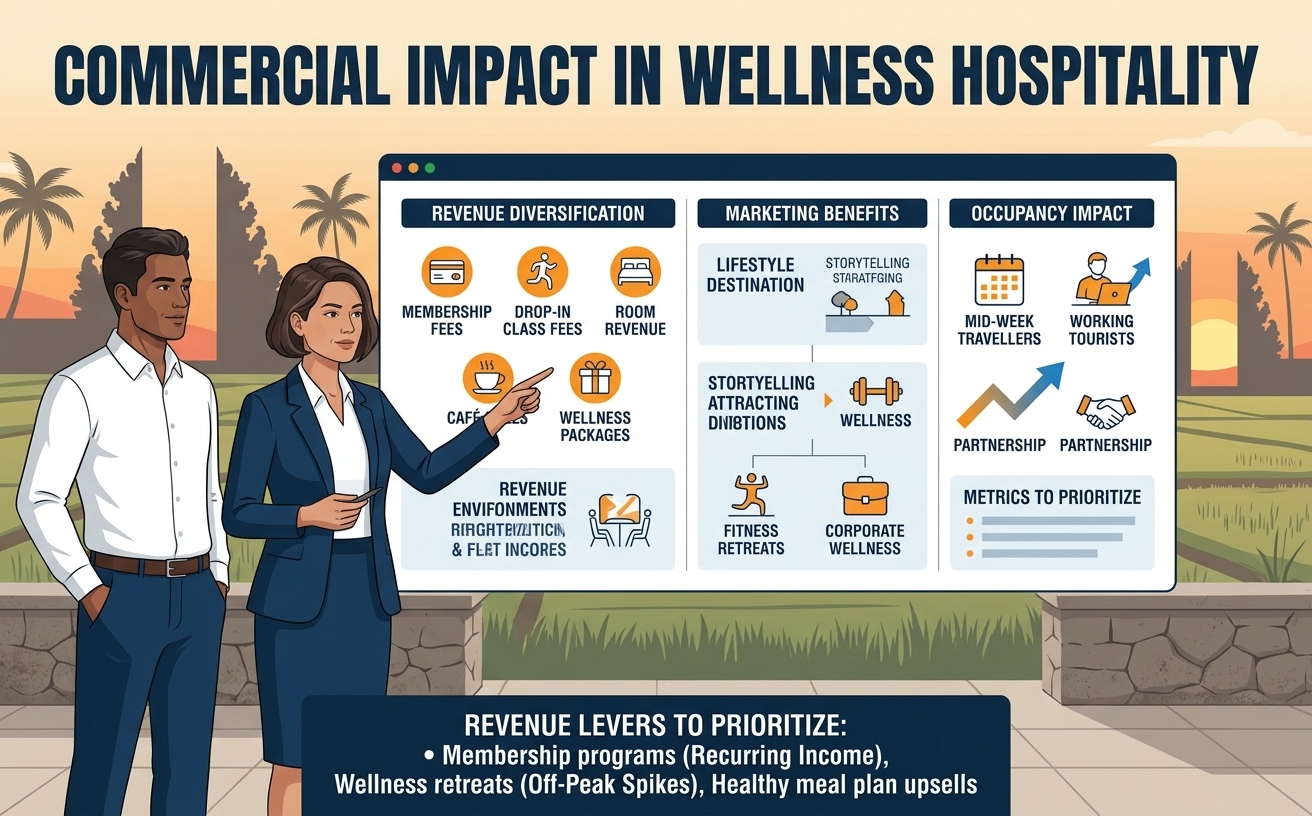
The hybrid model diversifies income and reduces reliance on seasonal room revenue alone. Revenue streams include membership fees, drop-in class fees, room revenue, café sales, and wellness packages. This diversification stabilizes cash flow and can increase average revenue per guest—particularly when operators successfully upsell class passes or meal plans at booking. Marketing benefits from richer storytelling: properties can position themselves as lifestyle destinations, attracting niche segments such as fitness retreats, corporate wellness groups, and health-conscious travelers.
From an occupancy perspective, the added amenities extend appeal to mid-week travellers and working tourists seeking wellness-friendly environments. Strategic partnerships—with local studios, nutrition brands, and tour operators—amplify reach and create bundled offerings that appeal to both domestic and international markets. Metrics that matter include membership retention rate, ancillary revenue per booking, and average length of stay; tracking these gives owners clearer signals for pricing and product development.
Revenue levers to prioritize
- Membership and subscription programs that guarantee recurring income.
- Wellness retreat packages and event-hosting for off-peak revenue spikes.
- F&B upsells and healthy meal plans tied to room reservations.
Implications for Property Owners and Investors
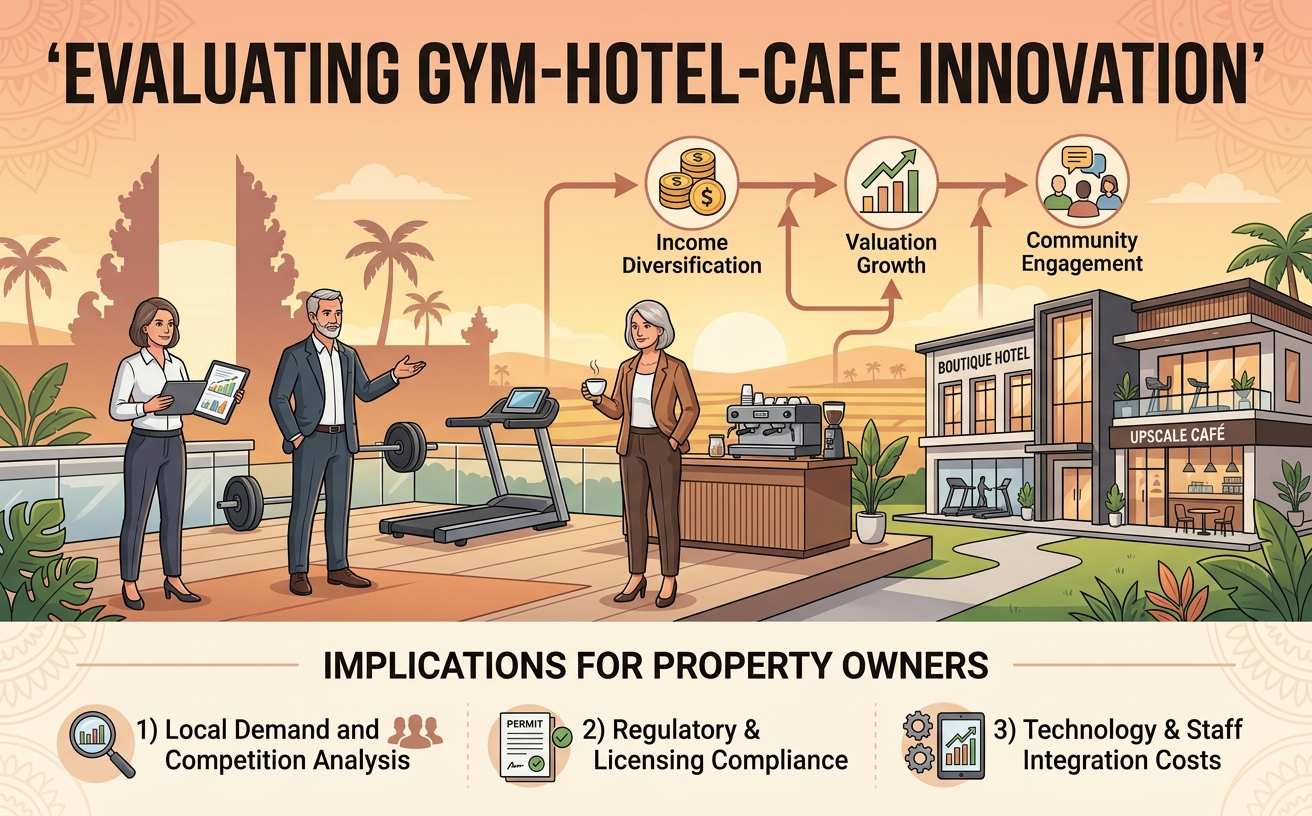
For property owners, the gym-hotel-cafe concept represents both opportunity and complexity. It can significantly enhance property valuation by proving diversified income and strong community engagement, but success depends on execution across hospitality, fitness programming, and food service. Owners should evaluate local demand, competition, and regulatory requirements—especially with respect to food licensing and health standards—before committing capital. Careful market testing through pop-ups or pilot memberships can validate the model with limited upfront investment.
Investors should look for operators with demonstrated experience in at least one of the three verticals and a clear plan to integrate the others. Operational KPIs—such as ancillary revenue contribution, occupancy uplift due to on-site amenities, and membership growth—are critical due diligence metrics. For existing villa and boutique hotel owners, adding a café or partnering with local fitness providers offers a lower-risk path to test the concept; scaling should follow demonstrated demand and consistent margins.
What owners should evaluate
- Local demand and competition for wellness spaces and specialty cafés.
- Regulatory and licensing costs for food service and public fitness facilities.
- Integration costs for technology, staffing, and facility upgrades.
Key Takeaways
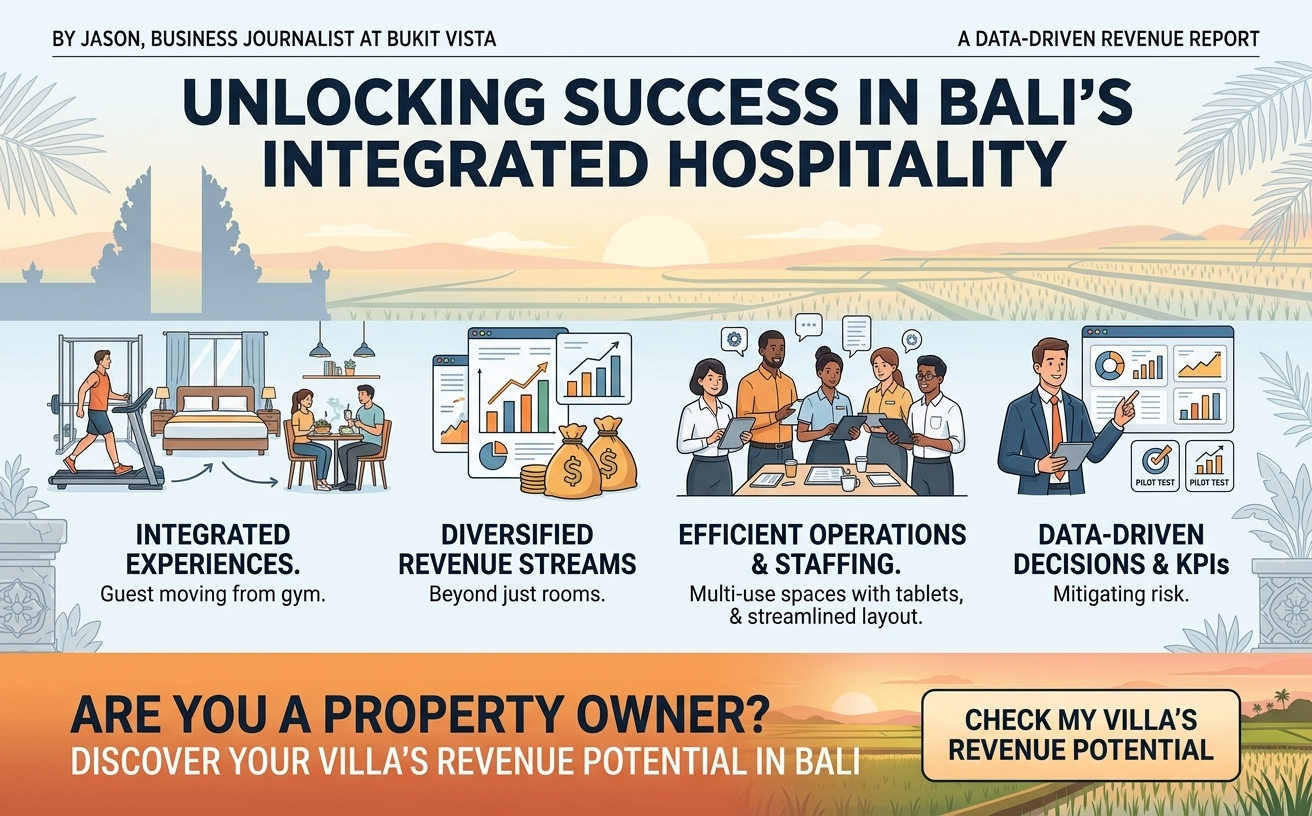
- The gym-hotel-cafe model meets rising demand for wellness-first travel and creates diversified revenue streams beyond room nights.
- Seamless guest experience—coordinated programming, healthy F&B, and room comfort—is essential for premium pricing and repeat visits.
- Design, technology, and cross-trained staff are operational must-haves to ensure efficient multi-use space management.
- Owners can mitigate risk by piloting services, partnering with local providers, and monitoring KPIs like membership retention and ancillary revenue.
Final word: Bali’s all-in-one gym-hotel-cafe trend reflects a broader shift toward lifestyle-driven hospitality where convenience, wellness, and community intersect. When executed well, the model strengthens resilience against seasonality, deepens guest loyalty, and opens new value pools for property owners and investors. For those considering the move, disciplined testing, strong partnerships, and operational rigor will determine whether the concept becomes a profitable long-term differentiator.
Jason, Business Journalist at Bukit Vista
You’re a property owner? Wondering What Could Your Bali Villa Really Earn?
Get a data-driven revenue projection based on your property type, area, and bedroom count. Discover your villa’s true earning potential in Bali.