

Bali is a place where relationships can begin quickly. Someone met at an event introduces another person the following week. A short retreat creates friendships between people from different countries, while founders, artists, hospitality professionals, and long-term residents move through overlapping communities.
The island makes meeting people relatively easy. Maintaining those relationships is another matter.
Bali is also highly transient. Some people stay for years, while others remain for only a few months before moving on. Schedules change, businesses demand attention, families grow, and new communities form. A person who once seemed central to everyday life can quietly become someone whose name appears only occasionally on a phone screen.
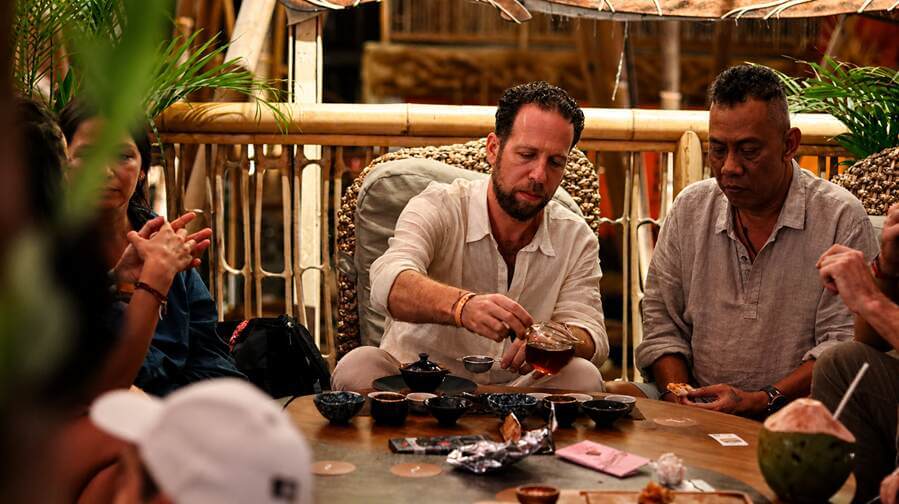
Relationships naturally move through periods of connection, disconnection, and reconnection. Yet people are often taught how to meet, introduce themselves, exchange contacts, and create opportunities, while far less attention is given to what happens afterwards.
One reflection describes the problem simply: “We’ve not been taught how important to reconnect and re-engage truly is.”
That idea feels particularly relevant in Bali because the island creates so many beginnings. People meet through business gatherings, school communities, ceremonies, dinners, wellness spaces, sports, hospitality, neighbourhoods, and mutual friends. At the time, everyone may genuinely intend to stay connected. Months later, the relationship may remain only as an old message thread.
The usual explanation is that people are busy. Yet maintaining a relationship does not always require much time. A thoughtful message, remembering someone’s project, congratulating them on a milestone, sharing something relevant, or simply asking how they are can be enough to reopen a connection.
When contact happens only because someone needs an introduction, client, recommendation, favour, or opportunity, the relationship can begin to feel transactional. Reconnection becomes stronger when it happens before anything is required.
This is something I have come to appreciate deeply in Bali. One relationship that reminds me of this is my connection with King Erwan of Kerambitan. Relationships like this show how knowing one person can gradually connect you to a place, a community, its traditions, its stories, and people you may never otherwise have encountered.

What makes such relationships meaningful is not necessarily how often we speak or see one another. Life changes. People travel. Responsibilities grow. Months can pass quickly. What matters is that the relationship still has a bridge back.
There is something powerful about returning after time has passed and discovering that the connection is still there. In a place as transient as Bali, that kind of continuity can create a deeper sense of belonging.
This is why relationship maintenance is different from collecting contacts. A contact can remain stored indefinitely. A relationship needs some form of attention.
Attention does not mean constant communication. Not every friendship requires weekly contact, and not every professional relationship needs regular meetings. Some people reconnect naturally after long periods and continue as though little time has passed. The important question is whether the relationship still contains genuine interest rather than being remembered only when it becomes useful.
Bali’s international community makes this particularly interesting because physical distance is normal. Friends may move between countries, and people who once saw one another every week can suddenly be thousands of kilometres apart. Maintaining connection becomes less dependent on geography and more dependent on effort.
There is a difference between keeping up with someone online and actually knowing how they are doing.
A more intentional approach can begin with a simple review of the people who have mattered during the past year. Who offered support during a transition? Who introduced a new perspective? Who made life in Bali feel more welcoming? Who shared knowledge without asking for anything in return? Who has quietly disappeared from the regular rhythm of life?
The purpose is not to turn relationships into another administrative task. It is to notice where attention has become overly focused on what is new. Modern social life rewards novelty, yet depth usually comes from repetition. Trust develops when people continue showing up after the first conversation has lost its novelty.
Over time, I have discovered that the people who matter most are not necessarily those met at the largest event or during the most exciting period. They are often the ones who remain connected through ordinary days, business changes, family responsibilities, travel, and different chapters of life.
Reconnection can also strengthen Bali’s wider community. A former neighbour may become a future collaborator, an old business contact may return with a new project, and a brief acquaintance may eventually become a close friend.
Not every relationship needs to be revived. Some connections have completed their purpose, and others may no longer feel aligned. Reconnection should not come from guilt or nostalgia alone. It is useful to ask why a relationship matters before trying to restore it.
One podcast reflection suggests looking back at people from six months, one year, or even longer ago and asking how the relationship felt, why it mattered, and whether there is a genuine reason to reconnect. Sometimes the answer will be no. In other cases, the answer may reveal that a valuable relationship has simply been neglected.
When the reason is genuine, the first step does not need to be complicated. A message can simply acknowledge that time has passed and that the person came to mind. There is no need to apologise excessively or explain every month of silence.
Perhaps the deeper lesson after learning how to connect and how to belong is learning how to return.
Bali will continue to introduce people to one another. New arrivals will come, communities will evolve, and unexpected conversations will continue to happen. Yet the strength of a network may depend less on how many new people enter it and more on whether the relationships already there are being remembered.
Who have you been meaning to reconnect with before you need a reason to contact them?