
Bali, famed for its tranquil beaches and vibrant culture, is also an island forged by fire. Beneath its lush green rice terraces and ornate temples lies a geological heart defined by volcanic activity. This dramatic landscape, shaped by millions of years of tectonic motion, is not just a backdrop for postcard-perfect views it is a living, breathing system that continues to mold the island physically, environmentally, and socially.
Volcanoes in Bali are both sacred and volatile. They are revered in the island’s spiritual traditions and feared for their destructive potential. Understanding Bali’s volcanic geography means recognizing the dual role these mountains play: as sources of life and as agents of sudden disruption.
The Volcanic Backbone of Bali
Bali lies along the Pacific Ring of Fire, a horseshoe-shaped zone encircling the Pacific Ocean, known for its high frequency of earthquakes and volcanic eruptions. This geological setting is the result of the subduction of the Indo-Australian tectonic plate beneath the Eurasian plate, creating a chain of active and dormant volcanoes across Indonesia, including several on Bali itself.
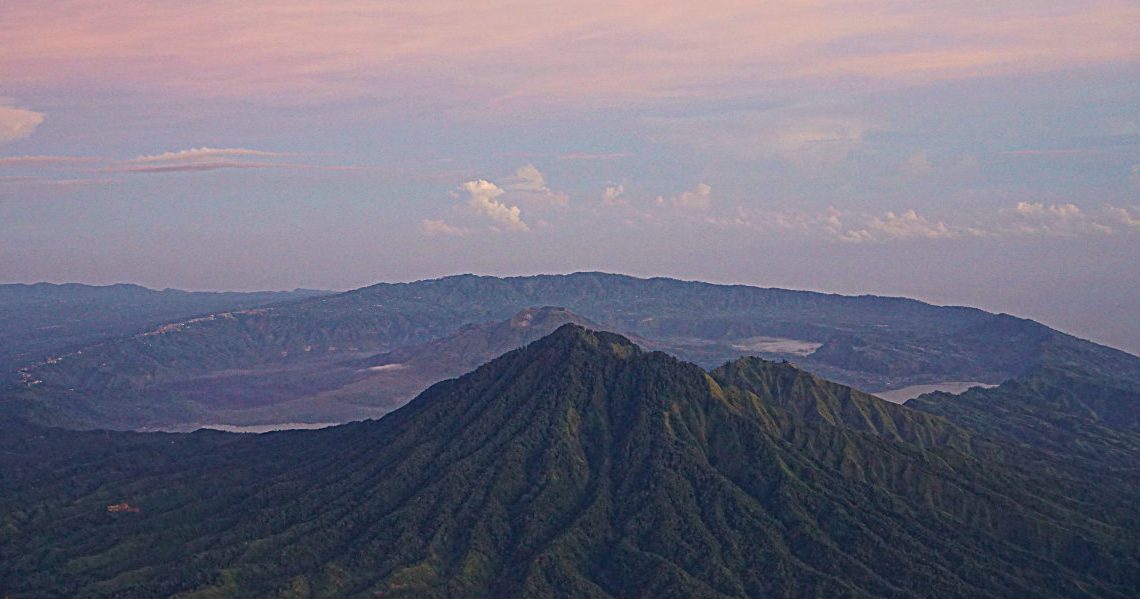
The most prominent of these is Mount Agung, standing at 3,031 meters, making it the island’s highest point. It dominates the eastern landscape and is considered the most spiritually significant mountain in Balinese Hinduism. Nearby is Mount Batur, a still-active volcano located within a massive caldera in the north-central region. While smaller in stature, Batur’s activity is more frequent, and its geothermal characteristics contribute to the unique terrain and hot springs in the area.
These volcanoes are not isolated peaks. Their presence influences soil fertility, weather patterns, and the flow of rivers across the island. Ash from past eruptions has enriched Bali’s soils, making them exceptionally suitable for rice cultivation. The combination of volcanic soil and a tropical climate has allowed agriculture to flourish, especially in the form of terraced farming systems that are as functional as they are picturesque.
Eruptions and Their Impact
While volcanoes bring life to Bali, they also bring disruption. Eruptions can and have upended communities, halted economic activity, and forced thousands from their homes.
Mount Agung, in particular, has a history of dramatic activity. Its 1963 eruption was one of the deadliest volcanic events in Indonesia’s history, claiming more than a thousand lives and displacing tens of thousands. Entire villages were destroyed by pyroclastic flows and lahars, and ash covered much of the island, affecting air quality, agriculture, and infrastructure for months.
In recent years, Agung reminded the island of its unpredictable power with renewed activity beginning in late 2017, prompting evacuations, flight cancellations, and widespread concern. Although the eruption was less catastrophic than in the past, it exposed vulnerabilities in emergency response systems, tourism dependency, and rural infrastructure.

The implications of an eruption are not confined to lava flows or ash fall. Volcanic activity affects nearly every aspect of island life from health and transportation to tourism and agriculture. Airborne ash can close airports and disrupt flight paths, leading to economic losses and logistical chaos. Farmers may see crops wither under layers of volcanic dust, while residents near the volcano face weeks or even months in evacuation shelters, uncertain of when they can return home.
Social and Cultural Dimensions
Bali’s relationship with its volcanoes is not just geological it is deeply spiritual. Volcanoes are considered the dwelling places of gods and ancestors. Mount Agung, in particular, is believed to be the spiritual axis of the island, and the Besakih Temple, Bali’s most important Hindu site, sits on its slopes.
This reverence informs how Balinese people view eruptions not merely as natural disasters, but as expressions of cosmic balance. Ceremonies and offerings are made regularly to appease the forces believed to reside within the mountains. Even in times of crisis, traditional beliefs often shape community responses, combining with official evacuation plans and scientific advisories to create a uniquely Balinese approach to disaster management.
This spiritual bond also influences settlement patterns. Many villages and temples are built on or near volcanic slopes despite the risks, guided by religious principles and ancestral traditions. The result is a cultural landscape interwoven with the island’s geological identity one that prioritizes harmony with nature, even when that nature turns violent.
Adapting to Volcanic Risk
The recurring threat of volcanic activity has prompted efforts to improve Bali’s disaster preparedness. Government agencies have installed early warning systems, conducted evacuation drills, and created exclusion zones around active volcanoes. Scientific monitoring, using seismographs, drones, and satellite imagery, helps track changes in volcanic behavior.
Community education is also an evolving focus. Awareness campaigns aim to balance respect for traditional beliefs with modern understanding of volcanic hazards. Local leaders, religious figures, and disaster experts often work together to ensure that information is delivered in ways that resonate with both scientific logic and spiritual values.
Still, challenges remain. The rugged terrain, limited road access in remote areas, and the sheer unpredictability of eruptions make evacuation and response efforts complex. During major volcanic episodes, shelters can become overcrowded, resources scarce, and coordination strained. Balancing long-term risk reduction with immediate human needs is a continuous process.
A Landscape of Resilience
Despite the danger, Bali’s volcanic geography is also a testament to resilience. Villages have been rebuilt, fields replanted, and traditions maintained in the wake of eruptions. The people of Bali, accustomed to living under the shadow of volcanoes, continue to draw strength from their land and their spirituality.
These mountains define not just the contours of the island, but the rhythms of life itself. From fertile soils and holy temples to periods of upheaval and renewal, Bali’s volcanoes shape a landscape that is constantly in flux beautiful, fragile, and powerful.
In this dynamic environment, the challenge is not to conquer nature, but to live with it. And for Bali, that means continuing to honor the volcanoes that both bless and test the island, embracing them as a central part of its identity.