
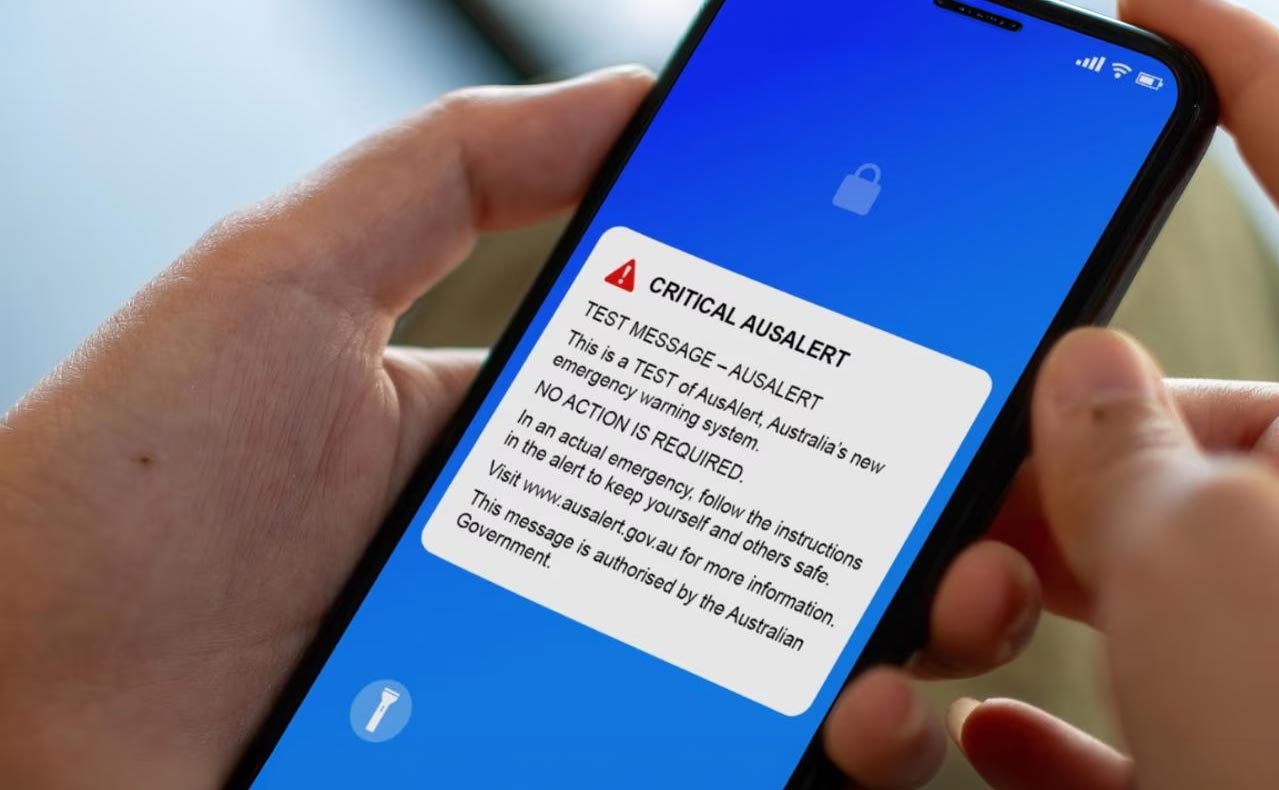
Australia has officially launched AusAlert, a new nationwide mobile emergency warning system that uses cell broadcast technology to deliver life-saving alerts directly to mobile phones during disasters. The new system is expected to strengthen emergency response across the country and could offer valuable lessons for disaster-prone nations such as Indonesia.
Unlike traditional SMS notifications, AusAlert uses location-based cell broadcast technology to send warnings simultaneously to every compatible mobile device within an affected area. Because the system does not rely on individual phone numbers, emergency messages can still be delivered quickly even when mobile networks are congested during large-scale disasters.
The alerts are designed for life-threatening emergencies, including bushfires, floods, cyclones, severe storms and other major incidents. Recipients will hear a distinctive warning tone accompanied by vibration, allowing alerts to cut through silent mode or Do Not Disturb settings and immediately capture attention.
Australian authorities have begun nationwide testing ahead of the system’s full implementation later this year. The technology is intended to improve the speed, reach and reliability of emergency communications, particularly during fast-moving disasters where every minute can make a difference.
The introduction of AusAlert comes as Australia continues to face increasingly frequent extreme weather events and natural disasters. Officials say the new emergency warning system is designed to ensure people receive critical information as quickly as possible, regardless of which mobile network they use.
While emergency management experts have broadly welcomed the technology, some domestic violence advocacy groups have expressed concerns that the mandatory alert tone could unintentionally expose people who rely on hidden mobile phones for their personal safety. Australian authorities have acknowledged those concerns while maintaining that the system’s primary purpose is to protect lives during emergencies.
Beyond Australia, the rollout of AusAlert is also likely to attract attention from countries exposed to similar disaster risks.
Indonesia, one of the world’s most disaster-prone nations, regularly experiences earthquakes, volcanic eruptions, tsunamis, floods and extreme weather. Emergency information is currently distributed through multiple channels, including the Meteorology, Climatology and Geophysics Agency (BMKG), television, radio, sirens, mobile applications and SMS-based notifications.
However, Australia’s adoption of a nationwide cell broadcast system highlights how emerging technologies can improve the speed and precision of public warnings by reaching everyone within an affected location almost instantly.
For Bali, where millions of international visitors travel each year while living alongside active volcanoes and coastal areas vulnerable to tsunamis, rapid and reliable emergency communication remains a critical part of disaster preparedness. Although Australia and Indonesia face different emergency management challenges, the launch of AusAlert is likely to contribute to broader discussions about how technology can better protect communities when disasters strike.
Disclaimer: While every effort has been made to ensure accuracy, this article may contain minor inaccuracies
in names, locations, or event details. Readers are welcome to contact the editorial team for any clarification.