
Bali’s landfill closure has been one of the biggest local news stories this month. The partial closure of Suwung TPA, the island’s biggest landfill, has sparked debate across the province and has been something of a shock to the island’s already strained waste management operations.
While waste management isn’t typically something tourists have to contend with when planning a vacation, in Bali, it is something that tourists are better off being aware of.
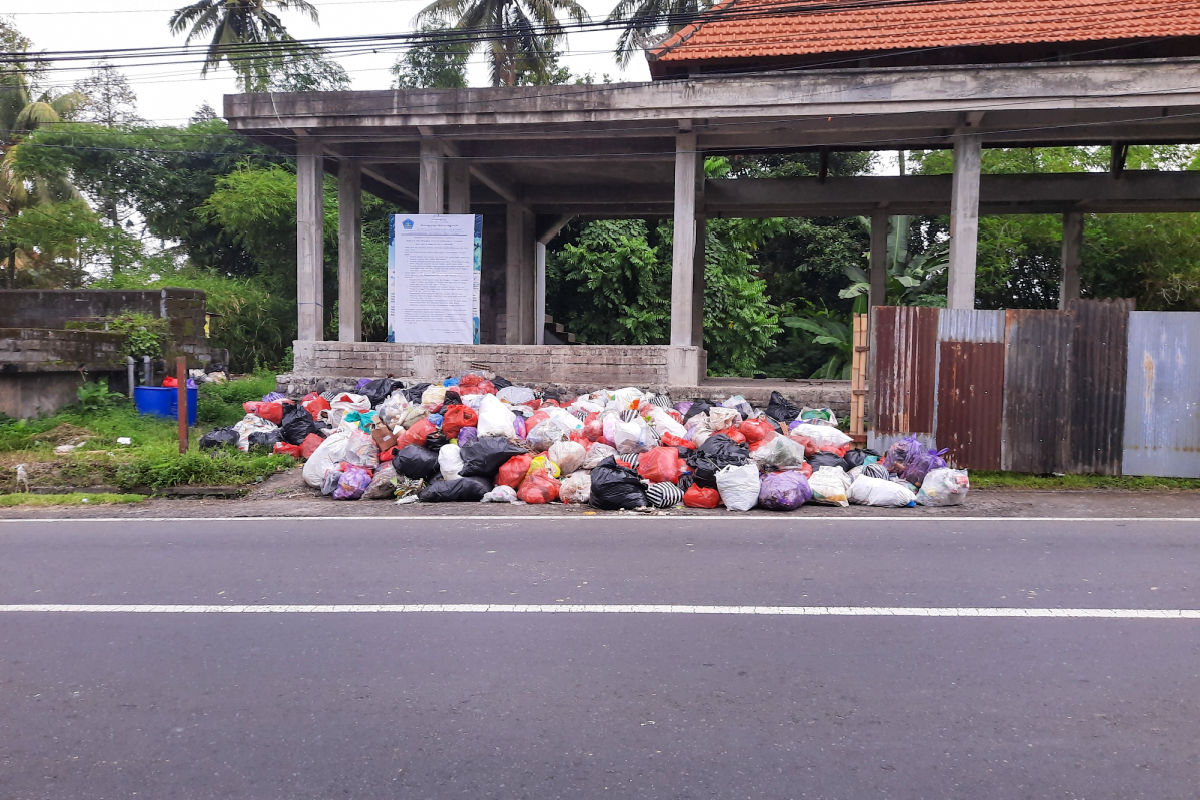
As of 1st April 2026, Bali’s biggest landfill, the Suwung TPA, officially stopped receiving organic waste, which accounts for upwards of 65% of all waste produced in Bali.
The site is set to be officially closed on 31st July 2026, but with the system already buckling under pressure, it’s too early to say whether that deadline will be met. Especially since contingency allowances keep being made to enable Suwung TPA to receive residual waste, and in some cases even mixed organic waste.
The effects of Suwung TPA’s closure are evident and noticeable all across the island. While piles of trash build up in areas like Kuta, across the island communities are turning to burning trash that cannot be collected by garbage truck operators and is driven to Suwung TPA. have been piling up at spots around the Kuta Beach resort, including in areas where tourists typically have pedestrian access.
Speaking to reporters, Kuta Beach Tourist Attraction Manager I Nyoman Arya Arimbawa, confirmed that teams have been responding to the issue but that options are limited. He told the media, “We’ve been picking up the debris since this morning. Some areas, like in front of the coffee shop and the skatepark parking gate, have been removed, but some remain in front of the hotel on the border with Legian.”
Arimbawa noted that the piled bags of trash were generally mixed organic and non-organic waste, and therefore not eligible to be sent to Suwung TPA and other nearby landfill sites. He explained that as soon as they clear it up, more is being dumped, with leaders now concerned that the trash is coming from outside the Kuta area.
Arimbawa explained, “After inspection by officers, it appears the waste came from outside. We have coordinated with the traditional village head and the sub-district office to follow up with the relevant agencies.”
He added, “We’ve started collecting it, but we’re still looking for additional vehicles for the cleanup.”
He confirmed that the Kuta Traditional Village is working with the Environment and Forestry Agency (DLHK) and has implemented a shared fleet system for the use of waste collection trucks. Garbage truck rental fees are quite high, around IDR1.5 million per truck.
He concluded, “Essentially, we are continuing to expedite the handling and coordinating with relevant agencies to prevent similar congestion from recurring in the prime tourist area of Kuta Beach.”
Over in Sanur, hotel managers have spoken out about the issues and reiterated that they are doing all they can to take responsibility for tourism business waste production. Speaking to reporters, Puri Santrian Resort Manager, I Made Suardana, confirmed that the hotel has partnered with a private company to manage all organic waste. He confirmed, “Organic waste management has been carried out with a third party. Most importantly, the processed waste is not simply thrown away.” He confirmed that in just one day, the complex, including Puri Santrian, Griya Keniten, and Village Restaurant, can generate half a truckload of waste.
Suardana noted the hotel provides five types of waste bins for waste sorting. Waste from rooms is sorted by staff, then collected and re-sorted before being handed over to management.
He confirmed that the hotel is working to eliminate the use of plastic bottles in rooms and replace them with reusable glass bottles. He shared, “We have long used glass bottles and have collaborated with suppliers to recall them so they can be reused.”
While many in the tourism sector are working to mitigate waste management issues at source, the reality is that the situation at Suwung TPA and other landfill sites across Bali may continue for some time.
The problem cannot be solved overnight, and while a new Waste to Energy Facility is set to be built in the next year, whose leaders’ help will go a long way in resolving the issues province-wide, construction on the site has yet to begin.
Discover more from The Bali Sun
Subscribe to get the latest posts sent to your email.