
The natural sounds around me are worth far more than being mere side dishes of nature. When I lie in bed, I hear crickets chirping and tree frogs calling into the dark. I hear the wind brushing through the trees, and now and then the rain drumming on leaves, steady and unhurried, as if it has all the time in the world.
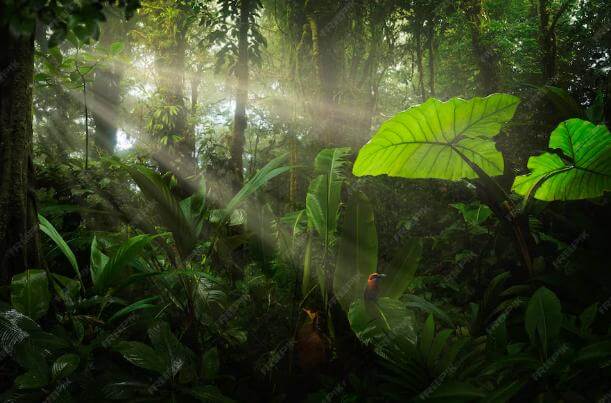
Even as a child, I listened to the rush of firs and pines, to the birds in the forest—the hammering of woodpeckers, the deep, ancient call of the capercaillie. Back then, I accepted it all as an everlasting constant. It never crossed my mind that bark beetles and shifting environmental conditions could one day kill pine forests and silence the capercaillie for good.
I took the forest itself, and its sounds, as something self-evident—something that stood above humanity, part of Earth’s basic equipment, permanently installed.
Now I’m a few years older, and better informed. And in the process, I had to learn that WOOD is the most valuable resource in the universe. Precious stones, diamonds, and gold exist on thousands of planets—but nowhere else are there trees that grow, produce wood, whose leaves breathe and supply humanity with oxygen. Where there is wood, there is life. There you can breathe. There you can find something to eat.
On planets made only of gold and gemstones, you can marvel. And then… that’s about it.
Back then, in California, I thought of “tree huggers” as slightly over-the-top nostalgic hippies who wanted to protect their forests from logging so they could keep picking berries and building log cabins. Today, I see forests and wooded areas as the highest priority on Earth to protect. That includes Bali.
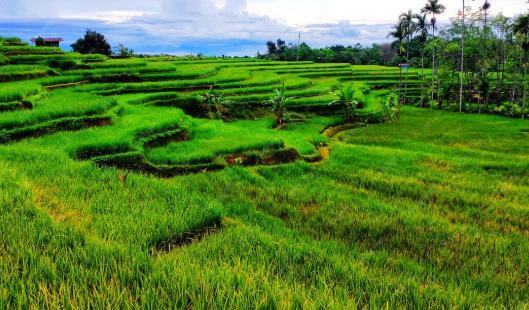
Before a single “tourist” ever set foot on the island—Arab and European traders included— the locals were already busy cutting down trees and carving terraces into hillsides so their beloved RICE could be grown. The obsession with rice spread far beyond the islands, leaving very little forest behind. It has reached the strange point where no building permit is granted on a rice terrace—but it is granted on forested land, provided the trees are first cut down so construction can begin.
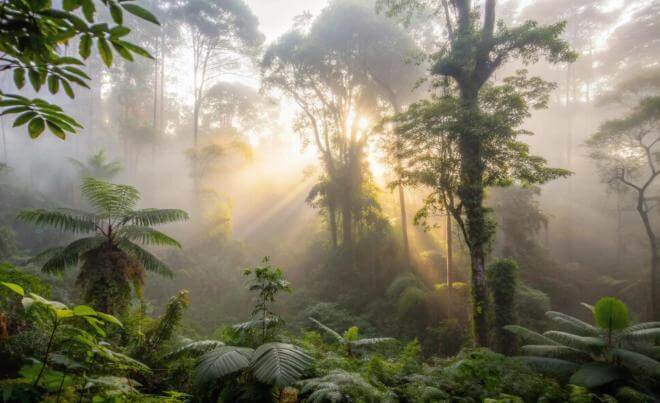
First the forests are destroyed for rice cultivation. Then, when someone later disrupts the resulting monoculture, they are told that “the rice fields were there first.” Which isn’t true. First, there were forests. If forest farming were practiced—if not only rice were grown—there would be more nature left over, for things other than rice.
The sounds of nature—the trilling of birds, the calling and answering, the chirping and croaking, the rustle of trees, the flow of water—offer me sanity. When life becomes too loud, when too many sound layers and mental layers pile up and overlap, I retreat to these timeless sounds, which were here long before humanity added far more noise than nature ever produces.
Nature’s sounds are stable coins in the jungle of human creations. They anchor me in a network of normality.
When I’m cut off from them through artificial influences, I lose my balance. I grow nervous, irritable. I get wired by electronics, hyped up by 440-hertz music, beaten down by low bass thumps and squealing loudspeakers in supermarkets and shopping malls.
Much of what I once considered the standard repertoire of planet Earth now feels rare—and sacred, even healing.
Beyond life-essential substances like wood and water, I value the interdependence of life itself: food chains and their disruption through clear-cutting of habitats; chains of events that make us aware of earthly connections—ocean warming through CO₂ emissions, water shortages where forests no longer store moisture in their roots, landslides following deforestation.
Human interventions in nature—ranging from seemingly harmless drilling in Chile to floods on another continent—are interventions in the entire network, in the field of humanity itself. Everything we do has consequences in the field in which we live. Ancient Balinese wisdom has always known this.
It understands existence as intertwined levels of being—each influencing, sustaining, and shaping the others. Earth, plants, and human beings are not separate domains but a living triangle, bound together in mutual responsibility.
This understanding is called Tri Hita Karana: the three sources of well-being.
Harmony with the natural world.
Harmony with the plant and living realm that nourishes it.
Harmony among human beings who depend on both.
The earth offers ground, water, minerals, stability. Plants translate sunlight into food, oxygen, shelter—into life that can be shared. Humans, gifted with awareness and choice, carry the responsibility to protect, cultivate, and reciprocate.
When one level is ignored or exploited, imbalance follows—quietly at first, then unmistakably. Rivers dry, hillsides slide, forests fall silent. The effects do not remain local; they ripple outward, through ecosystems, cultures, and generations. But when all three levels are honored, something else emerges.
The forest speaks again.
The land regenerates.
And human beings remember their place—not above nature, not outside it, but within its rhythm.
Perhaps the natural sounds I retreat to—the insects, the wind, the rain—are not merely soothing. Perhaps they are reminders. A language older than concepts, older than policy, older than profit.
They whisper a simple truth:
That sanity lies in balance.
That life thrives in reciprocity.
And that harmony is not something we invent—but something we return to.