
Global jet fuel spikes and sharply higher airfares are driving regional carriers to cut schedules, pushing Bali flight frequencies toward near-record lows. I am unpacking content from Bali Business Review on YouTube to highlight the immediate data points and what they mean for Bali property owners and managers.
Hi, I’m Jason, a Business Journalist at Bukit Vista, and I’ll be unpacking analysis from Bali Business Review. Today, we’ll dive into the impact of falling flight frequencies on Bali property to offer clear, data-driven insights.
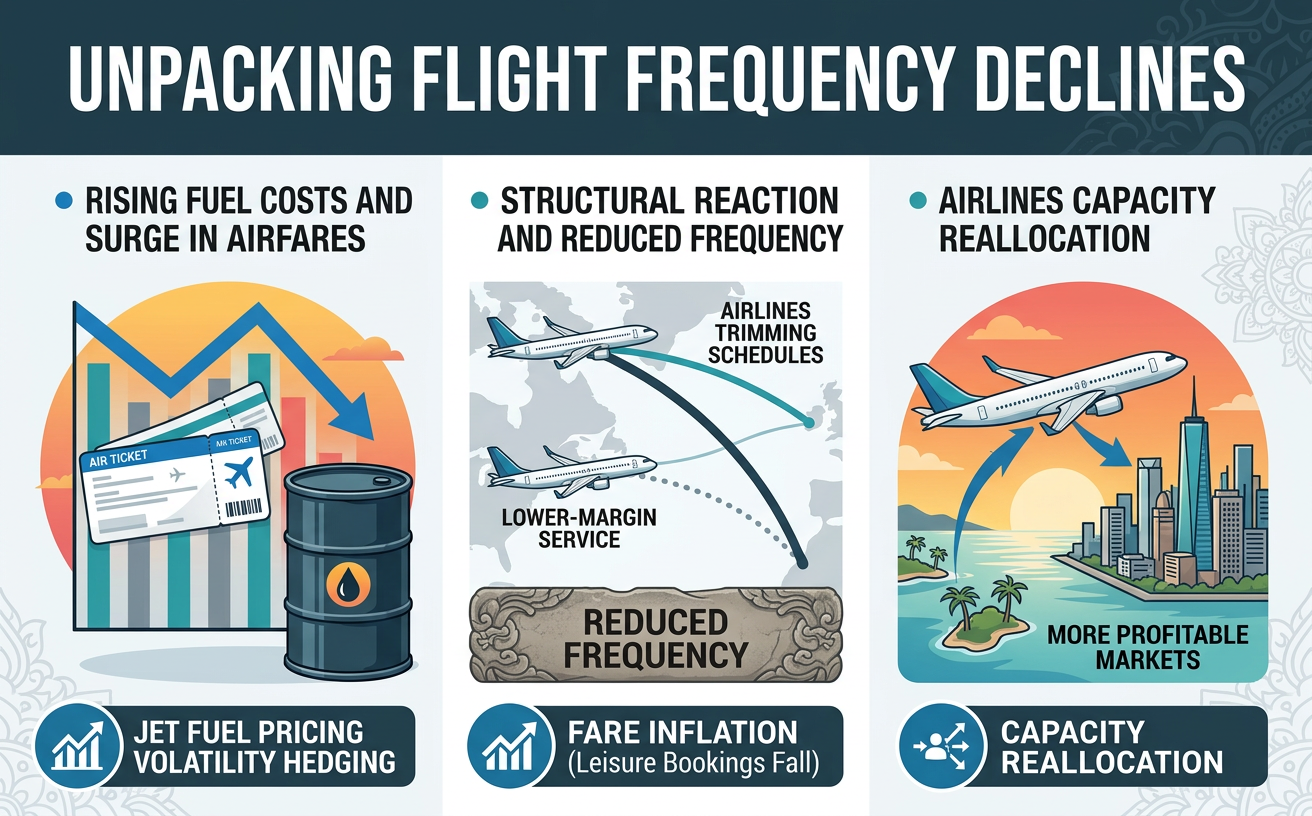
Why flight frequencies are falling
Airlines across the region are trimming schedules in response to two compounding pressures: rising jet fuel costs and a surge in airfares that suppresses discretionary travel demand. Reduced frequency is a structural reaction—airlines prioritize routes with the strongest yield while deferring lower-margin services. For Bali, this means fewer seats available during recovery windows when tourist demand would normally re-accelerate.
Key drivers to monitor
- Jet fuel price volatility and hedging policies among regional carriers.
- Fare inflation reducing short-haul and long-haul leisure bookings.
- Airline capacity reallocation toward more profitable markets.
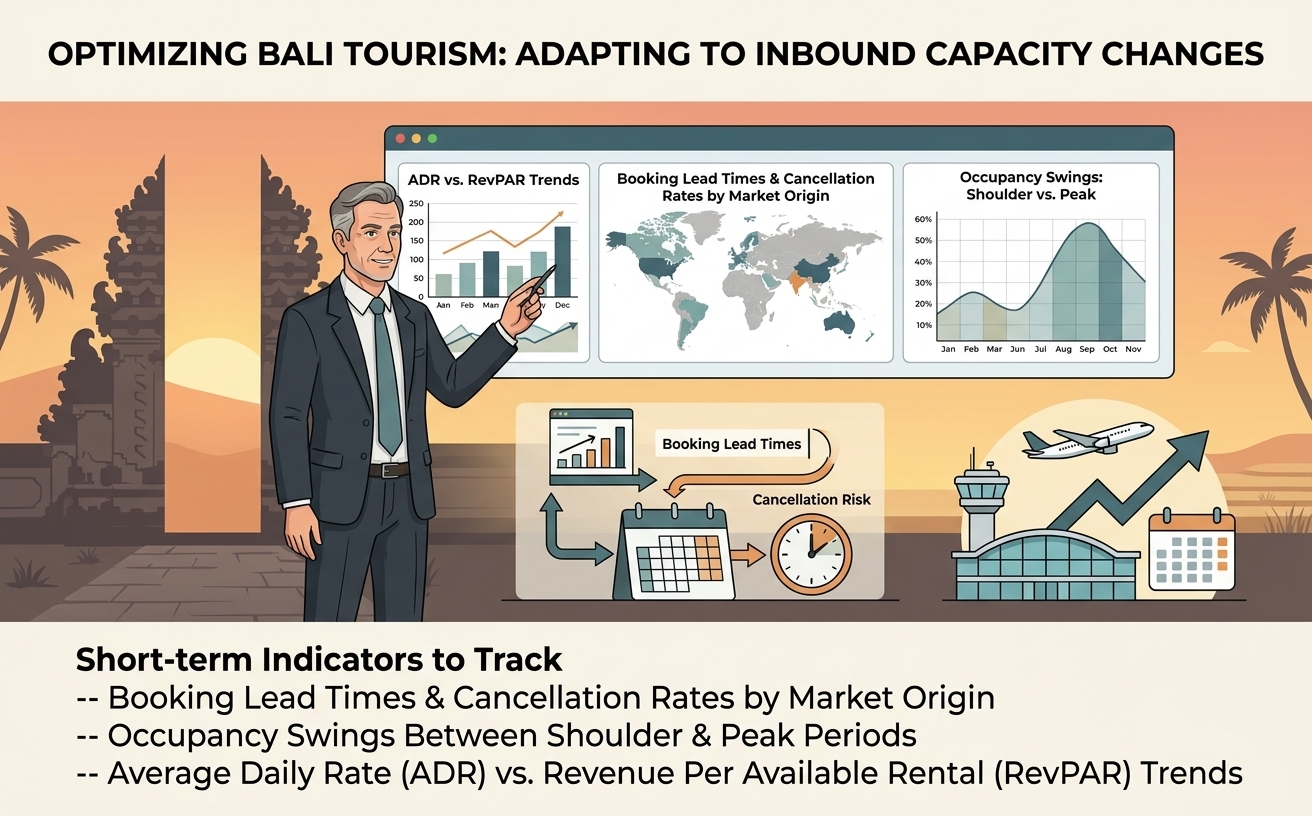
Immediate effects on Bali tourism and occupancy
Lower flight frequency tightens inbound capacity and narrows the pool of international travelers who can book competitively priced travel. This reduces booking velocity and increases reliance on higher-yield guests willing to pay premium fares, which can create uneven occupancy patterns across the year. Consequentially, short booking windows and higher cancellation risk become more common.
Short-term indicators property managers should track
- Booking lead times and cancellation rates by market origin.
- Occupancy swings between shoulder and peak periods.
- Average daily rate (ADR) vs. revenue per available rental (RevPAR) trends.
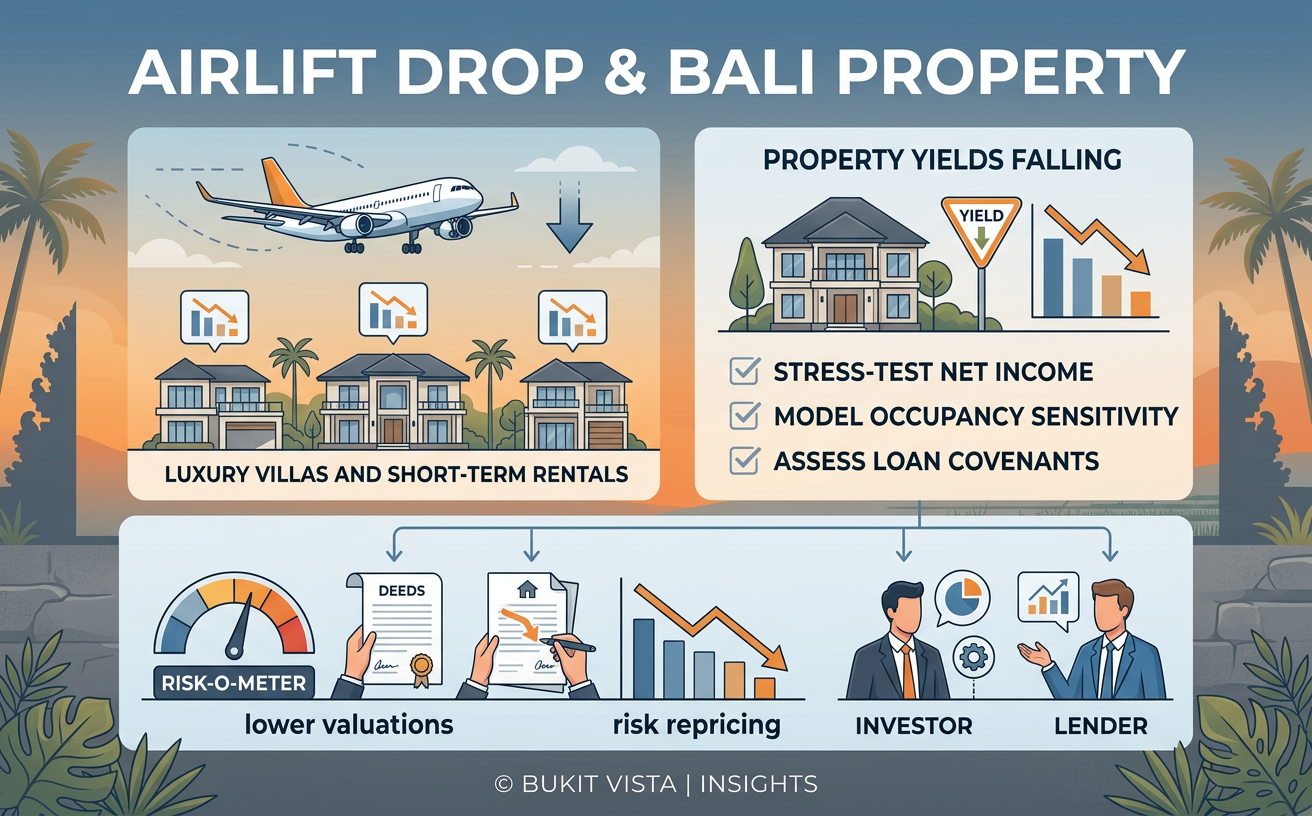
Revenue and valuation impacts for Bali property
When airlift drops, revenue compression follows—especially for villas and short-term rentals dependent on international arrivals. Lower occupancy and intermittent high-fare segments can reduce annualized revenue, eroding yields and pressuring valuations that assume stable tourism connectivity. Lenders and investors may reprice risk for assets with high exposure to international leisure demand.
Revenue management checklist
- Stress-test net operating income under reduced arrival scenarios.
- Model occupancy sensitivity to frequency and fare changes.
- Assess loan covenants and refinancing timelines against potential revenue dips.
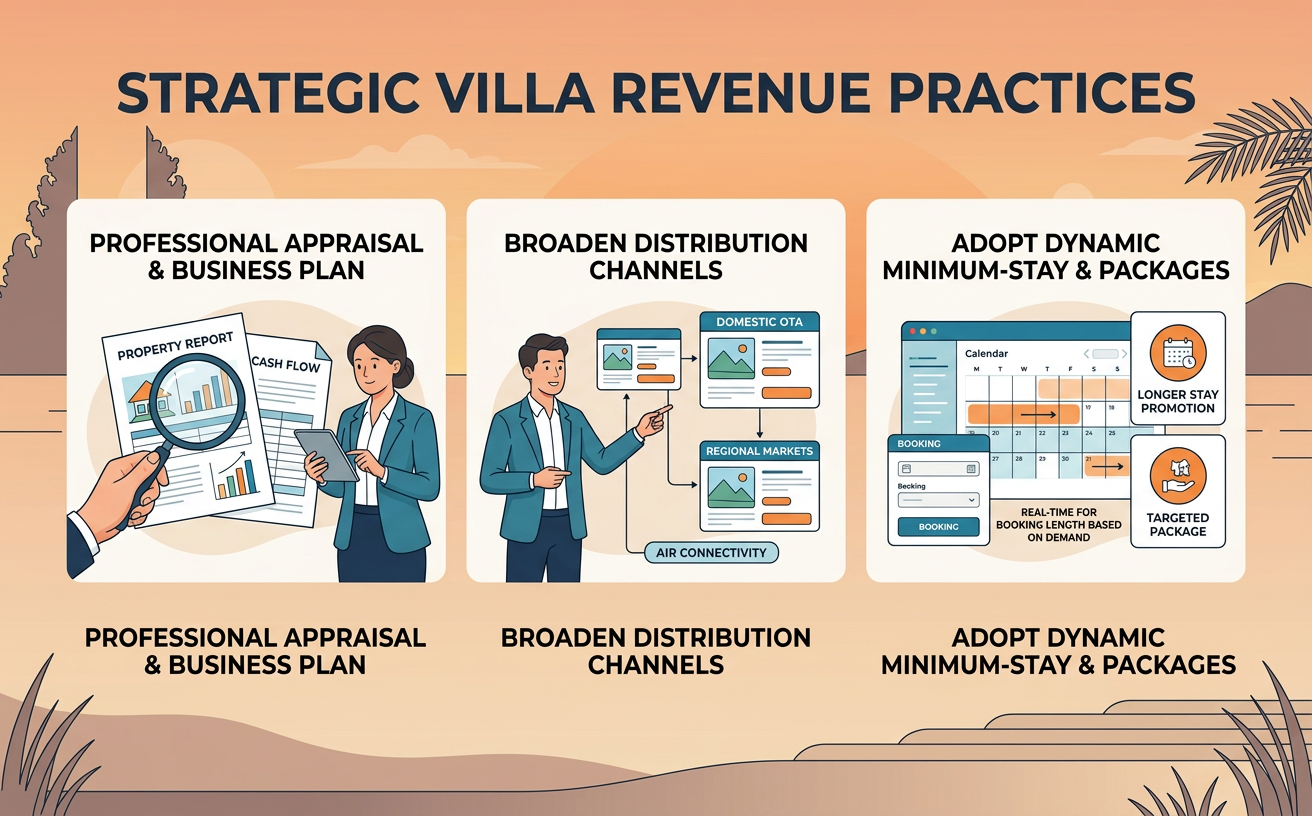
Practical strategies for villa owners and managers
Owners should shift from passive reliance on inbound air connectivity to active revenue resilience strategies: diversify market channels, target domestic and regional travelers, and implement dynamic pricing tied to real-time arrival capacity indicators. Operational cost controls and flexible booking policies can preserve margins while marketing pivots maintain demand. Professional appraisals and business plans help quantify exposure and guide tactical shifts.
Action steps to increase resilience
- Secure a professional property appraisal and a detailed business plan.
- Broaden distribution to domestic OTA channels and regional feeder markets.
- Adopt dynamic minimum-stay rules, promotions for longer stays, and targeted packages.
Policy, airline scheduling, and the market outlook
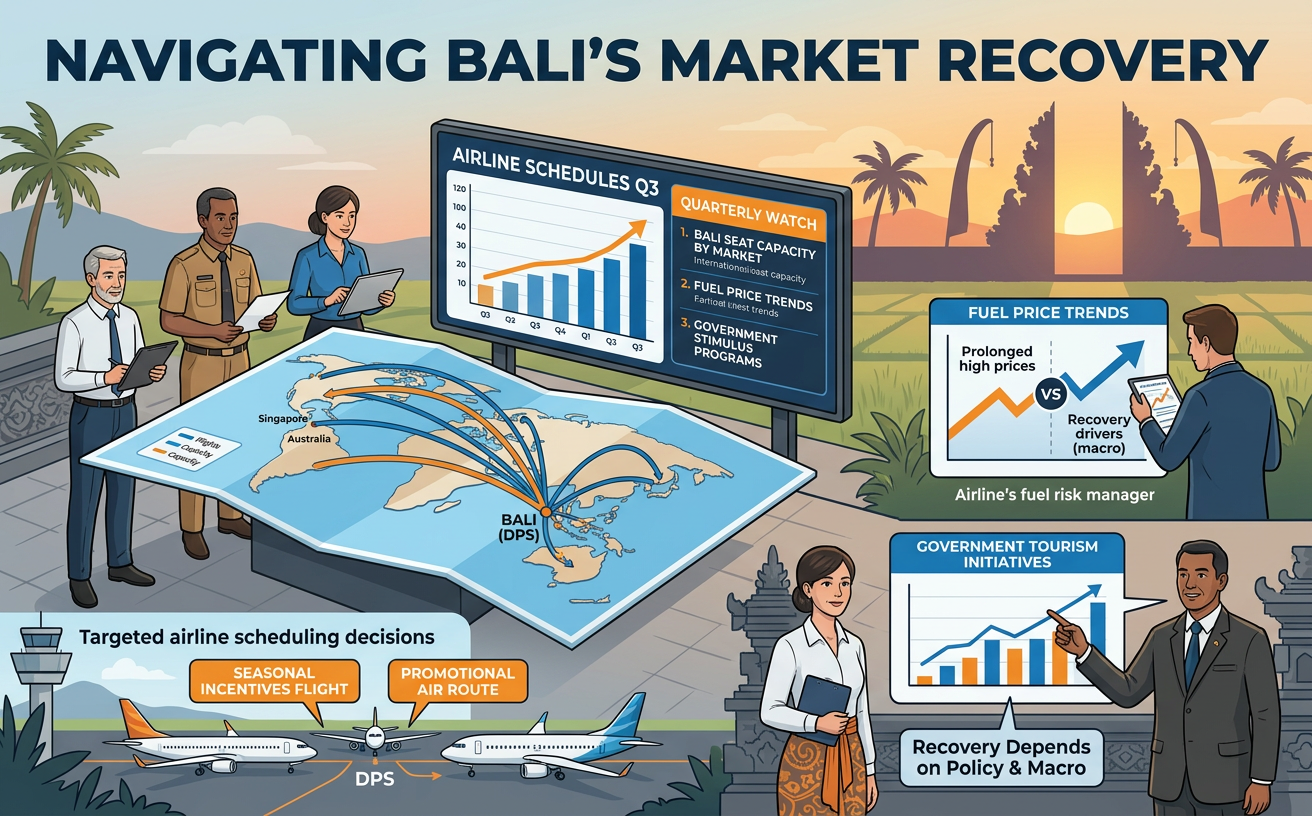
Recovery depends on both macro drivers—fuel prices, global demand—and targeted airline scheduling decisions. Public policy that supports connectivity, seasonal incentives, or promotional air routes can accelerate recovery, while prolonged fuel price pressure could keep frequencies suppressed. Owners must track airline schedule announcements and government tourism initiatives as leading indicators for market recovery.
What to watch this quarter
- Airline schedule releases and seat capacity to Bali by market.
- Fuel price trends and regional airline hedging reports.
- Government tourism stimulus or air-route support programs.
Key Takeaways
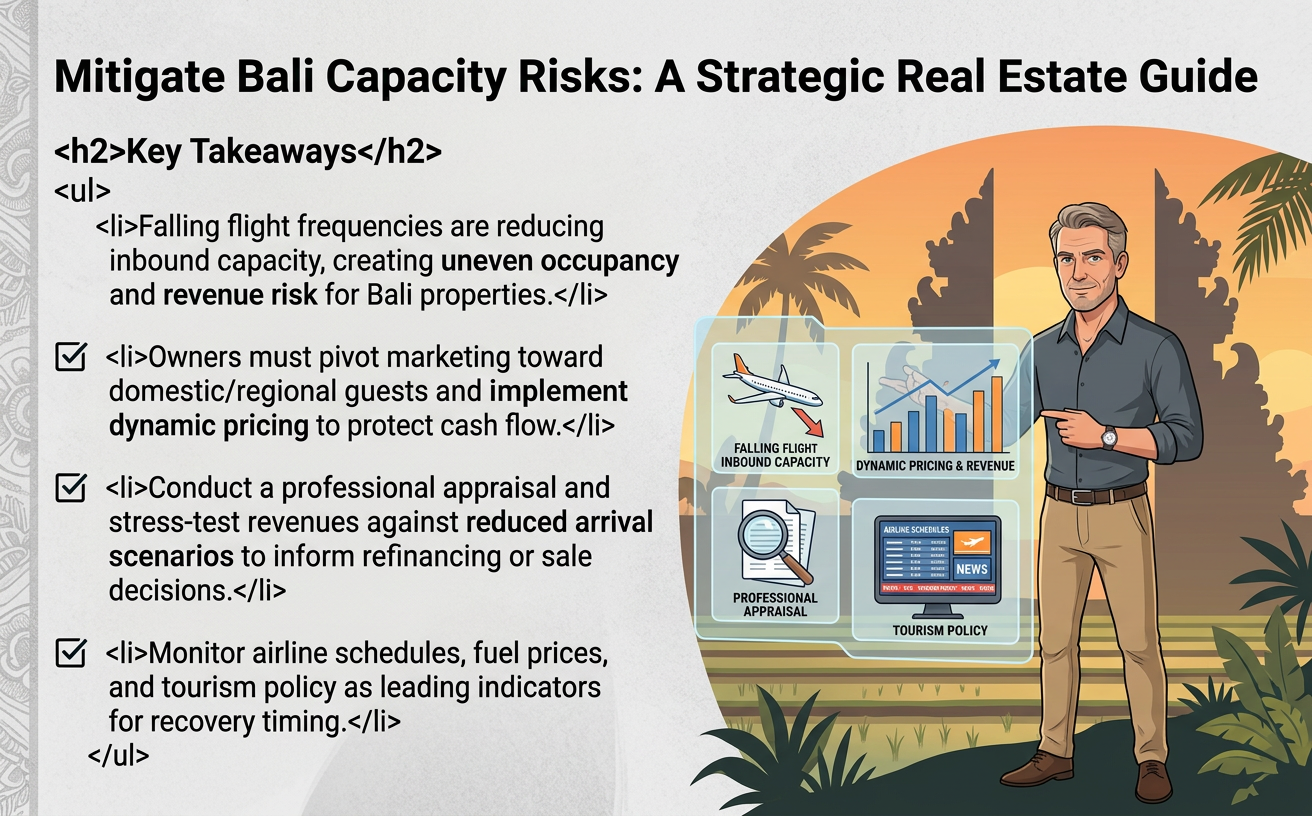
- Falling flight frequencies are reducing inbound capacity, creating uneven occupancy and revenue risk for Bali properties.
- Owners must pivot marketing toward domestic/regional guests and implement dynamic pricing to protect cash flow.
- Conduct a professional appraisal and stress-test revenues against reduced arrival scenarios to inform refinancing or sale decisions.
- Monitor airline schedules, fuel prices, and tourism policy as leading indicators for recovery timing.
Final word: the decline in flight frequencies is a clear structural risk for Bali real estate that requires proactive revenue management, diversification of demand sources, and updated financial planning. Property owners who act now—through appraisals, pricing changes, and targeted marketing—will be better positioned to protect earnings and value.
Jason, Business Journalist at Bukit Vista
You’re a property owner? Wondering What Could Your Bali Villa Really Earn?
Get a data-driven revenue projection based on your property type, area, and bedroom count. Discover your villa’s true earning potential in Bali.