
Unpacking content from Bali Business Review on YouTube, this report examines why Kayu Aya Street in Seminyak—famed for nightlife, restaurants and shopping—appears unusually quiet during daytime hours. We highlight observable footfall patterns, business-hour shifts, tourism behaviors and revenue implications for villa owners and hospitality operators.
Hi, I’m Jason, a Business Journalist at Bukit Vista, and I’ll be unpacking analysis from Bali Business Review. Today, we’ll dive into Seminyak daytime dynamics, nightlife contrast, and Bali property revenue optimization to offer clear, data-driven insights.
Daytime Atmosphere on Kayu Aya: A Quiet, Curated Street
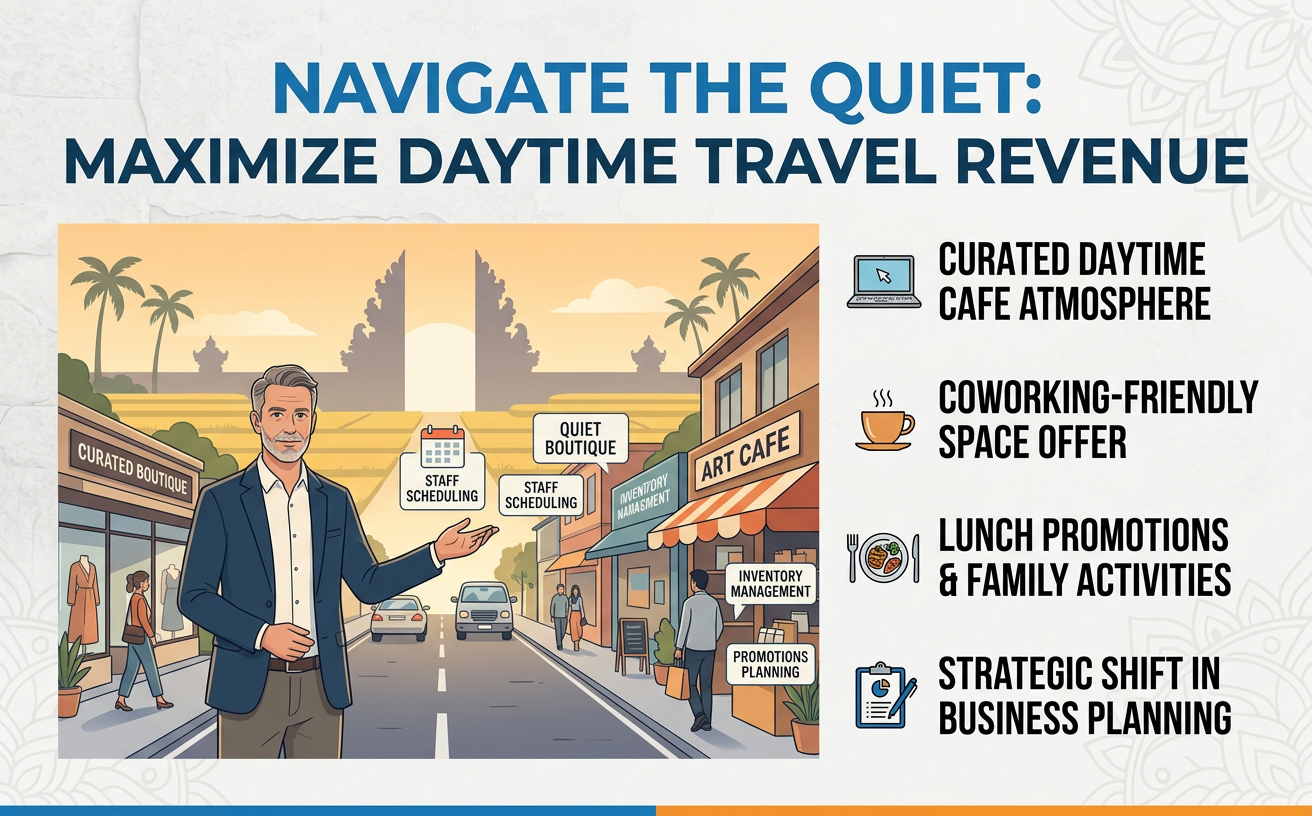
Kayu Aya Street, at the heart of Seminyak, transforms from an energetic evening corridor into a subdued daytime scene where curated cafés and boutiques operate with a slower rhythm. The visible reduction in pedestrian traffic during daylight suggests that many visitors time their Seminyak experience around sunset and after-dark entertainment, rather than daytime shopping or dining. That shift affects how businesses schedule staff, manage inventory, and plan promotions aimed at daytime customers.
The street’s daytime calm also reflects a visitor profile that prioritizes beach excursions or pool time at villas over mall-style shopping during peak sunlight hours. This pattern reinforces the importance of targeted daytime offers—such as lunch promotions, coworking-friendly cafés, and family-focused activities—to capture revenue that currently concentrates around evenings.
Nightlife Contrast: Where Revenue Concentrates
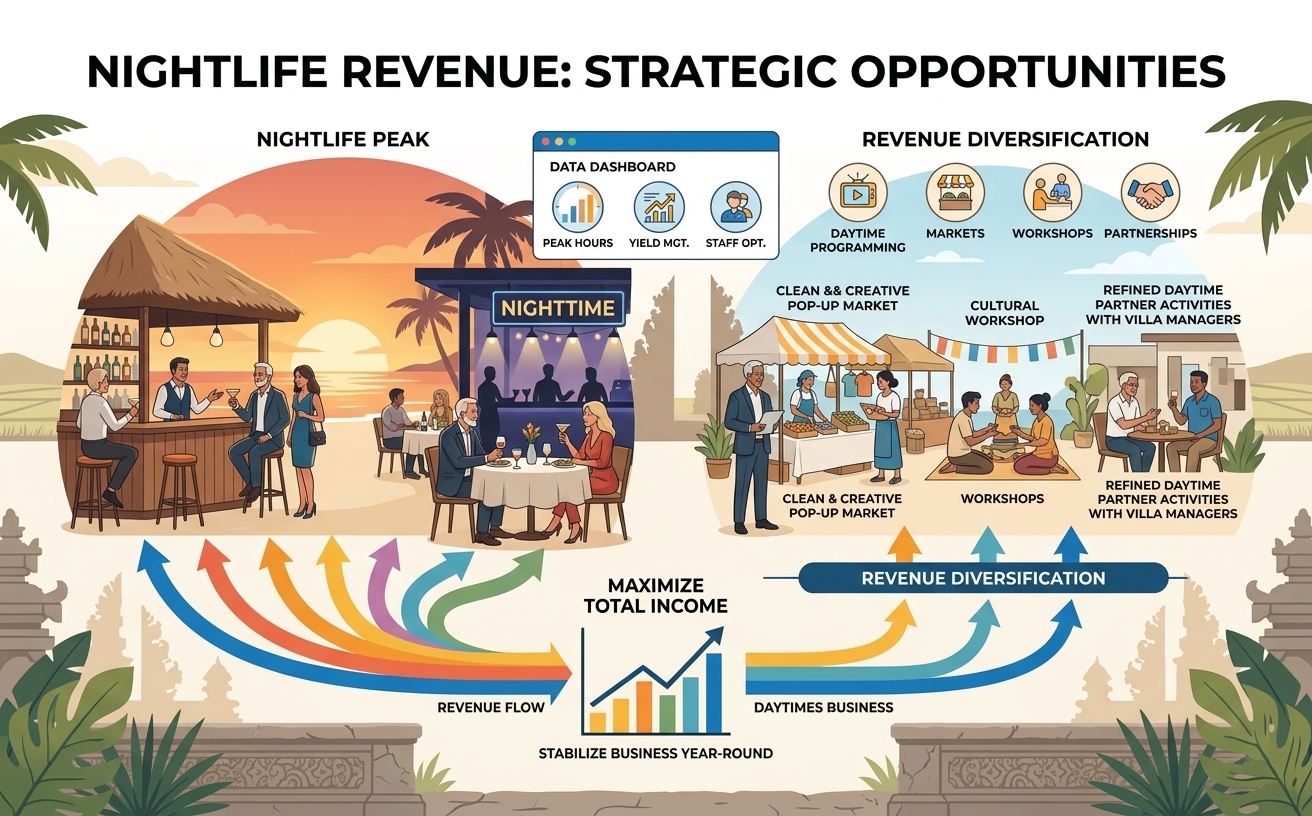
Seminyak’s real economic pulse is most visible after dark, when bars, sunset venues and late-night eateries draw both tourists and locals in high numbers. The contrast between day and night underscores a business model where peak revenue windows are compressed into evening hours, making yield management and staffing optimization crucial for profitability. Businesses that rely heavily on nightlife must balance fixed costs against concentrated daily income streams.
From a commercial perspective, concentrating sales in a narrow time band increases volatility and can magnify the impact of seasonal fluctuations or sudden changes in visitor behavior. Diversifying revenue with daytime programming—pop-up markets, cultural workshops, or partnerships with villa managers—can reduce that volatility and improve year-round stability.
Tourism Patterns: Visitor Choices and Their Implications

Visitor choices in Seminyak reflect broader Bali tourism trends: many international travelers aim to maximize beach time, wellness experiences and dining after sunset, rather than daytime retail. This behavior affects occupancy patterns, day-trip planning, and how guests use villa amenities. For property owners, understanding these patterns helps set competitive rates and design guest experiences that align with when guests are most active.
Local operators can respond by aligning services to guest routines—late checkout options, sunset shuttle services, and curated dining experiences timed for evening demand. Recognizing that daytime quiet is often intentional allows hospitality managers to market around guest preferences rather than attempting to force uniform activity throughout the day.
Bali Property Revenue Calculator: A Practical Tool for Owners
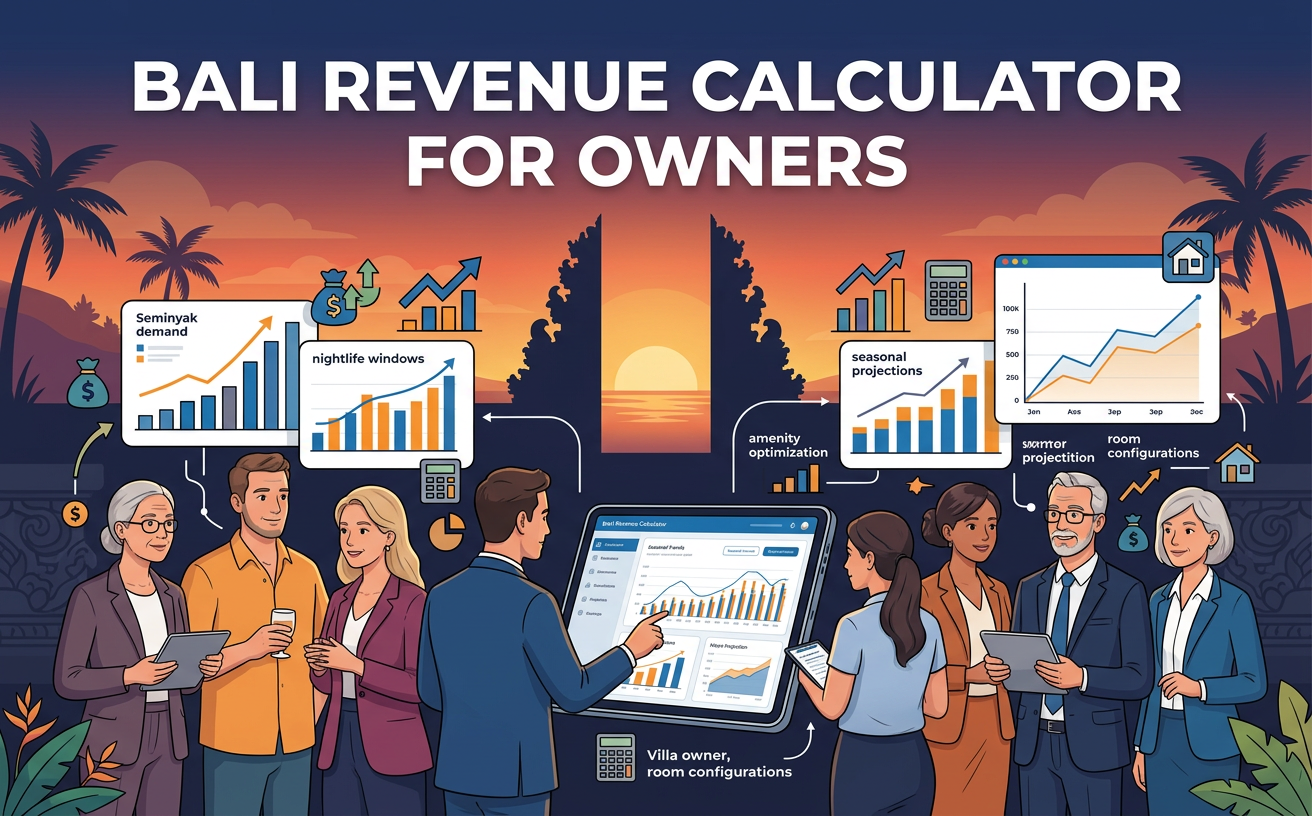
The Bali Property Revenue Calculator from Bukit Vista turns observed street-level patterns into actionable forecasts for villa owners and investors. By inputting property type, location and bedroom count, owners receive data-driven revenue projections that account for local demand cycles like Seminyak’s evening-heavy market. This helps owners decide whether to invest in daytime amenities or optimize for evening-driven bookings.
The calculator’s value is practical: it quantifies potential revenue impacts of scheduling, room configurations and targeted marketing. Property managers can simulate scenarios—raising nightly rates during high-nightlife windows, or offering daytime packages—to see how changes translate to annualized revenue.
Calculator checklist
- Enter accurate property type and bedroom count for realistic projections.
- Compare estimates for peak-season vs low-season to plan cash flow.
- Use results to prioritize investments in amenities that match guest activity windows.
Key Takeaways
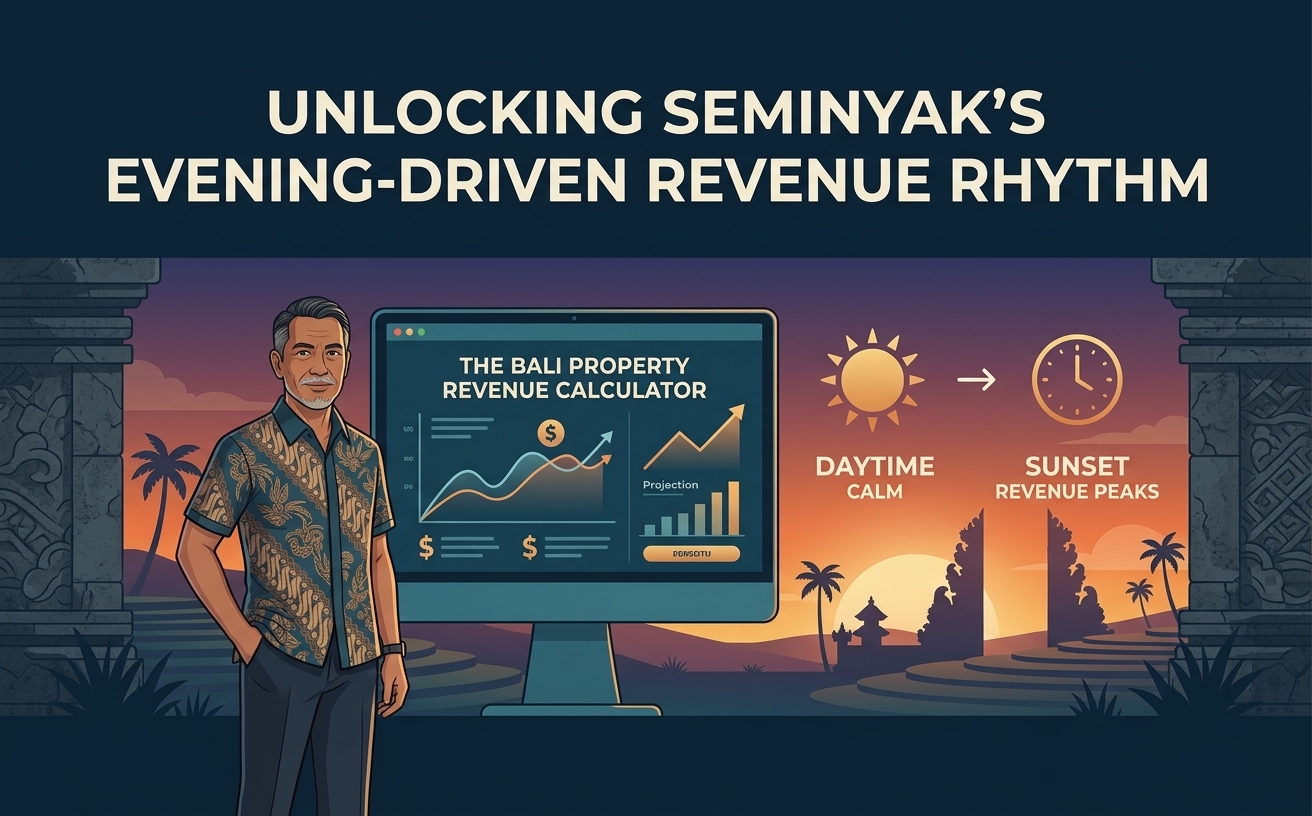
- Kayu Aya’s daytime quiet is a structural visitor preference—Seminyak traffic peaks at sunset and night, shaping revenue timing.
- Nightlife-driven income concentrates revenue windows; diversifying with daytime offerings reduces volatility.
- Property owners should align amenities and check-in experiences with guest activity patterns to maximize occupancy and ADR.
- The Bali Property Revenue Calculator provides data-backed projections to test pricing and amenity strategies before investment.
- Small operational changes—late checkouts, sunset-focused services—can capture untapped revenue tied to Seminyak’s evening economy.
Final word: Seminyak’s daytime calm is not a weakness but a customer-behavior signal. Owners and operators who design experiences and revenue strategies around the island’s evening-driven rhythm—guided by tool-driven forecasts—can turn that temporal concentration into a competitive advantage that boosts returns and reduces risk.
Jason, Business Journalist at Bukit Vista
You’re a property owner? Wondering What Could Your Bali Villa Really Earn?
Get a data-driven revenue projection based on your property type, area, and bedroom count. Discover your villa’s true earning potential in Bali.