

Why foreign investors should look beyond the current noise and understand the deeper evolution taking place across Bali and Indonesia? On 17 August, Indonesia celebrates its 81st Independence Day. For Indonesians, Hari Kemerdekaan carries meaning far beyond another date on the calendar. It represents sovereignty, identity, sacrifice, unity and the extraordinary journey of a nation that declared its independence in 1945 and has since grown into one of the world’s largest democracies and most important emerging economies.
For those of us who have had the privilege of living, working and building relationships in Indonesia, it is also an appropriate moment to reflect. Because there is a lot of noise surrounding Bali right now.
- Questions around foreign investment.
- Greater scrutiny of businesses and licences.
- Concerns about over-development
- Pressure on infrastructure.
- Debates about tourism.
- Questions around foreign behaviour and cultural respect.
- A desire to protect opportunities for Indonesian businesses.
- And understandable uncertainty among some international investors and operators about what all of this means.
Taken individually, these developments can appear concerning.
Viewed within the much larger story of Indonesia at 81, however, another interpretation becomes possible.
Indonesia is continuing to determine what the next phase of its development should look like.
And Bali is one of the places where that conversation is happening most visibly.
81 Years Is Worth Putting Into Perspective
Indonesia is an ancient civilisation, but a relatively young modern republic. Its cultures, kingdoms, communities and trading relationships extend back centuries. But the Republic of Indonesia itself declared independence only 81 years ago.
That distinction matters.
In a relatively short period, Indonesia has built institutions, developed infrastructure, reduced poverty, expanded its middle class and emerged as Southeast Asia’s largest economy. It has done so across an extraordinarily complex archipelago containing thousands of islands, hundreds of ethnic groups, languages, cultures and local identities.
Development on that scale was never going to be linear.
- There will be periods of acceleration.
- Periods of correction.
- Policy changes.
- Regulatory adjustments.
- Political debate.
- And moments when the country reassesses how the benefits of growth should be distributed.
That is not necessarily instability.
It can also be part of nation-building.
Bali Is Experiencing an Intensified Version of That Evolution
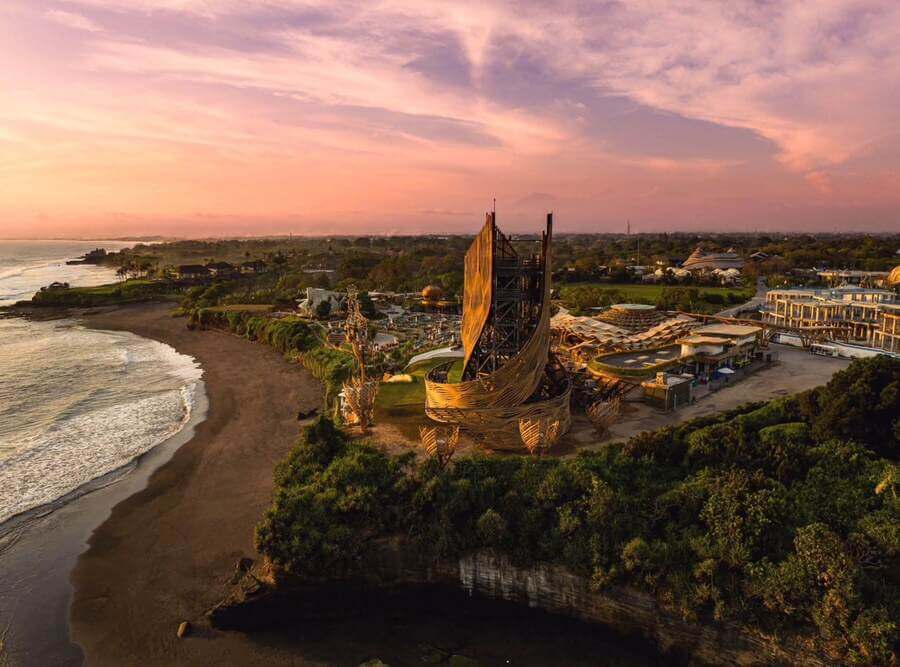
Few places demonstrate Indonesia’s development story more visibly than Bali. Bali’s international success has been extraordinary.
Tourism created employment, entrepreneurship and international connectivity.
- Investment followed.
- Hospitality expanded.
- Property development accelerated.
- International communities grew.
- New businesses, restaurants, wellness concepts, hotels, villas and experiences appeared.
- Bali became not simply a tourism destination but a globally recognised lifestyle and entrepreneurial ecosystem.
- But rapid success inevitably creates pressure; Traffic. Infrastructure. Waste. Water. Land use. Housing affordability. Employment. Environmental sustainability. Cultural preservation.
- Business ownership. And perhaps most importantly:
Who benefits from Bali’s continued success?
These are difficult questions. But mature destinations eventually have to confront them. Understanding the Current Investment Debate Recent regulatory developments have understandably attracted attention.
In July, Bali restricted foreign investors from accessing Indonesia’s online licensing system across 18 business categories, including areas such as accommodation, property, consulting, vehicle rental, retail, bars and cafes.
The stated concern includes foreign investment structures entering business areas that should provide opportunities for Indonesian micro, small and medium enterprises.
That deserves to be understood rather than sensationalised.
For legitimate foreign investors, stronger scrutiny can initially feel like another layer of complexity.
But protecting domestic economic participation and welcoming foreign investment are not necessarily contradictory objectives.
Indonesia can want international capital while simultaneously asking:
- Where should that capital participate?
- How should it participate?
- Who should benefit?
- And what responsibilities should accompany the opportunity?
- Those are reasonable questions for any sovereign nation.
Indonesia Is Not Closing to the World
This is perhaps the most important point for international investors to understand.
Indonesia continues to actively pursue foreign investment.
Indeed, the national direction tells a very different story from the suggestion that Indonesia is becoming closed to international capital.
In July, Indonesia’s parliament passed legislation enabling the creation of international financial centres designed specifically to attract major global banks, wealth managers and international investment.
Bali has been discussed as a potential location.
Indonesia is simultaneously seeking investment across infrastructure, tourism, technology, manufacturing, energy and other sectors.
Its tourism strategy is increasingly looking beyond visitor numbers toward destination quality, sustainability, experiences, infrastructure and investment across the broader archipelago.
So the emerging message is not:
Foreign investment is no longer welcome.
It is closer to:
The quality, structure, compliance and contribution of foreign investment increasingly matter.
That is a fundamentally different proposition.
Perhaps the Era of Easy Entry Is Ending
There may have been a period when some international participants believed that finding an opportunity, establishing a company and accessing capital were enough to succeed in Bali.
Increasingly, that will not be the case.
The next chapter requires more.
- Correct corporate structures.
- Appropriate licences.
- Tax compliance.
- Correct immigration status.
- Understanding land and zoning.
- Respect for sectors reserved or prioritised for Indonesian enterprise.
- Cultural awareness.
- Community engagement.
- And appropriate professional advice.
For people looking for shortcuts, Bali may indeed become more difficult.
For serious investors, that should not necessarily be viewed negatively.
Strong capital ultimately benefits from stronger governance, clearer rules and responsible competition.
Time Is Part of Doing Business in Indonesia
There is another lesson I believe international investors sometimes underestimate.
Time matters in Indonesia.
Not simply because administrative processes can take time.
Because understanding takes time.
Relationships take time.
Trust takes time.
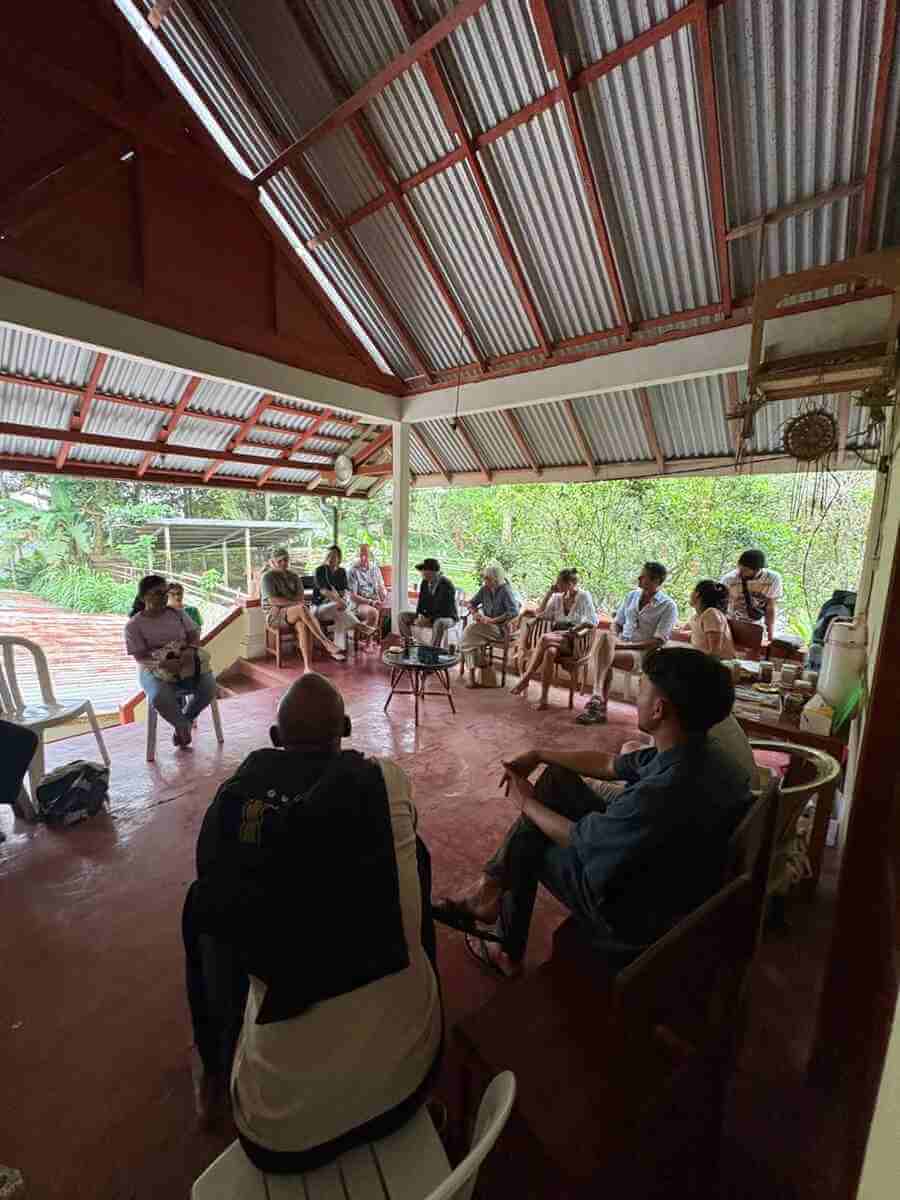
Indonesia is deeply relationship-driven, and Bali adds additional cultural and community dimensions to that reality.
A project that appears straightforward on a spreadsheet may intersect with national regulation, provincial government, regency administration, village structures, Banjar, local communities and cultural considerations.
Trying to move around those layers may make something appear faster initially.
Understanding them properly can make a project substantially stronger over the long term.
That is why choosing the right people is so important.
The right Indonesian partners.
The right legal advisers.
The right accountants.
The right government relationships.
The right community relationships.
And equally importantly, independent professional due diligence.
Relationships should never replace compliance.
The best relationships reinforce it.

Belong Before You Build
During almost a decade living and working in Bali, one principle has increasingly shaped my own approach:
Belong before you build. Build trust before you scale.
This isn’t about asking foreigners to become Indonesian.
Nor is it about suggesting international investors should be passive.
International expertise, ideas, capital and collaboration can contribute enormously to Indonesia’s future.
But investment occurs within an existing cultural, economic and social ecosystem.
Bali isn’t simply a marketplace.
It is someone’s home.
Understanding that changes the question from:
“What opportunity can I extract from Bali?”
to:
“What can we create here that produces meaningful value for everyone involved?”
Investors should benefit.
But so should Indonesian partners.
Employees.
Communities.
Government.
The environment.
And ultimately the destination itself.
Bali’s Challenges Should Not Be Romanticised
Respecting Indonesia also means being prepared to discuss its challenges.
Bali has genuine problems.
Infrastructure has struggled to keep pace with development.
Environmental pressures require serious attention.
Regulatory interpretation can sometimes be difficult for investors to navigate.
Coordination across different layers of administration can create uncertainty.
Rapid development has created consequences that require intervention.
And if Bali wants to attract increasingly sophisticated international capital, predictability, transparency and regulatory clarity will become even more important.
Acknowledging those issues is not criticism of Indonesia.
Constructive dialogue is part of any country’s development.
The important distinction is between identifying challenges and declaring the entire environment broken whenever regulations change.
From Independence to Interdependence
Perhaps there is an interesting parallel as Indonesia celebrates 81 years of independence.
Independence established sovereignty.
The next stage of Indonesia’s economic journey increasingly involves interdependence.
International capital working with Indonesian enterprise.
Government working with the private sector.
Tourism working with communities.
Development working with culture.
Investment working with sustainability.
And international partners learning that participation in Indonesia requires understanding Indonesia rather than attempting to recreate another market within it.
For Australia in particular, this matters.
Our countries are neighbours.
Tourism already connects millions of Australians with Indonesia, particularly through Bali.
But the opportunity ahead is much larger than tourism.
Hospitality.
Education.
Technology.
Investment.
Sustainability.
Healthcare.
Infrastructure.
Creative industries.
And destination development all offer opportunities for deeper collaboration.
But those opportunities will be strongest when built upon cultural intelligence and genuine partnership.
An Important Moment in Bali’s Journey
So as Indonesia celebrates its 81st Independence Day, perhaps those of us within the international community should resist becoming consumed by every headline.
Listen to the signals instead.
Indonesia is changing.
Bali is changing.
Some regulations will work.
Others may require refinement.
There will be debate.
There will be uncertainty.
And there will continue to be noise.
But beneath it sits something considerably more important.
A nation is continuing to define the relationship between growth and sovereignty, between international capital and domestic opportunity, and between economic development and cultural identity.
For responsible foreign investors, entrepreneurs and operators, this should not necessarily be viewed as a warning.
It should be viewed as an invitation to understand the country more deeply.
Be patient.
Listen.
Do the due diligence.
Understand the regulations.
Choose the people around you carefully.
Build genuine relationships.
Respect the culture.
And take the long view.
Because Bali is not simply deciding whether its doors should remain open.
It is increasingly defining how those doors should open, what responsible participation should look like, and how the next generation of growth can create value for Indonesia as well as those who choose to invest within it.
On the eve of Indonesia’s 81st Independence Day, that feels like a conversation worth having.
Dirgahayu Republik Indonesia.
Website: www.robertianbonnick.com
PT Karya Lyfe Group – Gateway To Indonesia
RiB & Associates | SpeakuP Monday – Destination Indonesia #1 Entrepreneurship & Social Impact TalkShow | Tourism Architect – Co Building Legacy
Strategy | Connector | Market Access | Cultural Integration | Business Growth | Private Public Partnerships