
We are unpacking content from Bali Business Review on YouTube to separate marketing claims from measurable facts. Developers often present headline revenue figures without context, masking occupancy volatility, management fees, and local regulations. This report highlights the core data points and practical checks property owners should run to verify performance.
Hi, I’m Jason, a Business Journalist at Bukit Vista, and I’ll be unpacking analysis from Bali Business Review. Today, we’ll dive into developer misinformation and property revenue performance in Bali to offer clear, data-driven insights.
Common Developer Claims and Why They Mislead

Developers frequently advertise projected returns using selective metrics: peak-season rates, best-case occupancy, and promotional occupancy guarantees. These numbers are often presented without seasonal normalization or reference to local demand cycles, which inflates realistic expectations. Promises about “guaranteed returns” typically rely on conditions that are temporary or contingent on undisclosed fees and marketing contributions, meaning the headline figure is rarely the net outcome for owners.
Checklist to spot misleading claims
- Ask for a year-by-year occupancy and ADR (average daily rate) breakdown, not just peak-season examples.
- Request a transparent list of fees, commissions, and marketing costs deducted from gross revenue.
- Verify whether the “guarantee” has a duration, clawback clauses, or minimum performance thresholds.
Hidden Costs and Revenue Overestimation
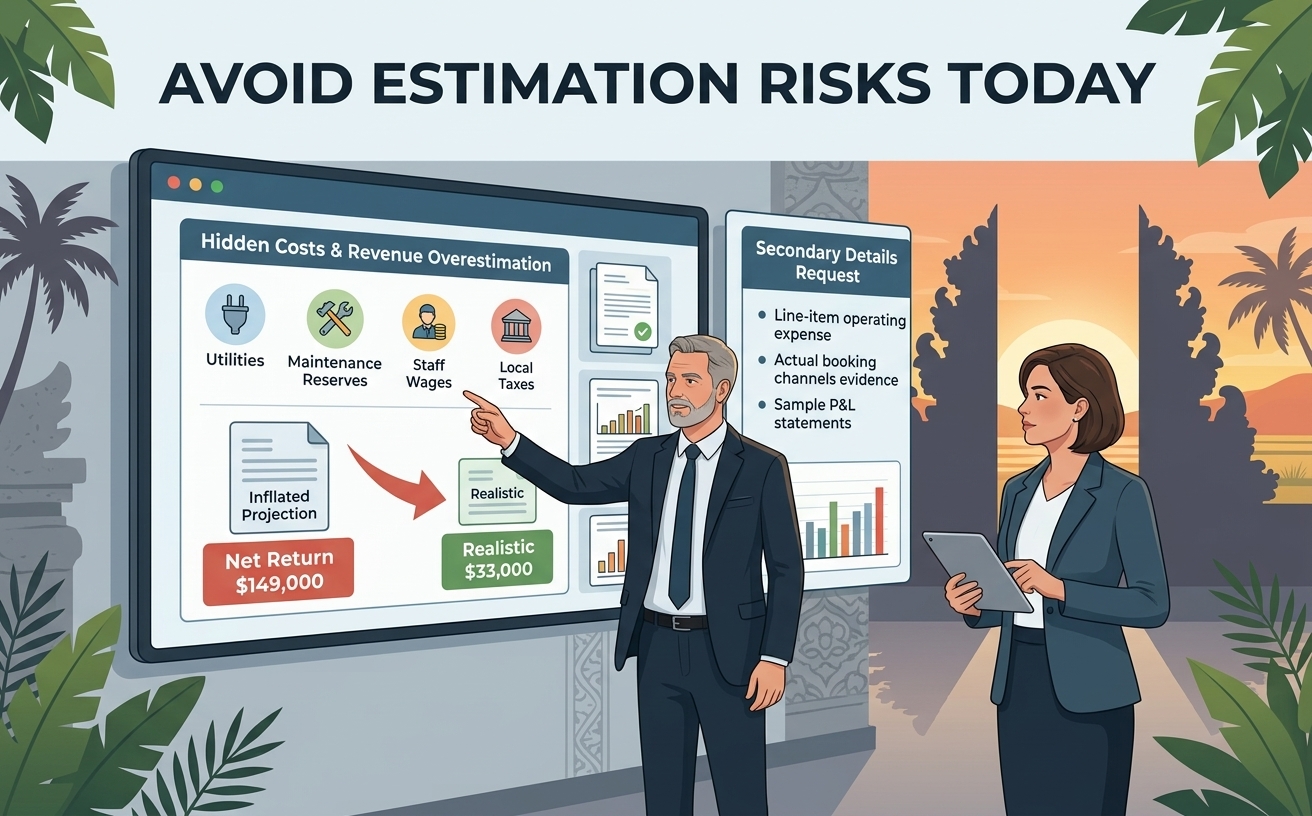
Beyond the advertised rental percentages, owners must account for operating expenses that developers often exclude from promotional materials. Common overlooked items include utilities, maintenance reserves, staff wages, and local taxes; together these can reduce net returns by a significant margin. Additionally, developers sometimes assume low marketing costs by counting developer-driven promotions that may not continue after handover, creating a gap between projected and realized bookings.
Secondary details to request
- Line-item operating expense projections for the first three years.
- Evidence of actual booking channels and their historical conversion rates.
- Sample P&L statements from comparable properties managed by the developer or partner operators.
How to Assess Your Property’s Actual Performance
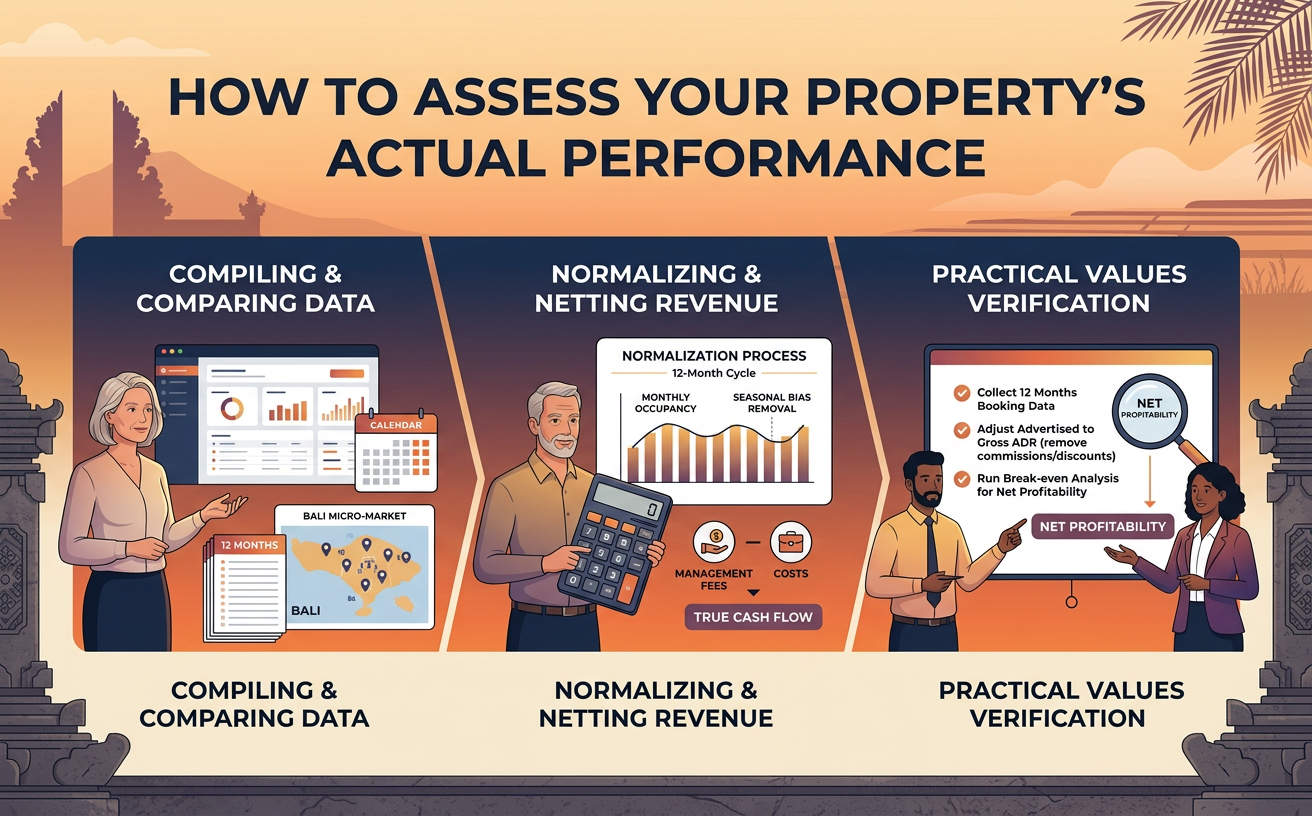
Owners need a repeatable, data-driven approach to assess whether a property is underperforming. Start by compiling historical occupancy, ADR, and length-of-stay data, then compare these with comparable listings in the same micro-market and season. Normalize results over a full 12-month cycle to remove seasonal bias, and calculate net revenue after all management fees and costs to see the true cash flow to the owner.
Practical steps for verification
- Collect at least 12 months of booking data and cross-check against local STR market reports.
- Adjust advertised ADR to gross ADR by removing platform commissions and promotional discounts.
- Run a break-even analysis including fixed costs to determine true net profitability.
Using the Bali Property Revenue Calculator: Benefits & How It Works
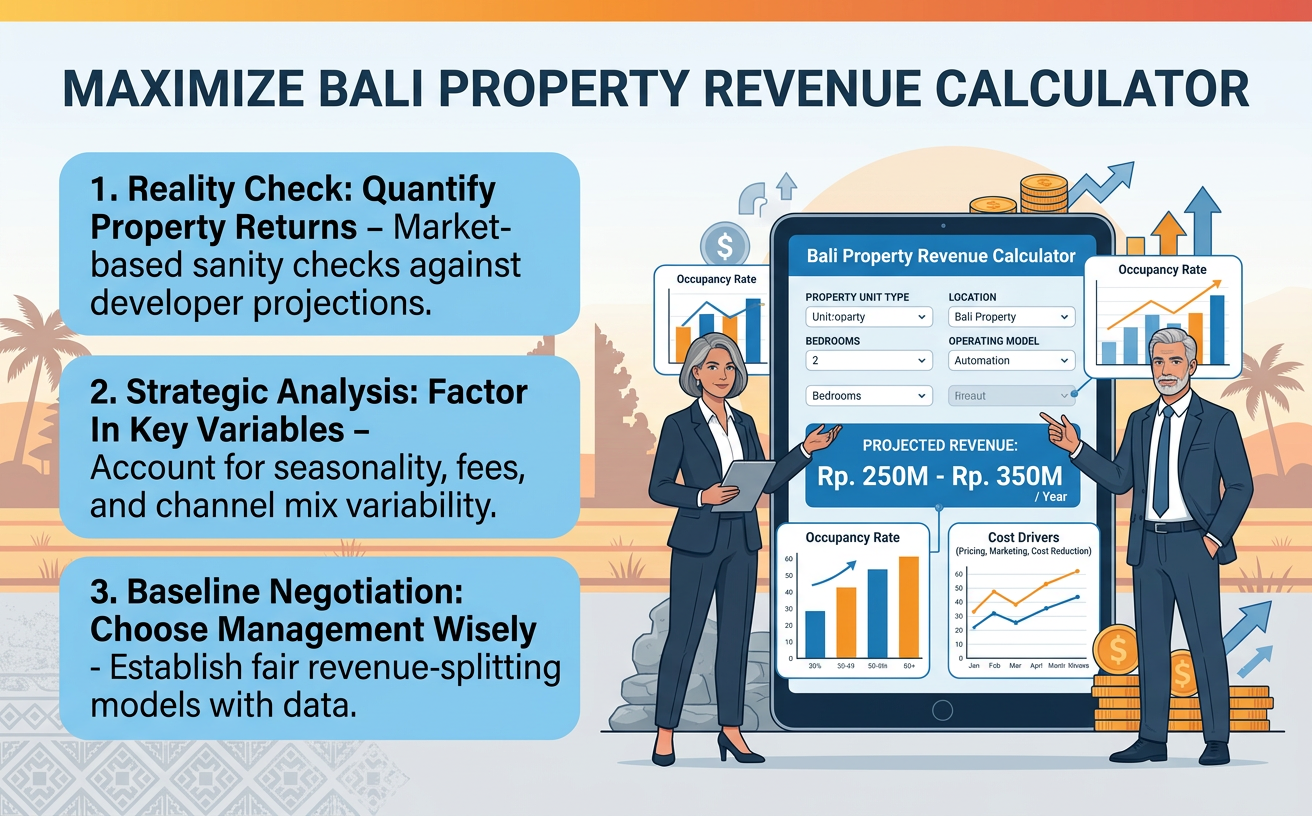
The Bali Property Revenue Calculator is a diagnostic tool designed to translate raw performance data into realistic revenue expectations. By inputting property type, location, bedroom count, and expected operating model, owners receive a projected revenue range that factors in occupancy variability and standard cost assumptions. The calculator helps surface whether developer projections align with market reality and highlights which levers (pricing, marketing, or cost reduction) will have the biggest impact on net returns.
Why owners should use the calculator
- It provides an immediate sanity check against developer projections using market-adjusted assumptions.
- It quantifies the effect of variables like seasonality, management fees, and channel mix.
- It creates a baseline for negotiation or for selecting a management partner with a realistic revenue-sharing model.
Key Takeaways

- Headline returns from developers often ignore seasonality, fees, and operating costs—always request normalized, year-round data.
- Verify guarantees for duration and clawback clauses and insist on sample P&Ls from comparable units.
- Use the Bali Property Revenue Calculator to produce market-adjusted revenue ranges before committing to contracts.
- Focus on net revenue to the owner after all deductions, not gross marketing or occupancy figures.
Final word: developers will continue to use attractive headline numbers, but informed owners can neutralize misleading claims by demanding transparent data and using tools that model realistic outcomes. A disciplined, data-first assessment protects capital value and optimizes operational decisions, whether that means renegotiating terms, switching managers, or investing in targeted yield improvements.
Jason, Business Journalist at Bukit Vista
You’re a property owner? Wondering What Could Your Bali Villa Really Earn?
Get a data-driven revenue projection based on your property type, area, and bedroom count. Discover your villa’s true earning potential in Bali.