
We are unpacking content from Bali Business Review on YouTube to examine mounting access problems, environmental risks, and socioeconomic fallout tied to a popular coastal destination. The report compiles visitor counts, emergency response times, and local statements to outline immediate hazards and longer-term impacts for tourism-dependent stakeholders. Narrow, eroded footpaths and intermittent vehicle restrictions create bottlenecks that extend arrival and evacuation times. Local authorities and guides interviewed for the piece note that peak-day queues and limited official signage amplify congestion, increasing stress for visitors and reducing the predictability of daily visitor flows. For businesses that rely on repeat customers and smooth turnover—restaurants, shuttle operators, and nearby villas—these bottlenecks translate into measurable revenue leakage on high-demand days. The analysis shows that even small delays at entry points can cascade into lost bookings and lower per-guest spending when itineraries are shortened or safety concerns prompt cancellations.
Hi, I’m Jason, a Business Journalist at Bukit Vista, and I’ll be unpacking analysis from Bali Business Review. Today, we’ll dive into The Troubling Journey to a Famous Beach to offer clear, data-driven insights.
Access and logistics: a deteriorating arrival experience
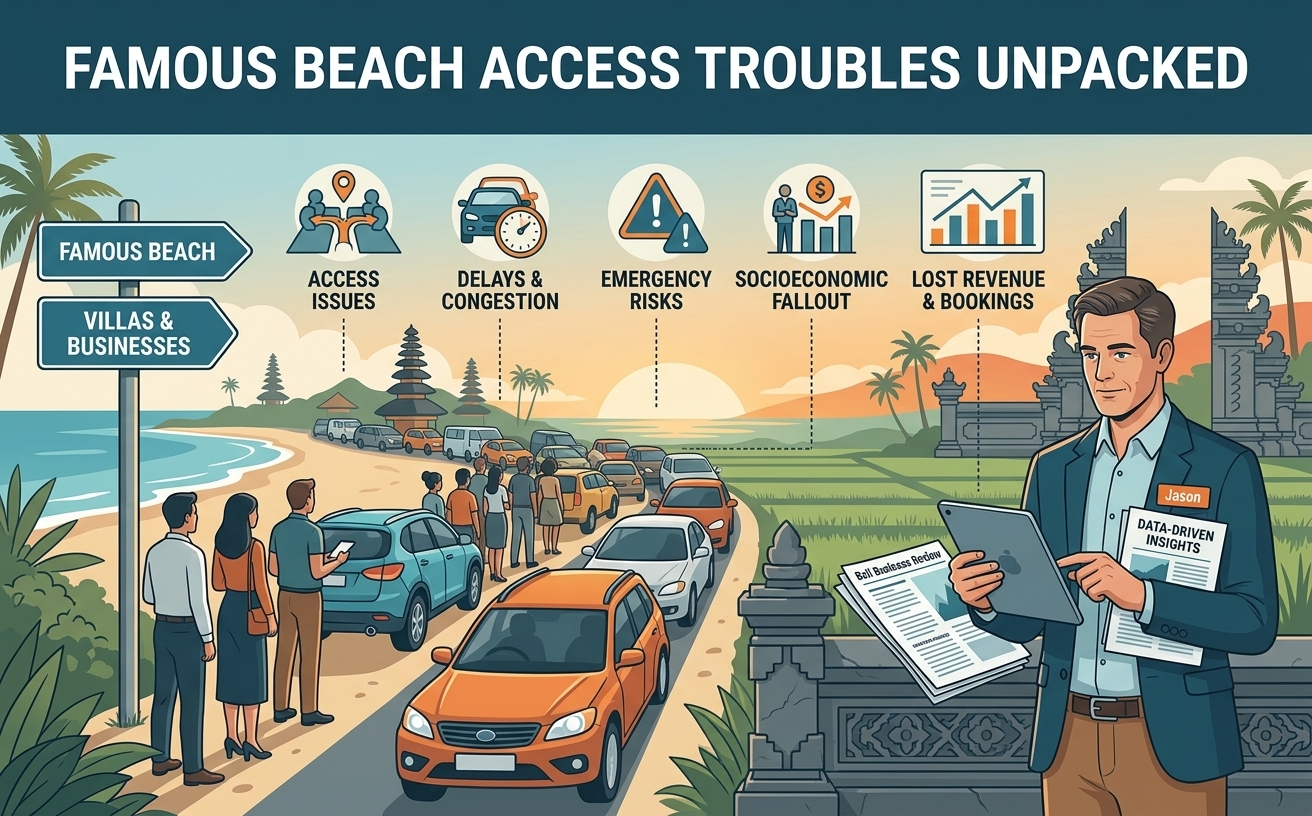
The report identifies access as the immediate operational problem: narrow, eroded footpaths and intermittent vehicle restrictions create bottlenecks that extend arrival and evacuation times. Local authorities and guides interviewed for the piece note that peak-day queues and limited official signage amplify congestion, increasing stress for visitors and reducing the predictability of daily visitor flows. For businesses that rely on repeat customers and smooth turnover—restaurants, shuttle operators, and nearby villas—these bottlenecks translate into measurable revenue leakage on high-demand days. The analysis shows that even small delays at entry points can cascade into lost bookings and lower per-guest spending when itineraries are shortened or safety concerns prompt cancellations.
Operational factors contributing to access problems
- Physical constraints: steep approaches, narrow stairways, and seasonal erosion
- Transport limits: reduced parking, restricted vehicle access, reliance on shuttle/pedestrian flow
- Signage and wayfinding: lack of clear routes increases visitor confusion and delays
- Peak demand variability: weekends and holidays create concentrated surges that infrastructure cannot absorb
Environmental and safety concerns raising long-term costs
The coverage highlights erosion, rockfall risk, and unmanaged cliffside foot traffic as core environmental and safety concerns with direct cost implications for local governance and businesses. Emergency responders and local operators described an uptick in rescue incidents during adverse weather or high tides, placing additional strain on limited rescue resources and increasing the probability of temporary closures. Environmental degradation also risks reputational damage: sustained images of unsafe or degraded access can depress visitation over seasons, not just single days, and reduce the tourism multiplier effect for nearby enterprises. For property owners and managers, the combination of higher insurance considerations, potential liability exposure, and reduced guest satisfaction can erode yield unless mitigations are implemented.
Environmental and safety indicators to monitor
- Frequency of rescue incidents and emergency call-outs
- Visible erosion markers and documented rockfall/landslide events
- Tide and weather patterns correlating with access restrictions
- Visitor feedback scores referencing safety or access issues
Tourism economy and property revenue implications
The report draws a clear line between access problems and economic outcomes for businesses and property owners in the vicinity, noting that unpredictable guest experiences lower average length of stay and on-site spend. Shortened itineraries mean fewer ancillary purchases—meals, tours, and local transport—which directly affects small businesses and villa-hosting revenues. Owners evaluating their portfolio performance should factor in operational risk and seasonally driven access volatility when projecting yield. To help make data-driven decisions, property owners can use tools like the Bali Property Revenue Calculator to estimate realistic earnings under current market conditions and incorporate potential access-related downticks into revenue scenarios.
Revenue-related checklist for property owners
- Run a baseline revenue projection with the Bali Property Revenue Calculator to establish expectations
- Factor in variable occupancy and shorter stays linked to accessibility events
- Assess insurance and liability coverage in light of local safety risks
- Explore positioning strategies: promote safe transport options, flexible check-in, and alternative experiences
Governance, local responses, and practical mitigations
Local government responses and operator initiatives documented in the report point to a mix of short-term traffic controls and longer-term infrastructure proposals, but implementation is uneven and funding timelines remain uncertain. Stakeholder interviews indicate that pragmatic, low-cost interventions—improved signage, staffed access points during peak hours, and volunteer or paid guides—can provide immediate risk reduction while larger engineering solutions are planned. Coordination between public agencies, local business associations, and property managers is crucial: without a shared operational plan, mitigation measures may be piecemeal and fail to restore visitor confidence. For property owners, engaging with community groups and contributing to localized transport or safety funds can be a cost-effective way to stabilize the guest experience and protect revenue streams.
Practical mitigations being pursued
- Short-term: staffed access control, temporary walkways, scheduled visitor windows
- Medium-term: investment in stabilized stairways, rockfall protection, dedicated parking zones
- Long-term: integrated coastal management and funding partnerships between government and private sector
- Owner actions: communicate proactively with guests, offer alternative experiences, and use revenue tools to plan
Key Takeaways
- Access constraints at the famed beach create direct economic losses for nearby businesses and properties through reduced stay length and lower guest spend.
- Environmental and safety risks elevate operational costs and liability exposure—monitor rescue incident frequency, erosion markers, and visitor feedback closely.
- Short-term, low-cost mitigations (signage, staffed access, scheduled windows) can stabilize visitor flow while infrastructure plans progress.
- Property owners should incorporate access volatility into revenue planning; use the Bali Property Revenue Calculator to model realistic earnings scenarios.
- Collaboration among local government, business owners, and property managers is essential to deliver timely, cost-effective solutions that protect tourism value.
The Troubling Journey to a Famous Beach underscores a core lesson for Bali stakeholders: infrastructure and safety are not peripheral concerns—they directly shape revenue, reputations, and long-term viability. For property owners, the immediate step is to quantify exposure and adjust projections using data-driven tools like the Bali Property Revenue Calculator, then prioritize operational changes that protect guest experience and earnings while advocating for durable public investments.
Jason, Business Journalist at Bukit Vista
You’re a property owner? Wondering What Could Your Bali Villa Really Earn?
Get a data-driven revenue projection based on your property type, area, and bedroom count. Discover your villa’s true earning potential in Bali.