
The most important part of a Bali villa is the part you will never see on a viewing. By the time a buyer walks a finished property the concrete has cured, the walls are rendered, and the pool is full. Whatever was done correctly underneath all of it, or quietly skipped, is now sealed inside the structure. The photographs look the same either way.
This is the quiet problem sitting underneath Bali’s off-plan boom. A large share of foreign purchases on the island are now made against a render and a price, on projects that are months from completion or not yet out of the ground. The buyer is shown a polished image, a payment schedule, and a handover date. What they are not shown, because it does not exist yet and because almost nobody thinks to ask, is the evidence that the building will be assembled to the standard the render implies.
The render is the easy part
Anyone can produce a render. It costs a few hundred dollars, takes a designer an afternoon, and commits the developer to nothing. The building is where the real cost and the real difficulty sit, and the two are not connected. A flawless visual can sit on top of a project with no independent oversight, no structural testing, and a contractor chosen on price alone. The buyer cannot tell the difference from the marketing. Standing in the finished villa, very often, they still cannot.
To understand what separates a building that lasts from one that merely looks finished, I put the question to Alex Ladda, an architect who studied at ETH Zurich and practised for fifteen years in Switzerland before establishing his studio in Bali. Six years on the ground here, fifteen years of European pedigree behind it, and a studio now based in Pererenan. His view was blunt and worth hearing.
Where a building actually goes wrong
The failures that matter are rarely dramatic and almost never visible. They are a concrete mix weakened to save a few rupiah per cubic metre, reinforcing steel that is thinner or sparser than the drawings specify, waterproofing rushed to hit a deadline, a slab poured without anyone testing what went into it. None of it shows on a viewing. All of it surfaces later, as cracking, damp, settlement, or a roof that gives way in the wet season two years after the keys changed hands.
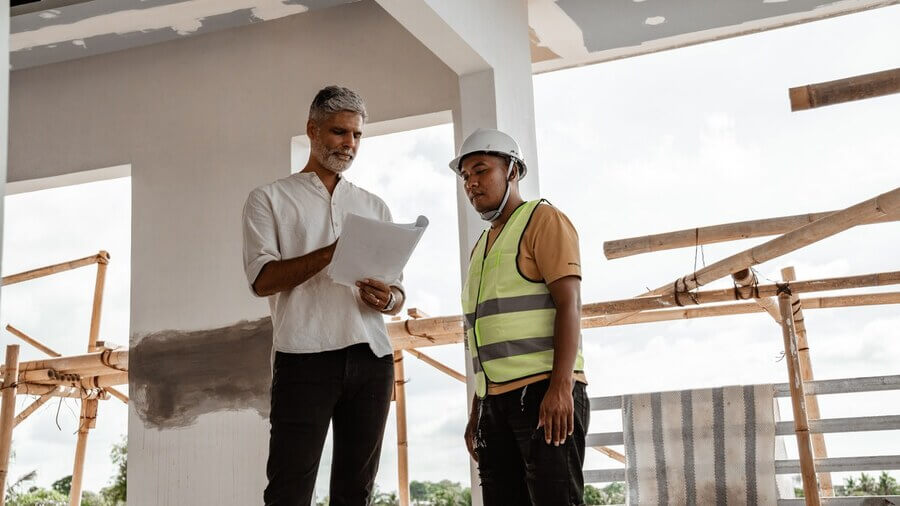
Ladda’s point was that the buildings going up across Bali are, for the most part, not technically complex. The structures are simple, primitive even, by the standards of the projects he ran in Europe. The difficulty is not the engineering. It is making sure that simple things are done correctly, in the right order, every single time, on a site where nobody senior is watching. Waterproofing, roofs, stairs, the slab. None of it is hard. All of it has to be done right, and right is invisible once the render coat goes on.
The work that sits between a render and a sound building
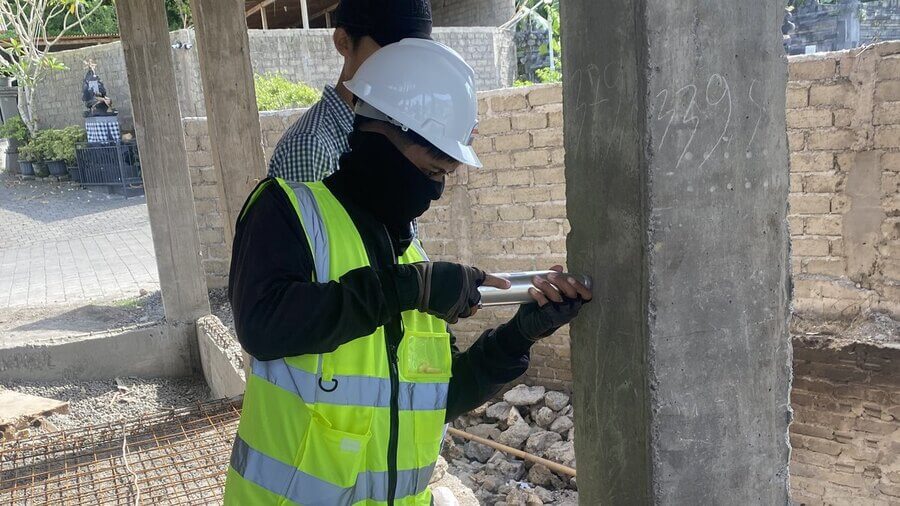
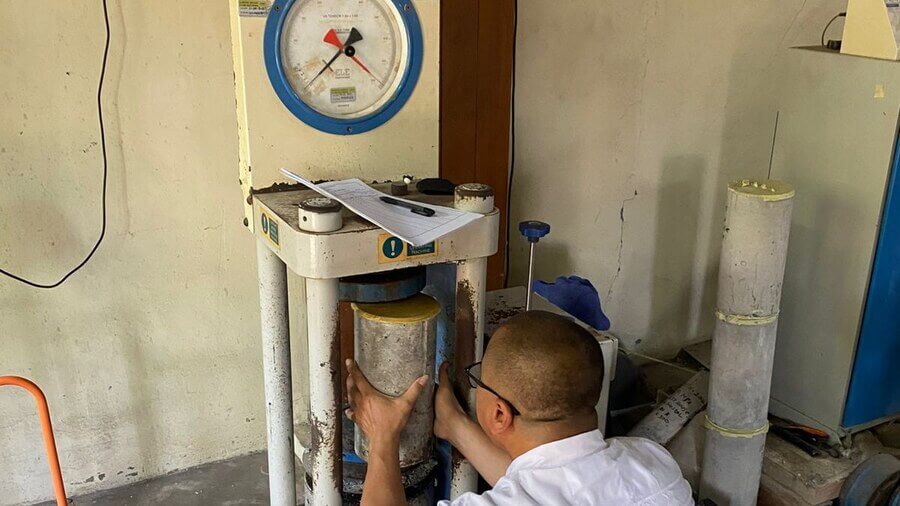
There is a layer of work that determines whether a building performs, and the buyer almost never sees it or knows to ask for it. On a properly run project the concrete and the reinforcing steel are tested through accredited laboratories, not accepted on the contractor’s word. The materials delivered to site are checked against the bill of quantities, so the buyer pays for the steel that actually goes into the building rather than the steel that appeared on an invoice. Defects are identified, photographed, logged, and signed off against a final list before completion is accepted. Someone independent is on site continuously, measuring progress against the drawings, the budget, and the specification, rather than against a contractor’s reassurance on a WhatsApp call.
That layer is the entire difference between a building that holds up for decades and one that looks identical on handover day and fails quietly afterwards. It is also, in Ladda’s account, where most of the value of professional oversight actually lives. The design is visible and easy to sell. The supervision is invisible, and it is what keeps the design honest.
A management problem, not a Bali problem
There is a lazy story about construction here, that standards are simply low and corners are always cut. The truth is more useful than that. Without a firm grip around a contractor, a team on site, weekly meetings, written reports, real documentation, corners get cut. With that grip in place, they do not. Ladda was clear that this is not unique to the island. The same discipline is required in Switzerland; the legal enforcement is stronger there, the human behaviour is identical. A contractor left unsupervised drifts toward the cheapest path everywhere in the world.
Which is why vetting the builder matters more than any brochure. Track record is the first test, and it means going to look at what a contractor has actually built, then talking to the people who lived through the process recently, not just the ones named as references. A good deal of Bali construction is run by one-person operations that assemble a crew the moment a contract is signed. That is not disqualifying in itself, provided there is a genuine management team that can be held to a standard and met on equal terms. The real risk is rarely the obviously bad builder. It is the average builder on an unsupervised site, and the good builder whose one competent site manager leaves halfway through, after which the project quietly becomes a different project from one month to the next.
The document most buyers never ask to see
Indonesia has a formal answer to this question, and most foreign buyers do not know to request it. Before construction, a project requires a PBG, the Persetujuan Bangunan Gedung, the building approval confirming the plans meet technical, structural, and zoning standards. After construction, a building is meant to receive an SLF, the Sertifikat Laik Fungsi, a certificate of function worthiness issued only once the completed structure has passed inspection of its structure, architecture, and mechanical systems. In plain terms, the SLF is the state confirming that the building is fit to be occupied and used.
Plenty of villas in Bali operate without one. A buyer is entitled to ask whether a property holds a valid SLF and to treat a vague answer as information in itself. The certificate will not tell you everything about how a building was made. A project that cannot produce it, or never sought it, is telling you something important before you have reached the first structural drawing.
What verification is actually worth
This is why a discount on an unverified building is not really a discount. A developer offering an extra few per cent off this month is moving the one number that is easy to move. The number that decides whether the purchase was sound, whether the thing was built properly, is not on the table and is not being discussed. Price is the easiest part of a property to see and the least likely to hurt you. The construction is the opposite, and it follows you to resale, because a structurally compromised building is also an illiquid one. The next buyer’s advisor will ask the questions the first buyer did not.
At Fullers we screen every property we feature against title, permits, zoning, rental viability, exit liquidity, and structural red flags, before it ever reaches a buyer. We are paid by the buyer and work only for the buyer, which means a building’s quality is our problem to surface rather than a detail to be managed around. The standard we apply is unglamorous and absolute. If we would not put our own family in it, it does not go to a client, whatever the render looks like and whatever the discount attached to it.
The era of buying a Bali property from an image and a promise is closing. The buyers who do well from here are the ones who learn to ask about the part they cannot see.
Credit:
Alex Ladda, Architect
https://alexladda.com/