
We are unpacking content from Bali Business Review on YouTube to expose the most common pitfalls facing property buyers and investors in Bali. This report lays out concrete scam types, red flags to watch for, and practical steps backed by local data to protect capital and ensure legally sound transactions.
Hi, I’m Jason, a Business Journalist at Bukit Vista, and I’ll be unpacking analysis from Bali Business Review. Today, we’ll dive into Bali real estate scams to offer clear, data-driven insights.
Common Types of Real Estate Scams in Bali
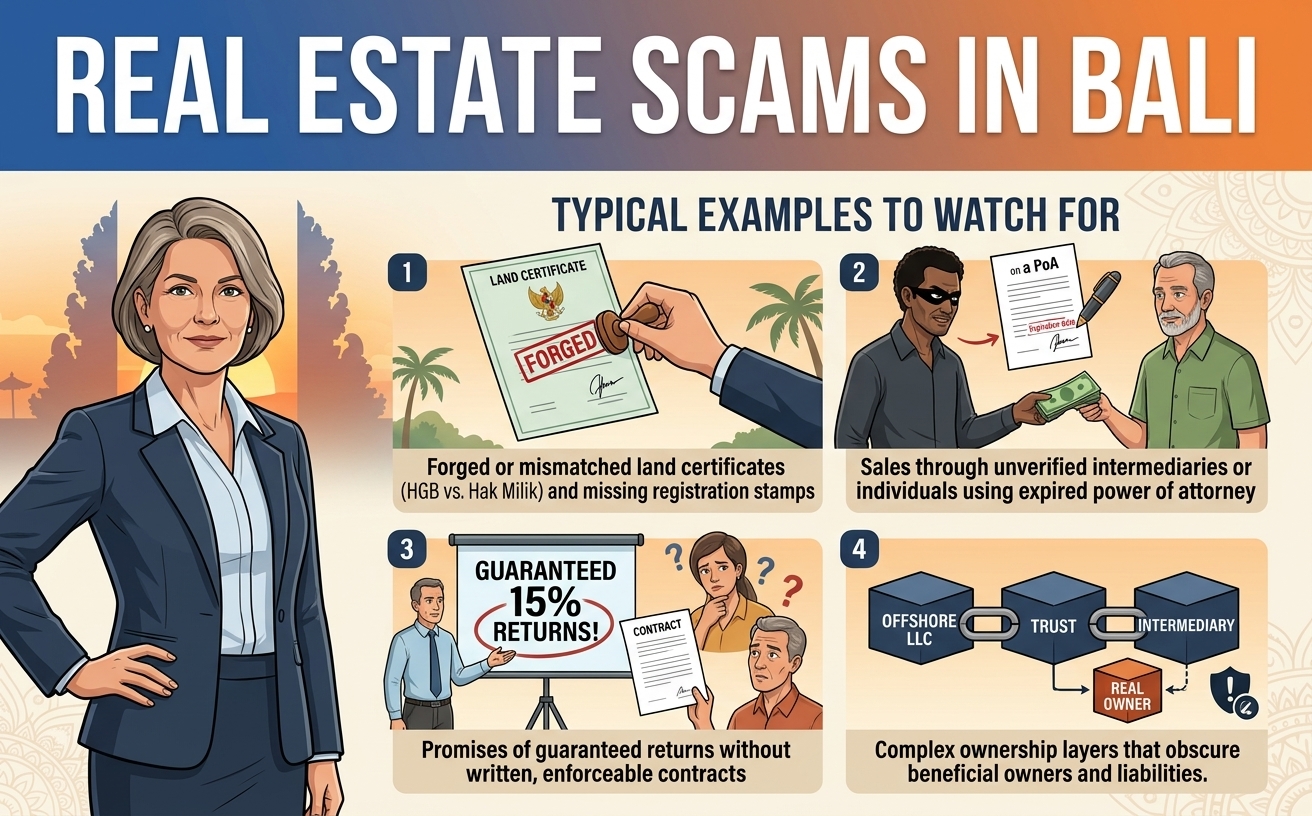
Fraud in Bali’s property market often takes predictable forms: fake ownership documents, misuse of power of attorney, offshore structures hiding true ownership, and rental-income misrepresentations. Scammers may present forged land certificates or sell rights to properties they do not legally control, exploiting foreign buyers’ limited local legal knowledge. Another frequent tactic is inflating expected rental yields or occupancy to entice investors into paying premiums for underperforming assets. Awareness of these common schemes is the first defense against losing significant capital.
Typical examples to watch for
- Forged or mismatched land certificates (HGB vs. Hak Milik) and missing registration stamps.
- Sales through unverified intermediaries or individuals using expired power of attorney.
- Promises of guaranteed returns without written, enforceable contracts.
- Complex ownership layers that obscure beneficial owners and liabilities.
How to Identify Red Flags Before You Buy
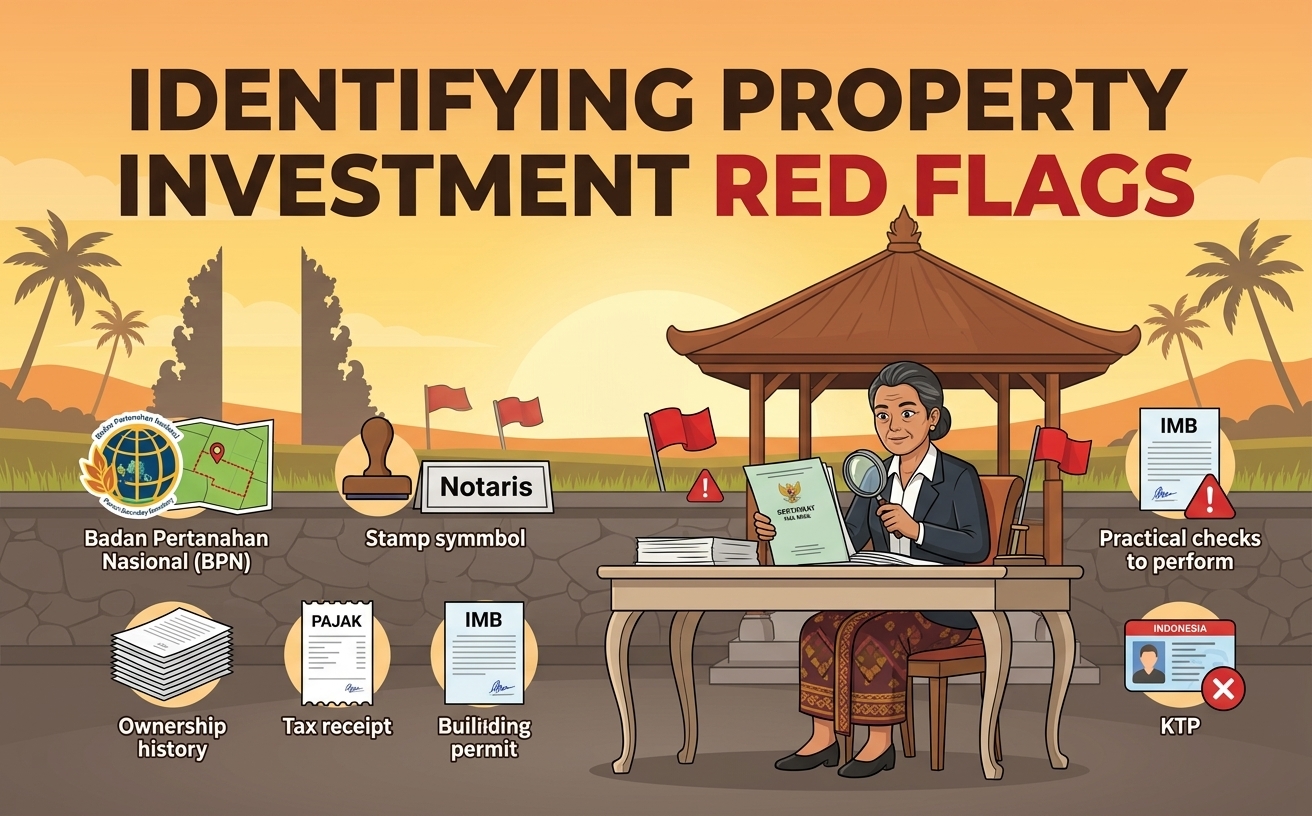
Identifying warning signs early reduces exposure to fraud. Key indicators include rushed sales, reluctance to involve reputable notaries, inconsistent documentation, and pressure to transfer funds into personal accounts or offshore entities. Investigate the land certificate in the National Land Agency records, confirm the seller’s identity through local administrative channels, and insist on a transparent audit trail for funds and contracts. If any party resists independent verification, treat the deal with extreme caution.
Practical checks to perform
- Verify land titles directly at the Badan Pertanahan Nasional (BPN) and cross-check parcel boundaries.
- Use a licensed notary (notaris) familiar with foreign ownership structures and local regulations.
- Request a history of ownership, tax receipts, and sanctioned building permits (IMB where applicable).
- Confirm seller identity with KTP (Indonesian ID) or passport and corroborate through local village records (desa).
Practical Steps to Protect Your Investment
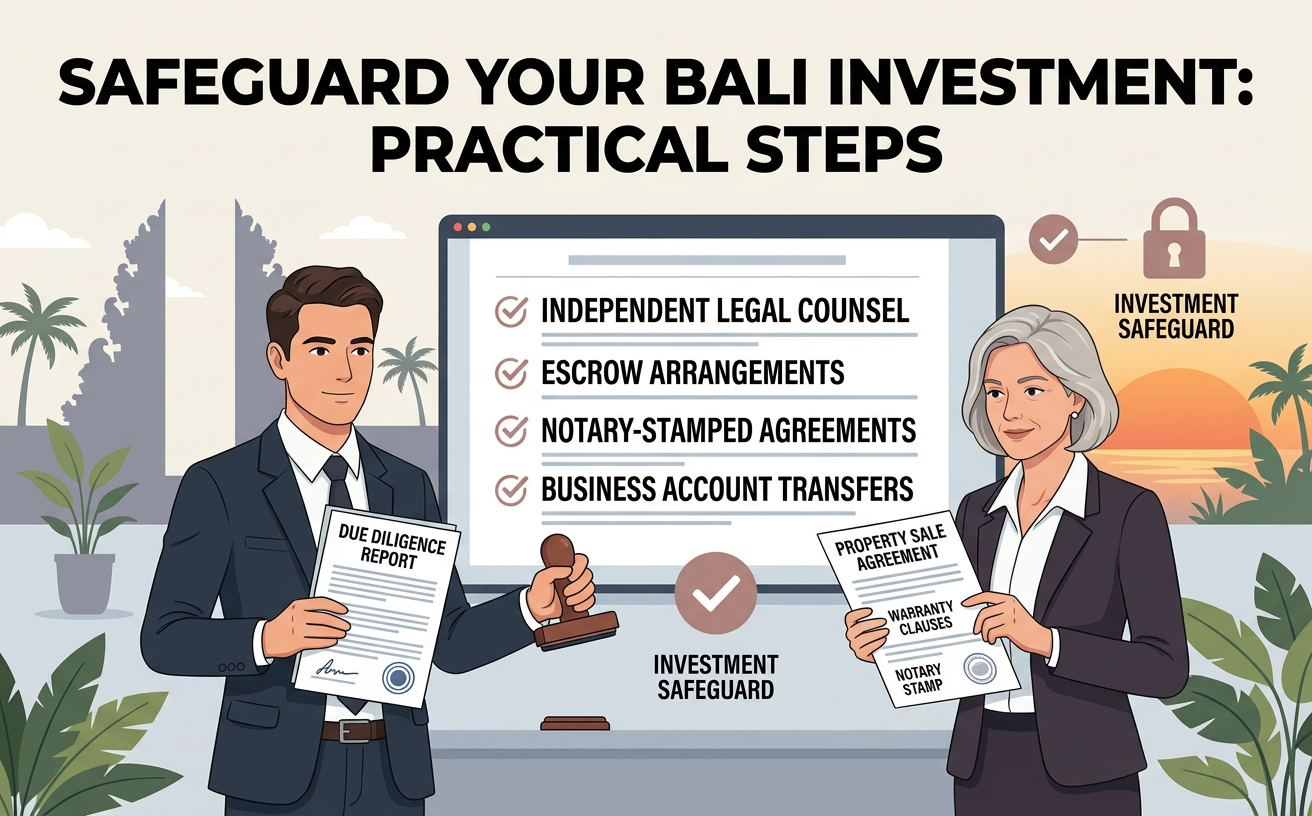
Mitigation starts with structured due diligence and ends with legally enforceable safeguards. Engage independent legal counsel experienced in Indonesian real estate, require escrow arrangements for large transfers, and use notary-stamped sale and purchase agreements that include warranty clauses and clear dispute resolution terms. Consider obtaining title insurance where available, and avoid cash payments or transfers to personal accounts; transact via business or escrow accounts tied to the notary or law firm handling the sale. These procedural protections significantly lower the chance of irreversible loss.
Recommended process checklist
- Commission a legal due diligence report covering title, encumbrances, and zoning.
- Use escrow for deposits and final payments overseen by the notary or licensed law firm.
- Include performance guarantees and penalties in the sale agreement.
- Schedule an independent property inspection to verify condition and compliance.
Tools and Resources: Revenue Calculator and Due Diligence Support
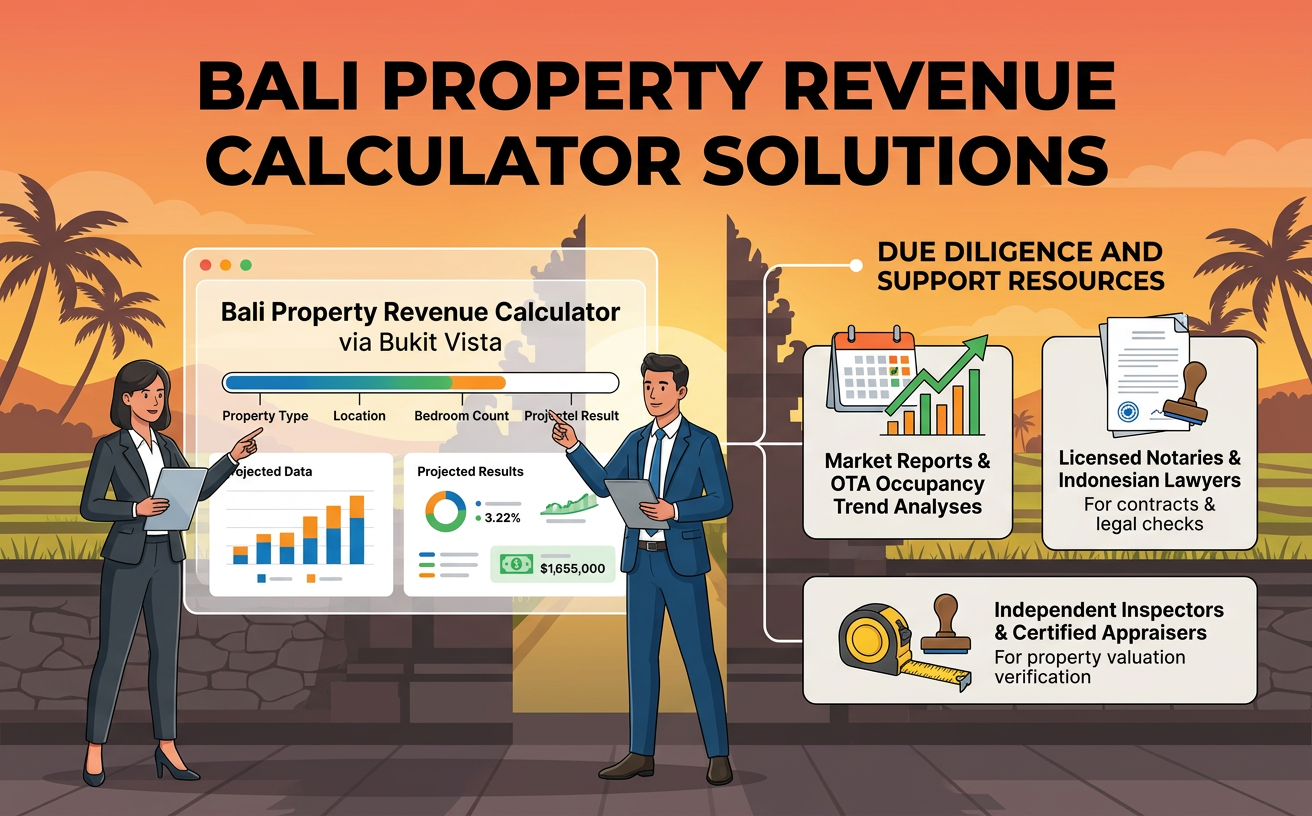
Beyond fraud prevention, assessing expected performance is essential to avoid overpaying for underperforming assets. The Bali Property Revenue Calculator promoted alongside this coverage provides a data-driven projection of rental income based on property type, location, and bedroom count, helping buyers test seller claims against market benchmarks. Supplement calculator outputs with local market reports, channel-manager data for occupancy trends, and a professional property manager’s estimates to create realistic forecasts. Combining financial modeling with legal checks creates a robust acquisition framework.
Helpful resources
- Bali Property Revenue Calculator via Bukit Vista for baseline income projections.
- Local market performance reports and OTA occupancy trend analyses.
- Licensed notaries and Indonesian property lawyers for contract and title work.
- Independent inspectors and certified appraisers for valuation verification.
Key Takeaways
- Common scams include forged titles, misuse of power of attorney, and inflated revenue claims; verify all documents through official channels.
- Perform legal due diligence with a licensed notary and experienced property lawyer before transferring funds.
- Use escrow accounts, written warranties, and enforceable contracts to reduce transactional risk.
- Validate projected rental income with independent tools like the Bali Property Revenue Calculator and cross-check against local performance data.
- If any party resists verification or transparency, pause the transaction and seek professional advice.
Final word: Bali’s property market offers attractive opportunities, but the combination of high demand and complex local rules creates openings for fraud. Investors who pair careful legal due diligence with realistic financial modeling and transparent transactional structures dramatically reduce risk and improve long-term returns. Prioritize verification, documented guarantees, and independent valuation to protect your capital and ensure a smooth acquisition.
Jason, Business Journalist at Bukit Vista
You’re a property owner? Wondering What Could Your Bali Villa Really Earn?
Get a data-driven revenue projection based on your property type, area, and bedroom count. Discover your villa’s true earning potential in Bali.