
DENPASAR, Bali – Indonesian authorities have completed a major wildlife crime investigation involving the alleged trade of elephant ivory products in Bali, paving the way for prosecutors to bring the case to court.
The Ministry of Forestry announced that prosecutors have declared the case dossier complete (P-21) in an investigation centered on the suspected sale of ivory-based handicrafts and decorative items in Gianyar Regency.
The case originated from a cyber patrol operation conducted by the Ministry’s Forestry Law Enforcement Directorate (Gakkumhut), which identified a Facebook post advertising products suspected to be made from protected wildlife parts.
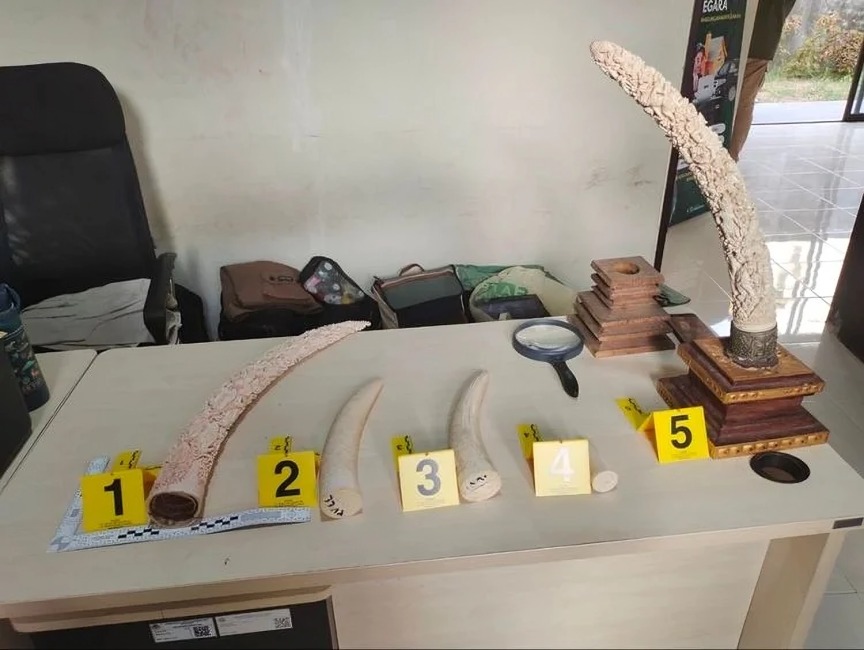
The online trail led investigators to an art shop in Tampaksiring, Gianyar, where inspections were carried out on April 14. A day later, a joint operation involving Bali Police resulted in the seizure of numerous carvings, handicrafts, and other items believed to have been made from genuine elephant ivory.
Authorities later identified a suspect, referred to by the initials IKS, who is accused of trading products derived from a protected species. Investigators subsequently secured court approval for the confiscation of the seized evidence and completed the legal requirements needed to advance the case.
Under Indonesia’s conservation laws, the possession, transportation, marketing, and trade of protected wildlife species and products derived from them are prohibited, including processed items such as carvings, ornaments, and souvenirs.
Director General of Forestry Law Enforcement Dwi Januanto Nugroho said the case reflects the continuing threat posed by demand for ivory and other wildlife products.
“As long as ivory products are viewed as luxury items, collectibles, or valuable commodities, illegal hunting and trafficking networks will continue to find a market,” he said in a statement released by the ministry.
According to investigators, wildlife trafficking cases involving processed materials are often more complex than those involving raw animal parts. Authorities must establish the origin of the material, confirm the protected status of the species involved, and demonstrate commercial intent.
The Ministry warned that products made from protected wildlife remain illegal even when transformed into decorative objects, artworks, or collectibles.
The case also highlights ongoing concerns about the illegal wildlife trade in Bali, one of Indonesia’s most visited tourism destinations. Conservation authorities have repeatedly cautioned travelers against purchasing souvenirs made from protected animal species, noting that consumer demand continues to fuel trafficking networks across Southeast Asia.
Officials urged both residents and international visitors to refrain from buying, collecting, transporting, or trading products derived from protected wildlife. The public is also encouraged to report suspected wildlife trafficking activities through official government reporting channels.
Indonesia is recognized as one of the world’s most biodiverse countries, making wildlife protection a key component of the nation’s conservation efforts.
Disclaimer: While every effort has been made to ensure accuracy, this article may contain minor inaccuracies
in names, locations, or event details. Readers are welcome to contact the editorial team for any clarification.