
Bingin has always been the beach you had to want to find. It sits beneath the limestone cliffs of the Bukit Peninsula, reached by a narrow path that drops down through a cluster of warungs and homestays to a tidal reef break that surfers have travelled for since long before Bali had a property market worth the name. For two decades it built an international reputation as the quieter, rawer counterpoint to Canggu and Seminyak, the place people went when they wanted Bali to still feel like a discovery. Then, on the morning of 21 July 2025, Bingin became the most closely watched stretch of coastline on the island for an entirely different reason.
This is the first in a monthly series examining Bali’s neighbourhoods through the eyes of the people who buy, build, and stay in them, grounded in verified market data rather than sentiment. We begin with Bingin because no other address in Bali has been tested quite so publicly in the past twelve months, and because the question every international buyer now asks about it deserves an honest, evidence-led answer.
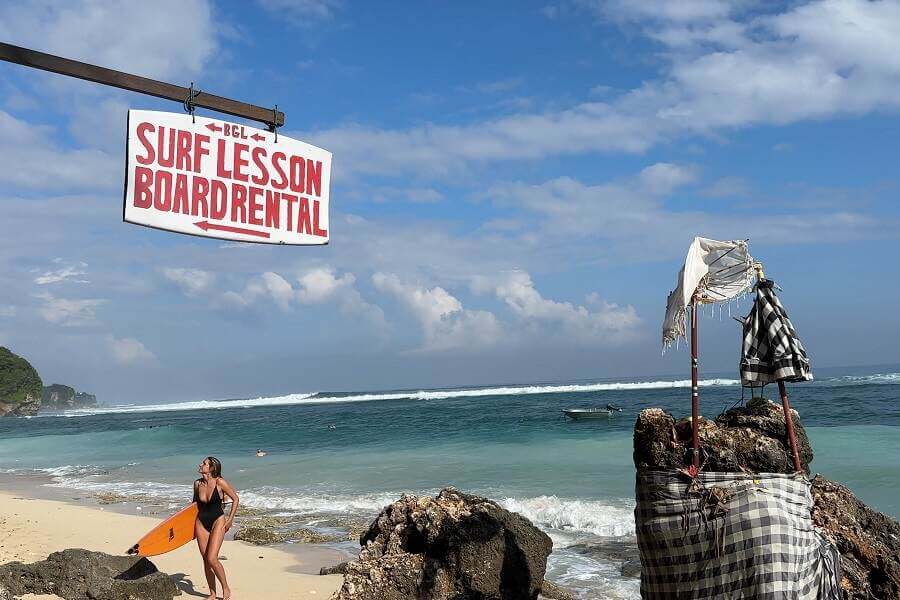
What Bingin Feels Like, and Why People Keep Coming
Bingin’s appeal has never been about scale. The cove is small, the path down is steep, and the accommodation has historically been intimate by design: boutique guesthouses, surf homestays, and a handful of cliffside restaurants rather than the large branded resorts that define other parts of the south. That constraint is the point. Visitors describe Bingin in the language of escape, of slowness, of a Bali that resists the café-and-co-working density found further north. People come for the surf, the sunsets over the reef, and an atmosphere that has proved remarkably difficult to manufacture anywhere else on the peninsula.
That identity has held through a turbulent year. We put the question directly to the developer of an established villa in the area, who experienced the events of July 2025 first-hand. “There was definitely a period of uncertainty immediately after the demolition, but occupancy held up better than many expected,” the developer told us. “Visitors still came for the surf, the beach, and the atmosphere. The biggest impact was probably on sentiment among owners and investors rather than tourists. Today, Bingin still feels very much like Bingin, although the event has made people more aware of development and regulatory issues.”
The Morning of 21 July, and the Year Since
The facts of what happened are not in dispute, and they matter to any buyer weighing the area. On 21 July 2025, the Bali Provincial Government, led by Governor I Wayan Koster and Badung Regent I Wayan Adi Arnawa, deployed more than 500 personnel from the civil enforcement agency, police, and military to dismantle around 48 cliffside structures at Bingin. Authorities stated that the buildings, which included villas, restaurants, warungs, and stairways, had been constructed on state-owned coastal land without the correct permits, in breach of Bali’s spatial planning regulations and coastal setback rules. The work was carried out manually, building by building, and the demolition drew international headlines alongside sustained criticism of how it was handled.
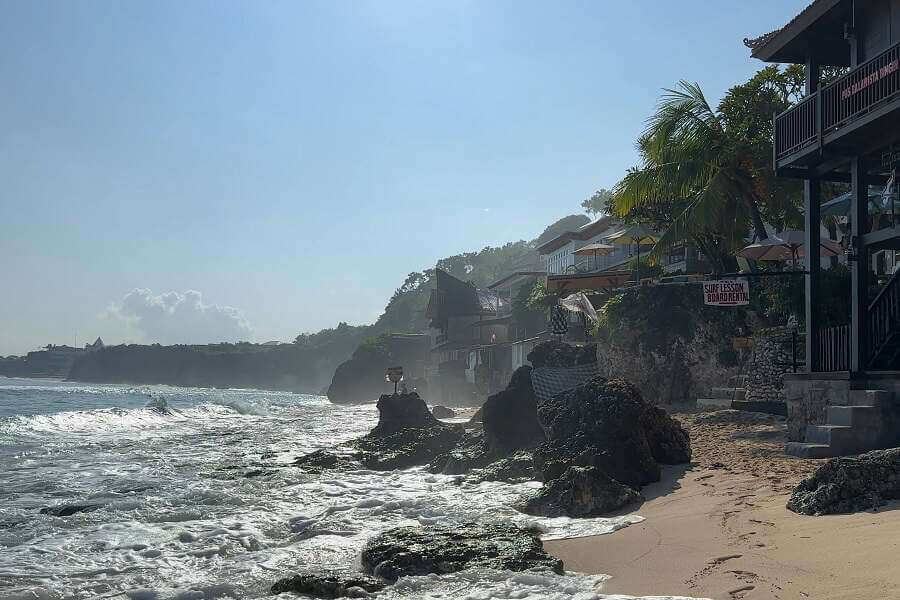
There is a second side to this, and it would be dishonest to leave it out. Many of the affected operators had run their businesses for years, in some cases decades, under customary community arrangements known as hukum adat, and had paid taxes throughout. A peaceful protest of roughly 200 residents and workers gathered on the day, asking not to defy the order but to negotiate a transition period. Legal counsel acting for the community filed a case with the Denpasar State Administrative Court seeking a delay pending review. The government’s position was that enforcement was a matter of law and long-term coastal preservation, part of a stated shift from high-volume tourism towards a higher-quality, better-regulated model. Both readings are real. The lesson for a buyer is not which side was right, but that land legality in Bali is now being enforced in a way it was not before.
What Comes Next on the Cliff
The story has since moved from demolition to redevelopment, which is the more useful part for anyone thinking about the area’s future. The Badung Regency Government has allocated IDR 20 billion to redevelop the wider Bingin Beach area, with early plans that include a stage for cultural performances such as the Kecak. The work is to be phased: planning and clearing through 2026, with a second construction phase from 2027. The initial priority is access and infrastructure, including a new set of wider cliffside stairs, a clean water network, and public facilities. Progress has not been seamless. Cleanup of demolition debris stalled at one point on funding, and the local community stepped in to help clear the beach themselves.
For a buyer, the near-term reality is honest disruption: construction activity, periodic noise, and a beachfront in transition for the next year or two. The longer-term reality is a publicly funded upgrade to the access and amenity of one of Bali’s most recognisable beaches. Those two things sit in tension, and both belong in the calculation.
Why We Work With REID
For the data in this series, we work with REID, our market intelligence partner of two years. We chose REID for a simple reason: it is the island’s only genuinely independent property intelligence platform, drawing on more than 100,000 property records across 65-plus locations, with no stake in selling any individual development. In a market where yield claims are too often supplied by the party doing the selling, an independent source is not a luxury. It is the difference between a number you can underwrite and a number you were sold.
So we asked REID the question buyers keep asking us: did the data show any significant effect on Bingin after the July 2025 demolition? The answer was direct. “Not really, if anything the market has remained strong. The overall sentiment of Bingin remains strong,” REID told us. “You can see the clearance rate is strong, so demand has remained. If anything, supply has slowed, but that is a market-wide trend as the market cools.”
What the Demolition Did, and Did Not, Do to the Market
The clearance rate is the figure that tells the clearest story. In Bingin, 57% of available properties are transacting, against a Bali-wide rate of 32%. Demand in Bingin is absorbing supply at close to twice the island’s pace. In the one-bedroom segment the gap is wider still, with a Bingin clearance rate of 63.8% against 30.2% across the market. This is not the signature of a neighbourhood that has lost the confidence of buyers.
What buyers are paying, and earning, reinforces the point. Bingin’s median property price sits at around USD 300,000, a 5.6% premium to the island median of USD 284,000. Occupancy runs at 58% against the market’s 54%, and the average daily rate reaches USD 266 against USD 232 island-wide, a 14% premium. Bingin is also overwhelmingly a compact-asset market: one- and two-bedroom villas account for 66% of sales here, compared with 50% across Bali, and those smaller formats are precisely where the area’s outperformance concentrates. Two-bedroom villas in Bingin record 65% occupancy against 59% market-wide.
The one number that does not move is price growth, and it would be misleading to gloss over it. Bingin prices are essentially flat, down a fractional 0.4% year-on-year, against a modest 1% rise across Bali. Read alongside the clearance and occupancy data, this is the real picture: demand is strong and stock is turning over quickly, but prices are stable rather than climbing. That is a more honest and, for a disciplined buyer, more useful position than a runaway growth narrative. It points to a market that rewards income and operational performance over speculative capital gain.
The wider backdrop supports the demand base. Bali’s total tourist arrivals reached their highest level since 2019, with foreign visitors accounting for 42% of the total for the first time on record. Supply, meanwhile, has slowed across the island as developers absorb existing inventory rather than launch new projects, and Bingin is structurally supply-constrained in any case, with fewer than 200 available properties and just over 200 sales in the twelve months to May 2026. A market with limited stock, fast absorption, and a premium daily rate is not a market the demolition broke.
Where Bingin Could Go in the Next Five Years
No serious view of an area is complete without naming what could go wrong. Four risks stand out, and each has a defensible mitigation.
The first is seasonality and concentration. Bingin’s earnings are heavily weighted to the June-to-September peak, when occupancy and rates climb sharply, leaving the shoulder and low-season months structurally softer. The mitigation is operational: professional management, a direct-booking strategy to reduce reliance on online travel agents, and realistic underwriting that does not annualise peak performance across the whole year.
The second is rate pressure. Across Bali, average daily rates fell roughly 14% over the past year as operators traded price for occupancy in a more competitive market. Bingin’s rates are holding above the island average, but the trend is real, and product quality is what defends pricing power. Well-built, well-positioned, well-managed villas hold their rate; tired or generic stock does not.
The third is forward supply. The island-wide concern sits in off-plan apartments, where around 79% of stock is still under construction and a wave of completions could intensify competition. Bingin is largely insulated here, being a villa-led and supply-constrained market, and completed villas command roughly a 15% premium over off-plan equivalents precisely because the income is real and the delivery risk is gone. For most buyers in this area, completed and trading beats off-plan and promised.
The fourth is the one the demolition itself exposed: regulatory and land-legality risk. This is the single most important factor in Bingin, and it is entirely manageable through process. It means buying only completed villas with a verified permit stack and legitimate land status, confirmed by independent legal due diligence before any capital is committed. The buyers who were exposed in July 2025 were, almost without exception, those who had relied on informal arrangements rather than verified title and permits. That is exactly the layer a buyer-side advisor exists to provide.
What the Numbers Look Like on a Real Bingin Villa
To ground all of this in something concrete, consider an established two-bedroom villa in central Bingin, asking around USD 239,000, roughly IDR 4.23 billion. Its full-year 2025 trading record has been independently verified, including two months affected by maintenance downtime. Across the year it ran at 75.6% occupancy at an average daily rate of about IDR 3.38 million per night. Through the June-to-September peak it reached 80% to 94% occupancy at rates between IDR 3.1 million and 4.6 million, demonstrating the upper end of what a well-run two-bedroom villa achieves in this micro-location.
On the verified figures, the property returns a net yield in the region of 11.0% on the most conservative reading, rising towards 16.8% on a maintenance-adjusted basis, measured against the asking price. By comparison, typical operating villas in this part of the Bukit deliver around 7% to 9% net. These yields are calculated before income tax, which is structure-dependent: an Indonesian tax resident, a KITAS holder, and a non-resident buyer will each see a different net outcome from the same villa, which is why we always model returns against the buyer’s specific ownership structure rather than quoting a single headline number. One further signal is worth noting. Booking lead times on the villa lengthened from around six days in January 2025 to 36 to 40 days by year-end, a forward indicator that demand was strengthening, not weakening, as the year went on.
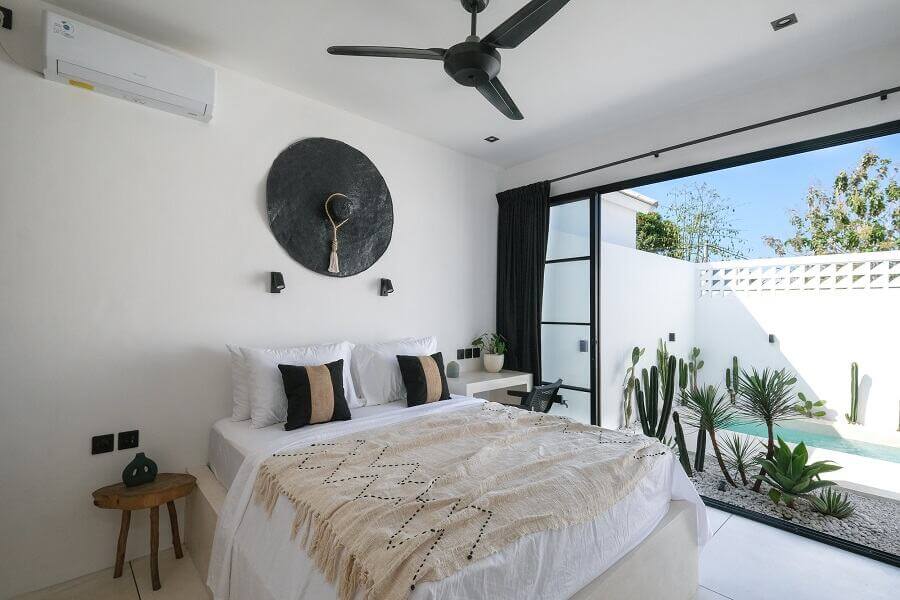
A property like this is the kind we represent buyers on every week: verified, completed, and trading, with the numbers reconciled against an independent record before anyone signs anything. If you would like the full briefing on this villa, or to see other verified properties in Bingin assessed to the same standard, you are welcome to reach out or leave a comment below.
Frequently Asked Questions
Is Bingin a good place to buy property in Bali in 2026?
On the data, Bingin remains one of Bali’s stronger micro-markets. It records a 57% clearance rate against the island’s 32%, occupancy of 58% against 54%, and an average daily rate around 14% above the market. Prices are flat rather than rising, so the opportunity is income- and absorption-led rather than driven by capital growth.
What happened at Bingin Beach in 2025?
On 21 July 2025, the Bali Provincial Government demolished around 48 cliffside structures found to have been built on state-owned land without the correct permits, in breach of spatial planning rules. The event was widely covered internationally and prompted both community protest and legal action.
Is Bingin Beach still open to visitors?
Yes. The beach remains open, though visitors may encounter cleanup and, in time, redevelopment works. Badung has allocated IDR 20 billion for a phased redevelopment of the area running from 2026 into 2027.
What rental yields do villas in Bingin achieve?
Well-run, completed villas in Bingin can achieve net yields meaningfully above the 7% to 9% typical of comparable Bukit stock, with verified examples in the 11% to 16.8% range before income tax. Actual net return depends on ownership structure, management quality, and how conservatively the figures are underwritten.
What should buyers check before buying in Bingin?
The central lesson of the past year is land legality. Verify title, land status, and the full permit stack through independent legal due diligence before committing capital, and favour completed, trading villas over off-plan promises.
Market data in this article is provided by REID, Bali’s independent property intelligence platform and Fullers Properties’ market data partner. Source: realinfo.id (https://www.realinfo.id/).