
Indonesia’s national tourism board, Wonderful Indonesia, is one of the best places to find inspiration and ideas for exploring the Indonesian archipelago.
Of course, if you’re looking for information, you come directly to us here at The Bali Sun!
We’re only half joking, but Wonderful Indonesia has just updated its guidelines for Bali Culture 101, how to understand the traditions that shape the island, and we thought it was well worth revisiting.
With Bali in the midst of the peak vacation season, thousands of travelers are heading to the island for the first time. So what better time than now to get up to speed with the beauty and diversity of Balinese culture so that visitors can have a culturally respectful, enjoyable, and meaningful vacation in Bali.
Wonderful Indonesia shares, “In Bali, traditions are not only reserved for special occasions. They are woven into daily life through offerings, ceremonies, and practices passed down across generations, shaping the island’s identity and sense of community.”
For many tourists visiting Bali, the truly unique culture is one of the biggest attractions. With ceremony, faith, and ritual setting the flow and pace of each day, this way of life is something that many tourists have never experienced before.
Here at The Bali Sun, we say this all the time, but Bali is one of the most culturally generous places in the world, and we’re not talking about the hospitality. Balinese culture is open for outsiders to experience in a really powerful way. There are not many places in the world where people who are not of the culture can take part in sacred ceremonies and observe deeply reverent cultural practices.
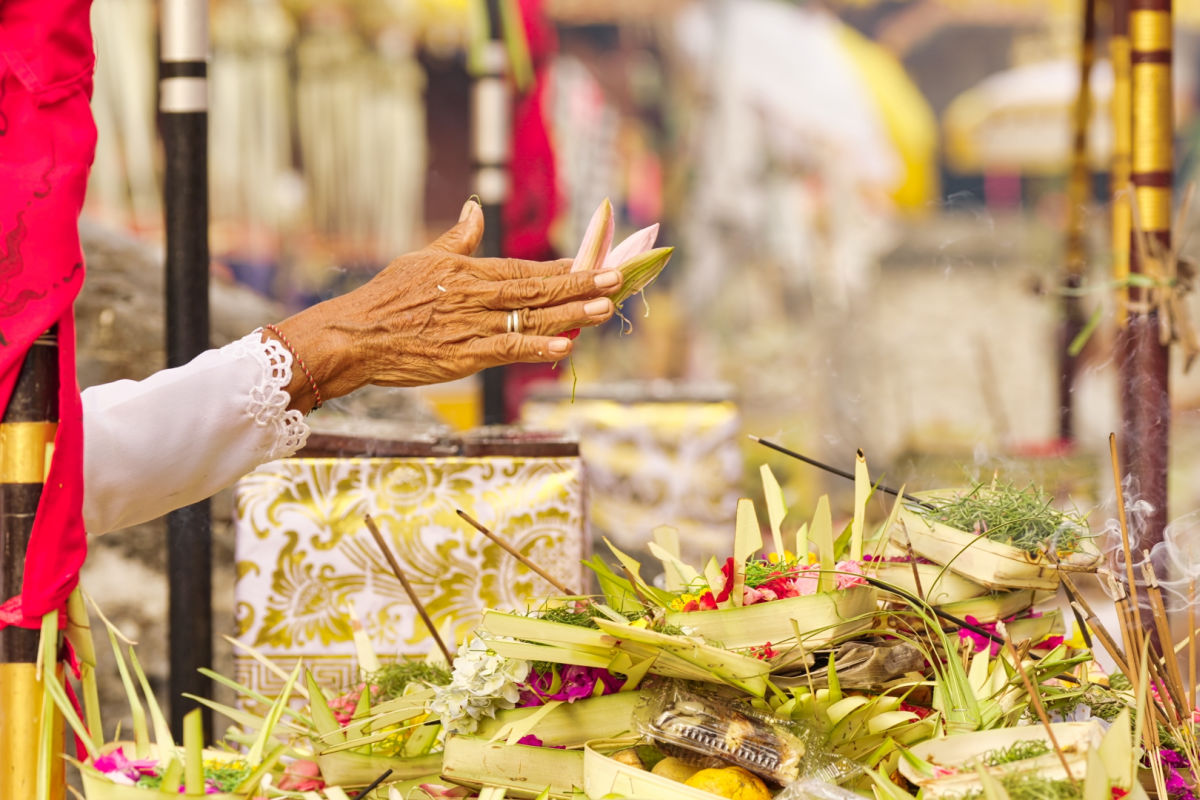
One of the first aspects of Balinese culture that tourists notice when they arrive is the Canang Sari.
As explained by Wonderful Indonesia, “One of Bali’s most visible traditions, Canang Sari, is a daily offering placed as an expression of gratitude and devotion. Made from woven palm leaves, flowers, and incense. Each flower colour represents a different direction in Balinese belief.”
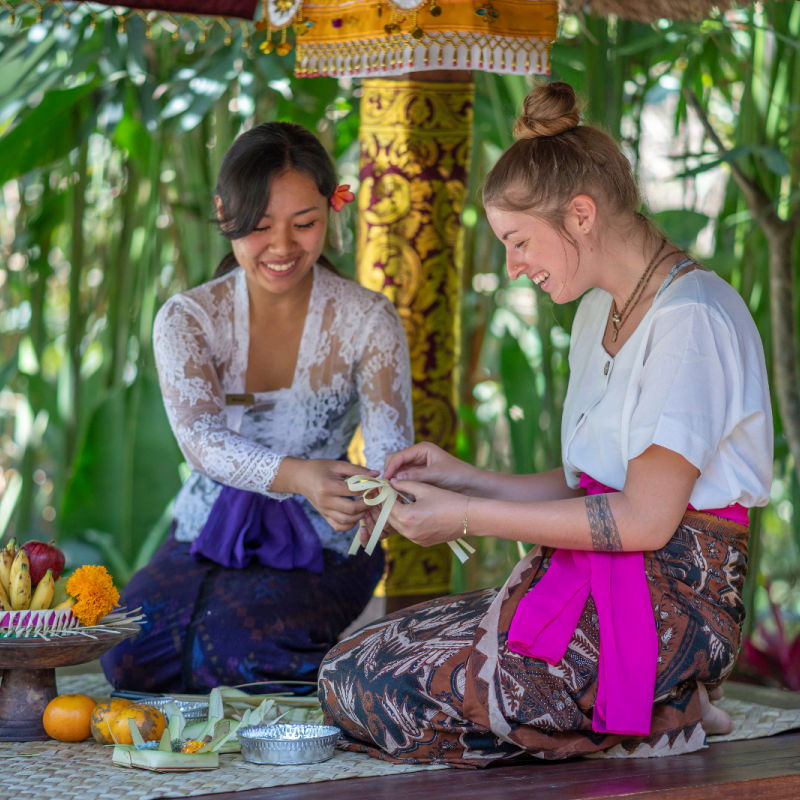
Here at The Bali Sun, we always encourage tourists to experience Balinese culture firsthand, and one of the most valuable cultural activities designed for tourists in Bali is a Canang Sari Making Workshop.
These sessions are on offer all around the island, and most top hotels offer classes as part of their cultural programming. We love the workshops on offer at the ARMA Museum in Ubud. Canang Sari making classes are also on offer at Hotel Tjampuhan in Ubud.
We highly recommend booking a Canang Sari Workshop followed by a visit to the Tjampuhan Spa, which is set within a river cave…it’s pretty magical!
Wonderful Indonesia has also highlighted Galungan and Kuningan as important elements of Balinese culture for tourists to be aware of. This is a particularly timely one as Bali is celebrating Galungan right now.
Galungan Day was observed on the 17th June 2026, and Kuningan Day will close the 10-day festival on the 27th June 2026. Galungan and Kuningan are the Balinese Hindu celebration of the triumph of good over evil, of dharma over adharma.
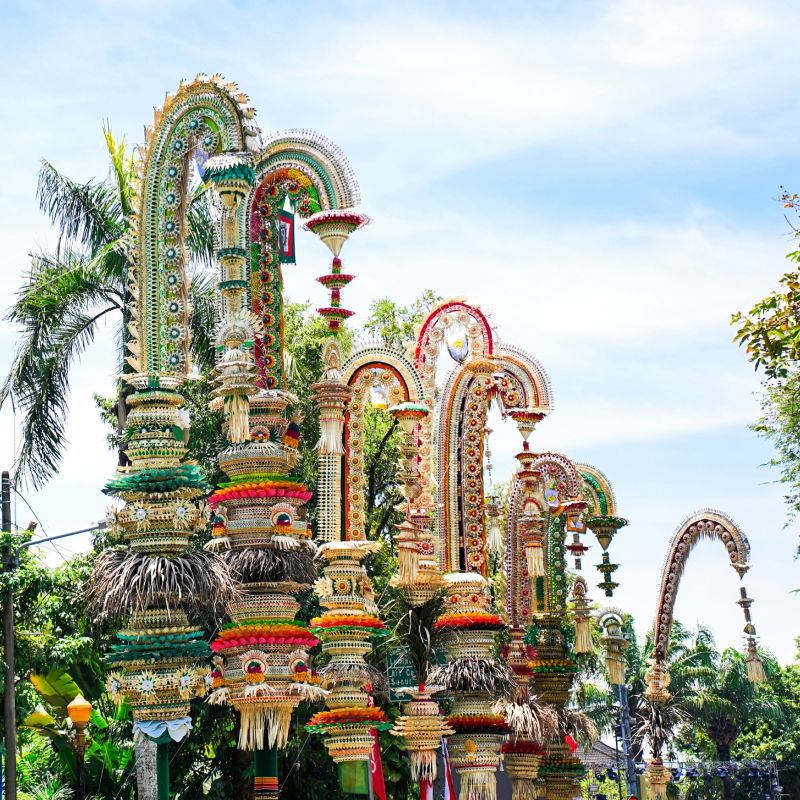
Tourists in Bali right now won’t be able to help but notice that the streets are lined with impressive Penjor. These are the tall and ornate decorated bamboo poles that are installed outside every home in every community in Bali.
The pennies are a symbol of gratitude, and are thought to help guide the ancestors who visit earth during the 10 days of Galungan and Kuningan, home.
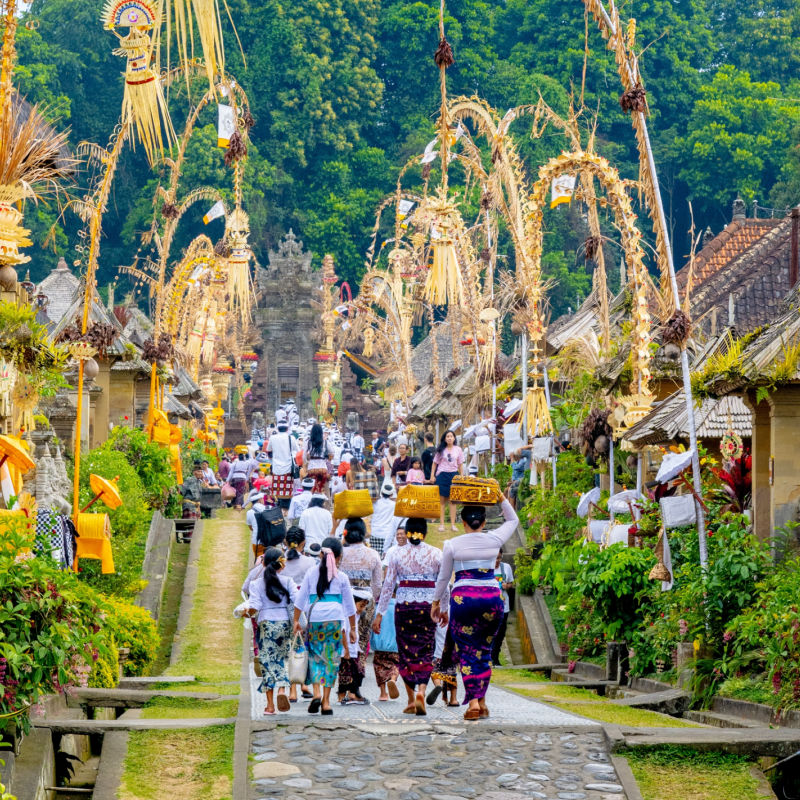
Balinese culture is rich, diverse, and for outsiders would take a lifetime of devoted study to fully understand. This is just one of the reasons why so many foreigners return to Bali time after time; one visit simply isn’t enough.
There is so much to learn about Balinese culture, from ceremonies and rituals to temples and sacred landmarks, to the language and cosmology, and so much more.
While it can feel overwhelming to start with, cultural respect for tourists in Bali is very simple; slow down, observe, be gently curious, generous, and open-minded, and you’ll feel right at home.
Discover more from The Bali Sun
Subscribe to get the latest posts sent to your email.