
We are unpacking content from Bali Business Review on YouTube to explain why Bali’s road network chokes under growing demand. The analysis centers on a two-artery model: concentrated north-south corridors that handle the bulk of island traffic, creating predictable bottlenecks that impact commute times, tourism flows, and property performance.
Hi, I’m Jason, a Business Journalist at Bukit Vista, and I’ll be unpacking analysis from Bali Business Review. Today, we’ll dive into Why Bali Traffic Is So Bad: The Two-Artery Bottleneck to offer clear, data-driven insights.
What the Two-Artery Bottleneck Is

The “two-artery” concept describes how Bali’s primary traffic flows are funneled into a limited set of major roads and corridors, concentrating movement along a few predictable axes. These arteries carry local commuter traffic, delivery vehicles, and a large share of tourist transfers to and from airports, ports, and major destinations like Kuta, Seminyak, and Ubud. Because parallel high-capacity alternatives are limited, any disruption or peak-period surge cascades through the network, producing island-wide delays.
This pattern is amplified by mixed vehicle types—motorcycles, private cars, taxis, and buses—sharing the same lanes without consistent segregation or dedicated transitways. Seasonal tourism cycles and special events further increase load on these arteries, exposing infrastructure limitations and heightening the sensitivity of travel times to small changes in demand.
Why Demand Has Outpaced Road Capacity
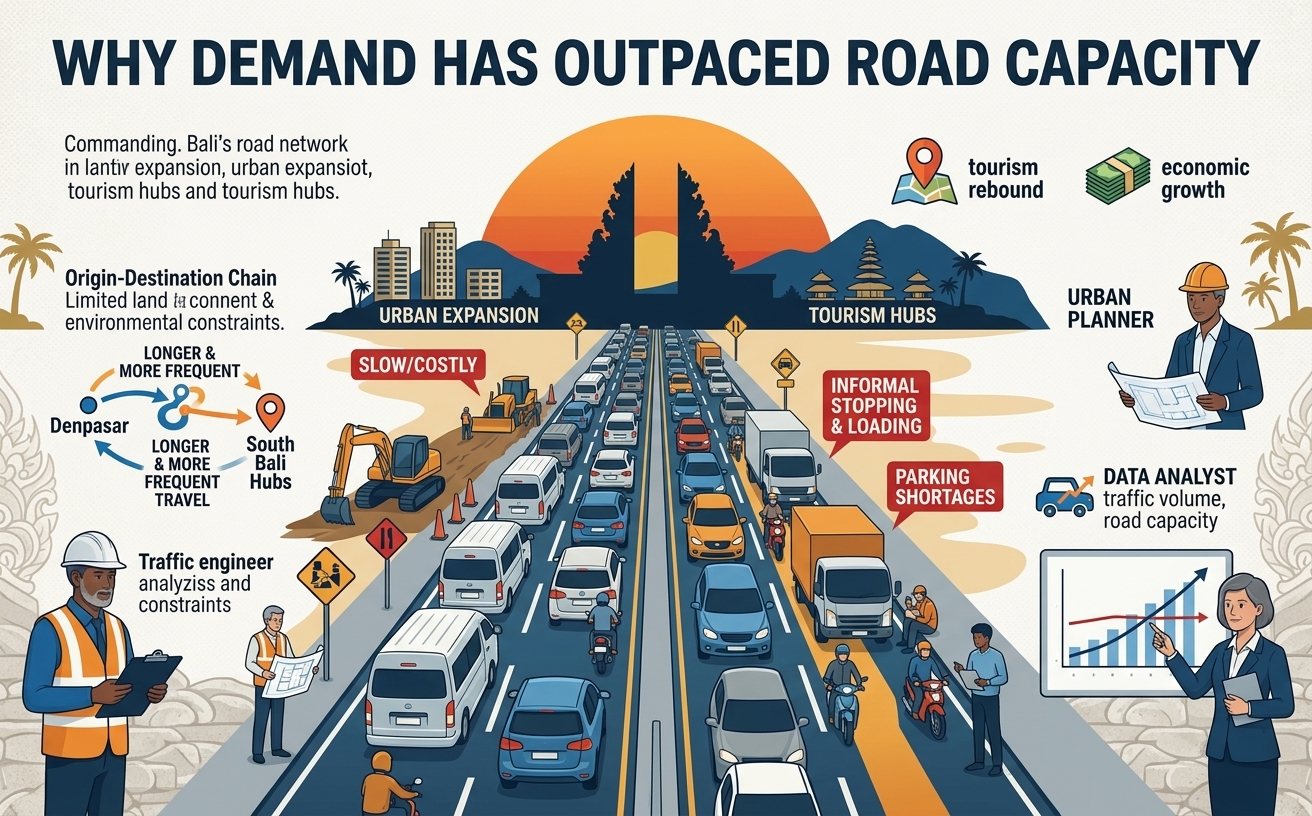
Bali’s economic growth and tourism rebound have increased vehicle volumes faster than road upgrades have been implemented, creating structural capacity shortfalls. Urban expansion around Denpasar and southern tourism hubs has translated into longer origin-destination chains; more people and goods now travel farther and more frequently along the island’s main corridors. Limited land availability and environmental constraints reduce the feasibility of large-scale road widening, meaning supply-side interventions are often slow, costly, or politically contested.
Additionally, parking shortages and curbside activity on these arteries reduce effective road width and slow traffic flow, while informal stopping and loading practices create frequent friction points. The net effect is that even modest increases in daily vehicle counts or tour transfers can trigger disproportionate congestion compared with cities that have more distributed arterial networks.
Business and Property Impact
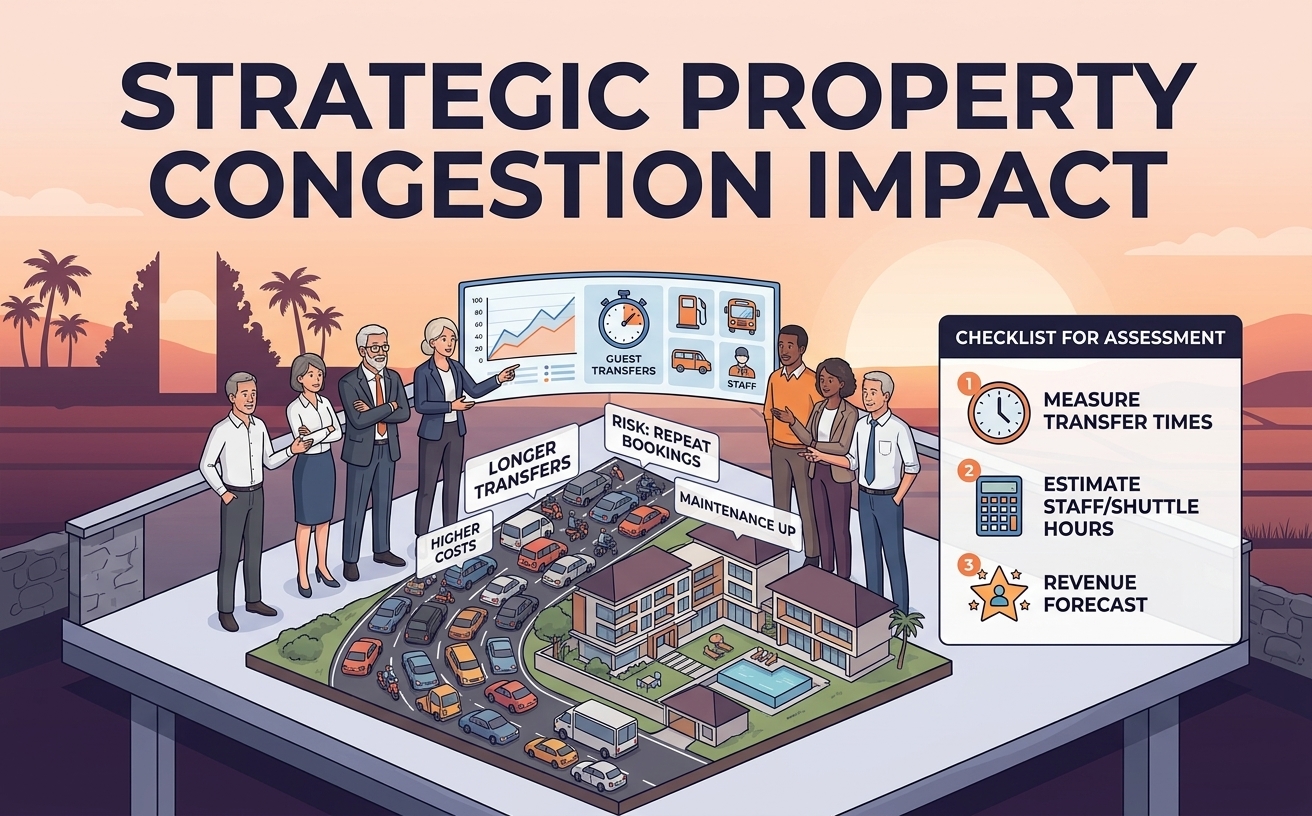
For hospitality operators and villa owners, congested arteries translate to longer guest transfers, unpredictable arrival times, and higher operating costs for transport and staff logistics. These frictions affect guest satisfaction scores and can reduce repeat bookings or lower achievable nightly rates, especially for short-stay markets that value convenience and quick access to dining and nightlife. For investors, localized congestion is a measurable risk that can depress occupancy and revenue per available unit if not mitigated.
Beyond direct guest experience, congestion increases maintenance and fuel costs for shuttle services and makes last-mile logistics more expensive for housekeeping and suppliers. Properties near chronically congested corridors should factor slower turnaround times and potential higher variable costs into revenue projections and underwriting assumptions.
Checklist for property impact assessment
- Measure average transfer times to the airport and key attractions during peak hours.
- Estimate additional shuttle and staff hours required per booking due to congestion.
- Factor guest satisfaction impact into revenue-per-night and occupancy forecasts.
Infrastructure and Policy Responses
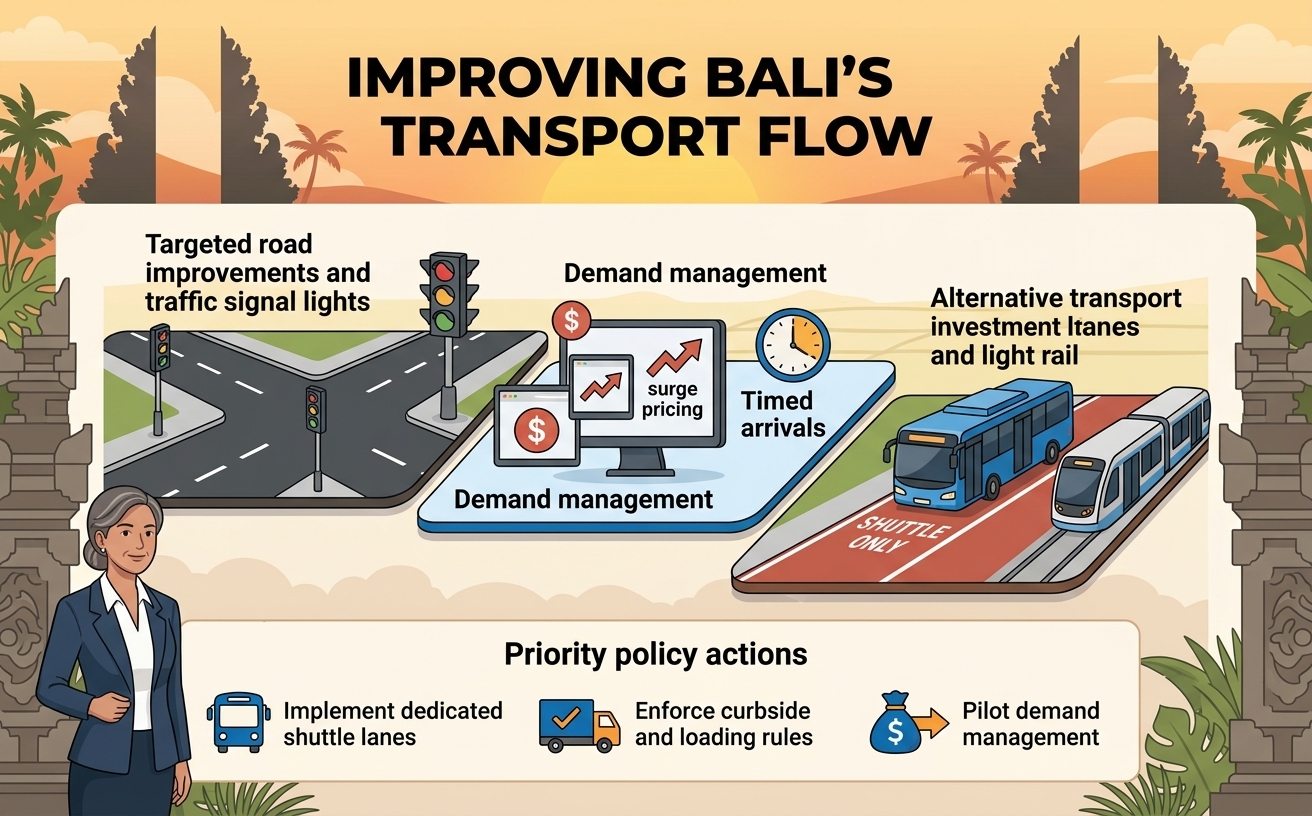
Addressing the two-artery bottleneck requires layered interventions: targeted road improvements, demand management, and alternative transport investments. Short- to medium-term measures include traffic signal optimization, enforcement of loading zones, and dedicated lanes for high-occupancy vehicles or shuttle services. Medium- to long-term solutions often considered are ring roads, bypasses, and investments in mass transit such as bus rapid transit corridors or light rail segments to redistribute flows off the main arteries.
Policy tools like congestion pricing, improved public transport ticketing, and park-and-ride schemes can shift discretionary trips away from peak periods, while coordinated land-use planning helps to reduce long trip generation in sensitive corridors. Successful examples combine operational fixes with targeted capital projects and clear enforcement to protect gains in flow efficiency.
Priority policy actions
- Implement dedicated shuttle lanes in high-tourist corridors.
- Enforce curbside rules and loading zones to reduce lane obstructions.
- Pilot demand management (timed arrivals, surge pricing for peak transfers).
Practical Steps for Villa Owners and Investors
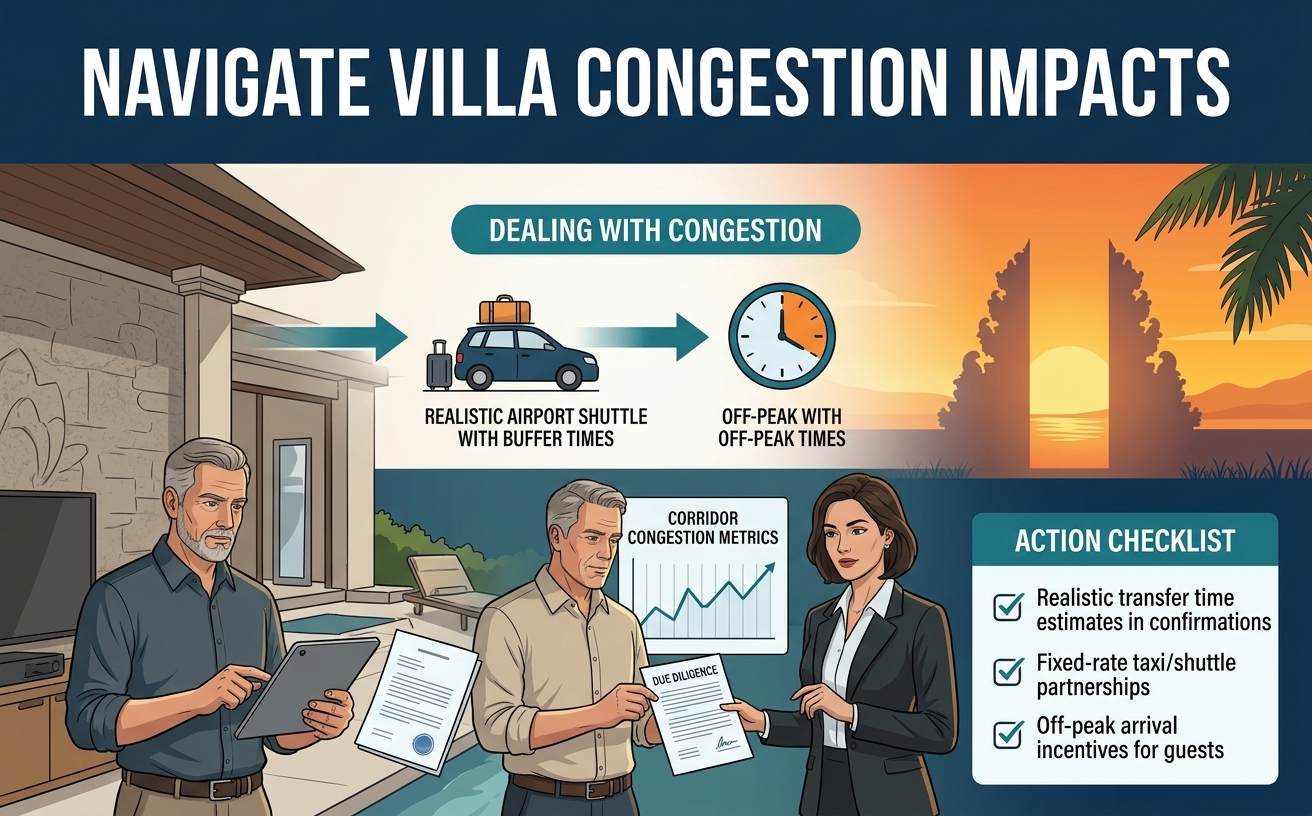
Villa operators can proactively soften congestion impacts by incorporating transport-aware amenities and pricing strategies into operations. Offer scheduled airport shuttles with buffer times, transparent transfer-time communications, and partnerships with trusted transport providers to reduce guest anxiety. Pricing models that reward longer stays or off-peak arrivals can shift demand away from congestion peaks and improve operational predictability.
Investors should include corridor congestion metrics in due diligence, comparing properties not just by distance but by average travel times during peak and off-peak periods. Operational contingency plans—on-call drivers, flexible check-in windows, and local concierge services—reduce negative reviews tied to transport delays and preserve revenue performance.
Action checklist for owners
- Include realistic transfer time estimates in booking confirmations.
- Negotiate fixed-rate partnerships with local shuttle and taxi operators.
- Offer incentives for guests booking arrivals outside peak congestion windows.
SEO, Title and URL Recommendations
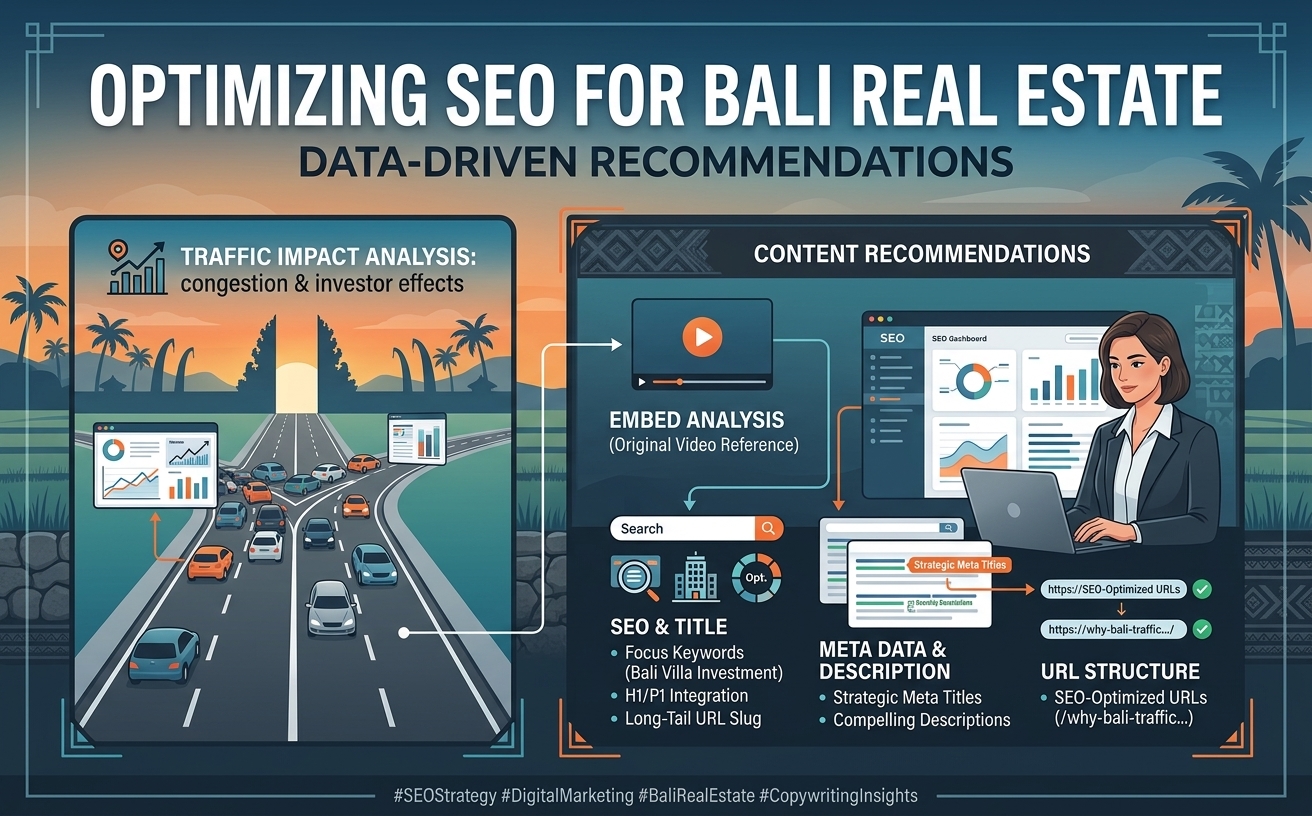
Focus keywords: Bali traffic, Bali congestion, Bali villa investment, two-artery bottleneck, Bali transport solutions. Use an SEO-optimized URL slug such as /why-bali-traffic-is-so-bad-two-artery-bottleneck to capture long-tail search intent. Meta title example: “Why Bali Traffic Is So Bad: The Two-Artery Bottleneck — Impact on Villas & Investors”. Meta description example: “Explore the two-artery bottleneck behind Bali’s congestion, its effects on tourism and villa investment, and practical steps for owners to protect revenue.” These elements help search engines connect traffic, investment, and local solutions queries to the article.
Source and embedded analysis reference: https://www.youtube.com/embed/K9E873WY9Bc. Use this embedded link on the page to provide visitors with the original Bali Business Review analysis while keeping the article focused on data-driven recommendations.
SEO content checklist
- Include focus keywords in H1, first paragraph, and meta title.
- Add structured data for article and video embed to improve indexing.
- Link to related local transport and tourism policy pages for topical authority.
Key Takeaways
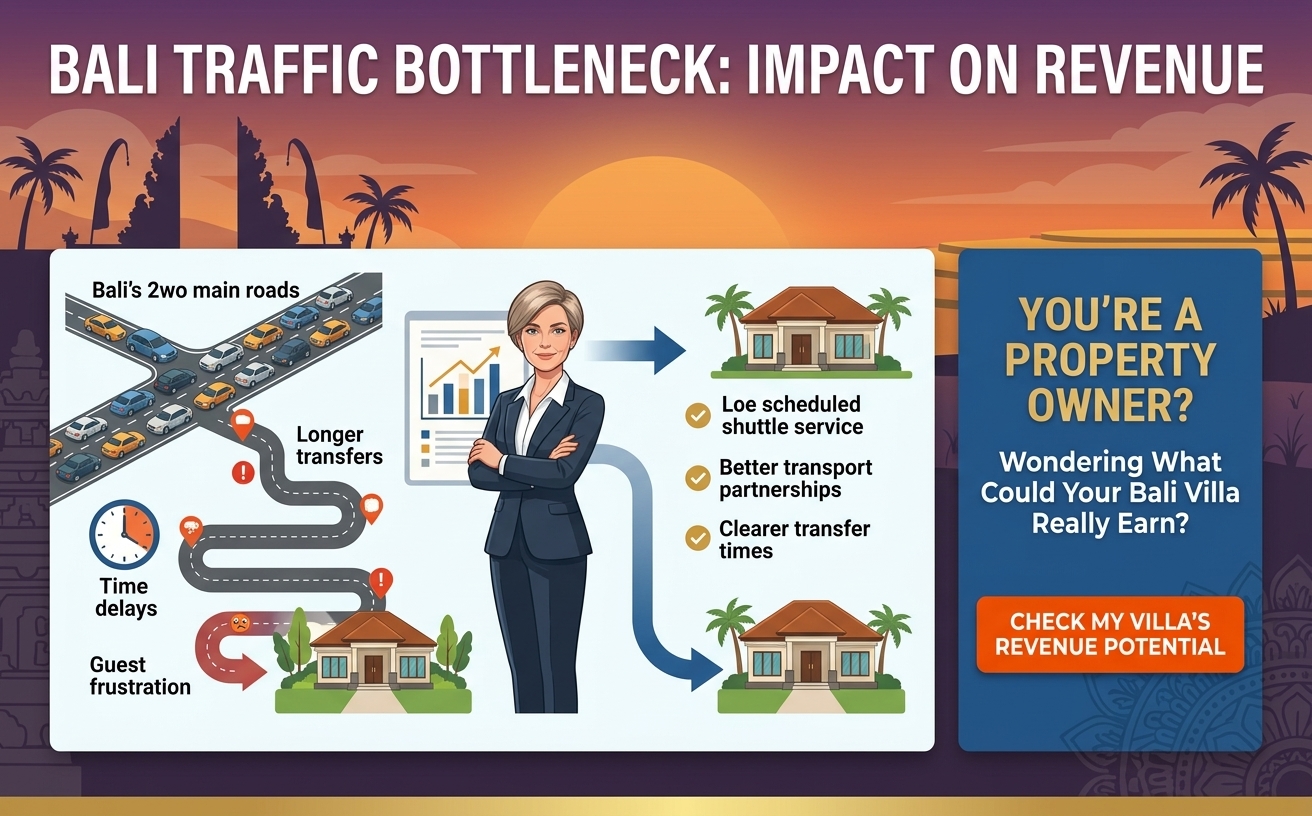
- The two-artery bottleneck concentrates traffic on a few corridors, making Bali highly sensitive to demand spikes and disruptions.
- Congestion has direct revenue implications for villas and short-stay properties through longer transfers and higher operating costs.
- Operational measures—scheduled shuttles, clear transfer times, and transport partnerships—can mitigate guest impact immediately.
- Long-term relief requires mixed solutions: road management, targeted transit investments, and demand-side policies.
- Investors should quantify corridor-level travel time and factor transport risk into valuation and underwriting.
Final word: the two-artery bottleneck is a structural constraint that shapes guest experience and property performance across Bali. Owners and investors who measure transfer times, adapt operations, and advocate for targeted infrastructure and policy changes will protect revenue and improve guest satisfaction in a congested but still highly desirable destination.
Jason, Business Journalist at Bukit Vista