
I am unpacking content from Bali Business Review on YouTube to clarify the core differences between freehold and leasehold property statuses in Bali. This report focuses on legal frameworks, ownership rights, transferability, typical lease terms and renewal risks—key data points every investor should know before committing capital.
Hi, I’m Jason, a Business Journalist at Bukit Vista, and I’ll be unpacking analysis from Bali Business Review. Today, we’ll dive into Freehold vs Leasehold in Bali to offer clear, data-driven insights.
Understanding Freehold and Leasehold
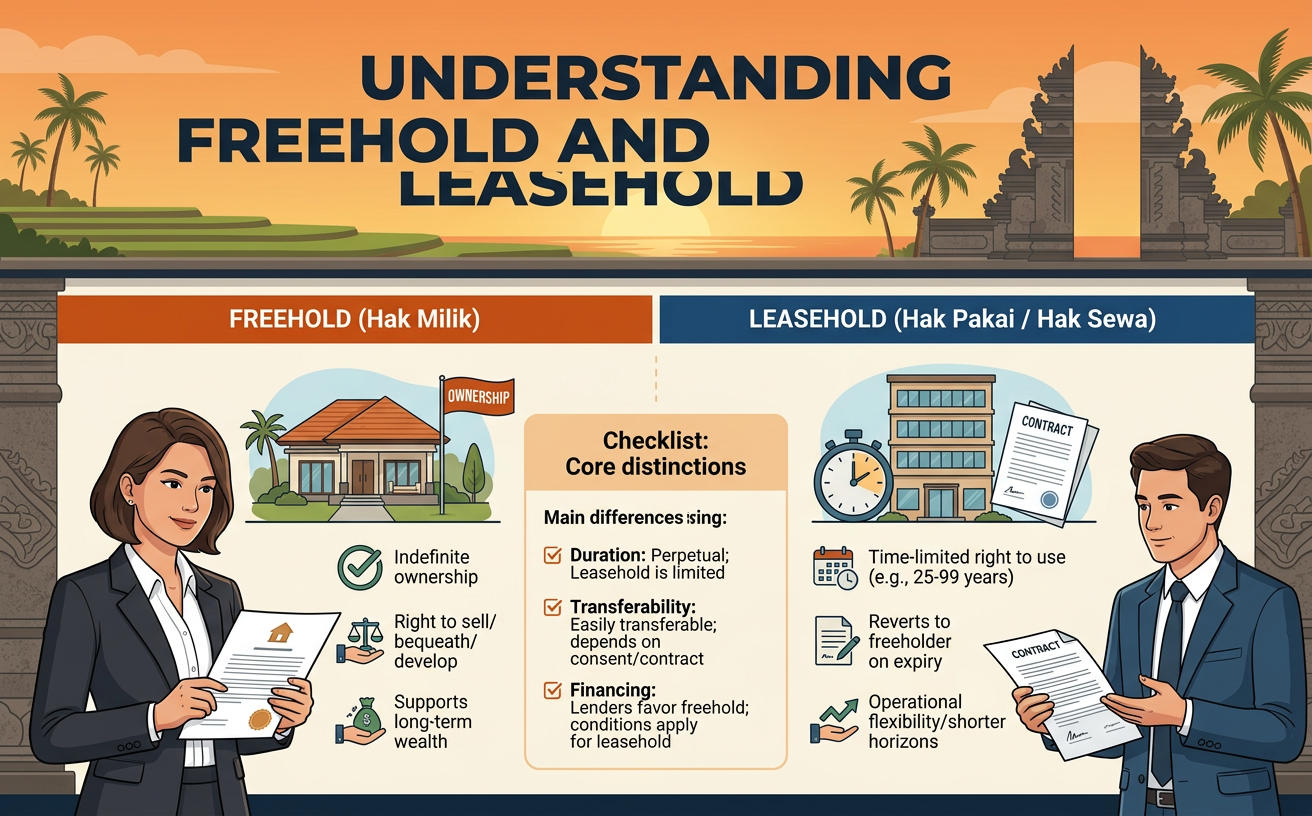
Freehold and leasehold represent two distinct legal frameworks for property interests. Freehold grants indefinite ownership of land and any structures on it, typically including the right to sell, bequeath, and develop, though subject to local zoning and use restrictions. Leasehold grants a time-limited right to occupy and use the property under contract terms; ownership reverts to the freeholder when the lease expires unless renewal or extension is negotiated. Each model offers different benefits: freehold provides capital security and long-term control, while leasehold often reduces upfront cost and can offer operational flexibility for businesses or investors focused on shorter horizons.
For investors, the practical differences center on duration, transferability, and financing. Freehold is viewed as a capital asset that is easier to mortgage and transfer, supporting long-term appreciation and planning. Leasehold investments require careful review of lease length, escalation clauses, and permitted uses because these factors materially affect income projections and resale value. Understanding these mechanics helps investors align their capital deployment with desired risk profiles—long-term wealth building typically favors freehold, whereas leasehold may suit operational or project-based strategies.
Checklist: Core distinctions
- Duration: Freehold is perpetual; leasehold is time-limited (commonly 25–99 years).
- Transferability: Freehold easily transferable; leasehold depends on consent and contract terms.
- Financing: Lenders favor freehold but can finance leasehold based on remaining term and collateral quality.
Legal Implications in Bali
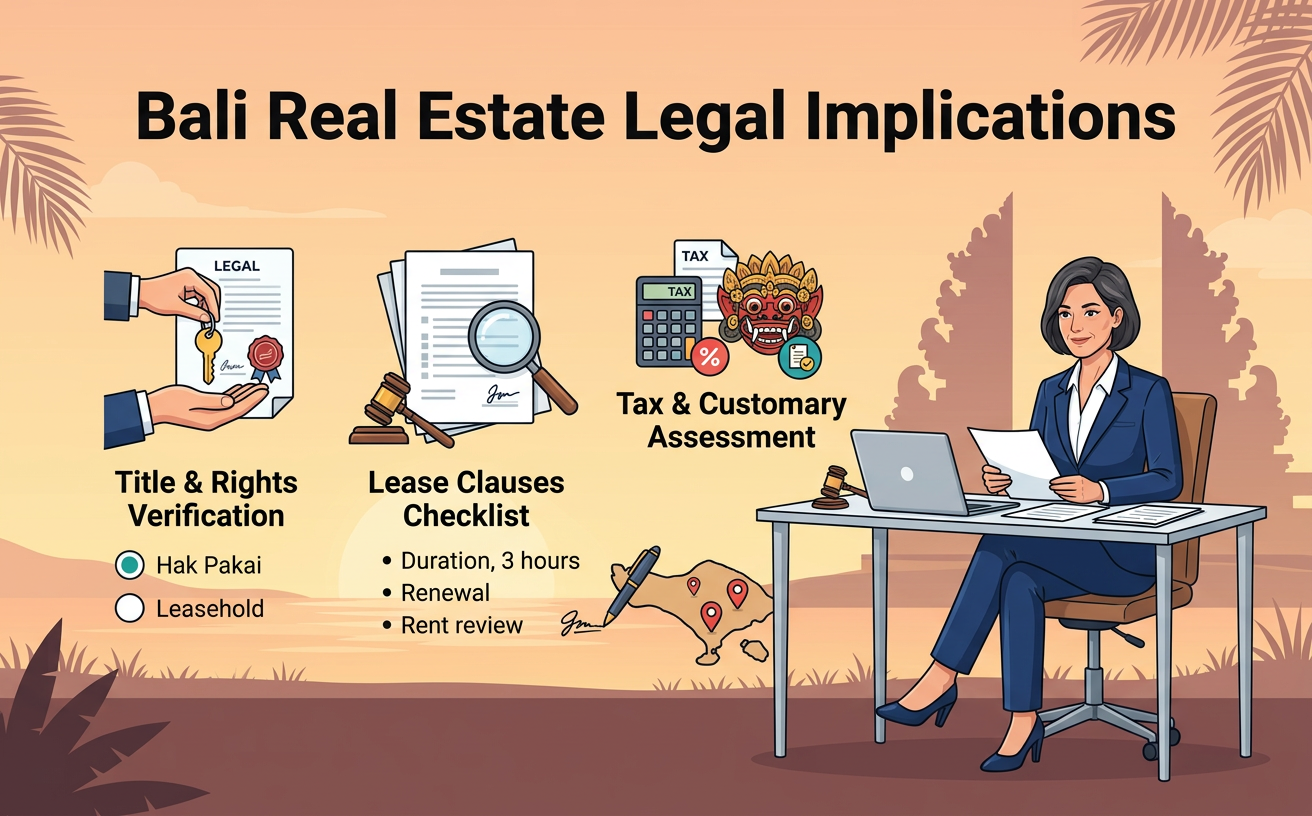
Bali’s legal environment introduces specific constraints, especially for non-Indonesian nationals. Indonesian law generally prohibits foreign ownership of freehold land; foreigners commonly hold use rights through structures such as Hak Pakai or Hak Guna Bangunan, nominee arrangements, long-term leases, or corporate holding structures. Investors must evaluate whether the intended ownership form complies with national statutes and local practice, and they should verify titles, encumbrances, and any customary land claims which can create contested rights on Balinese parcels.
Leasehold arrangements remain the most accessible route for foreign investors, but legal attention is critical: lease length, renewal provisions, rent escalation formulas, and dispute resolution mechanisms determine long-term viability. Due diligence should include title search, verification of the lessor’s right to lease, confirmation of permitted land use, and tax implications including duties on transfer and income. Working with a reputable notary, local counsel, and experienced property managers reduces legal exposure and improves the chances of seamless renewal or transition at lease end.
Checklist: Legal due diligence
- Confirm land title class (e.g., Hak Milik, Hak Guna Bangunan, Hak Pakai) and the lessor’s authority.
- Review lease clauses: duration, renewal mechanics, rent review, subletting rights, and termination triggers.
- Assess tax liabilities, registration requirements, and potential customary (adat) claims.
Investment Strategies
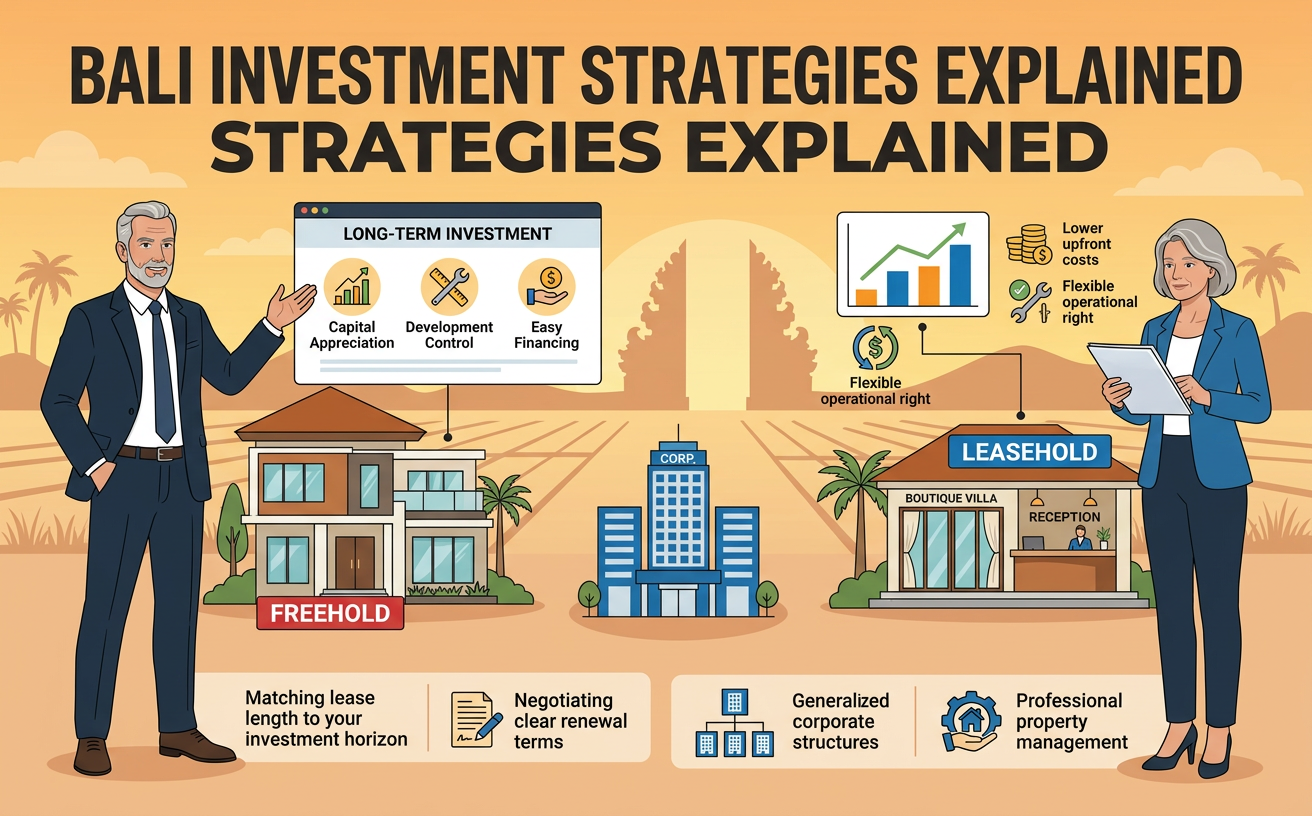
Choosing between freehold and leasehold depends on investment horizon, intended use, and risk tolerance. For investors seeking long-term capital appreciation, development control, and easier financing, structures that approximate freehold rights—where legally possible—are preferable. If the investment is operational (short-term rental business, pop-up hospitality, or project with finite lifecycle), leasehold can optimize capital efficiency by minimizing upfront acquisition costs while preserving operational flexibility.
Structure matters: many investors combine legal mechanisms to capture benefits of both models—long leases with stable renewal terms, layered corporate ownership, or hybrid agreements tying operational rights to management companies. Evaluate expected holding period relative to lease term: lenders and buyers typically require a meaningful remaining lease life (often 20–30+ years) to support financing and resale. Use scenario analysis—projecting revenue, costs, and terminal value under different lease outcomes—to compare expected returns adjusted for renewal and legal risk.
Checklist: Strategic considerations
- Match lease length to investment horizon; shorter projects favor leasehold while buy-and-hold favors freehold-like security.
- Negotiate clear renewal terms and cap escalation to stabilize long-term cash flow.
- Use corporate structures and professional property management to protect operational continuity and compliance.
Key Takeaways
- Freehold provides the strongest capital security and transferability, but is typically restricted for foreigners in Bali.
- Leasehold offers accessibility and lower upfront cost, but requires rigorous review of term, renewal, and escalation clauses.
- Legal due diligence—title verification, tax implications, and customary claims—is essential to mitigate long-term risk.
- Align property type with intended use: long-term appreciation favors freehold-like structures, operational projects often suit leasehold.
- Use tools like the Free Bali Property Revenue Calculator to compare scenarios and validate returns under different ownership models.
Final word: understanding the legal differences and structuring strategies for freehold versus leasehold in Bali directly affects both risk and return. Investors should prioritize clear title, realistic lease terms, and scenario-driven financial modeling to align property selection with business objectives and exit plans. For a practical next step, run the numbers with the Free Bali Property Revenue Calculator and review the embedded reference material below for further context.
Jason, Business Journalist at Bukit Vista
You’re a property owner? Wondering What Could Your Bali Villa Really Earn?
Get a data-driven revenue projection based on your property type, area, and bedroom count. Discover your villa’s true earning potential in Bali.