
BADUNG, Bali – A foreign resident in Bali is facing growing criticism after Indonesian members were removed from an expatriate WhatsApp group, with the incident reigniting debate over discrimination and drawing a response from immigration authorities.
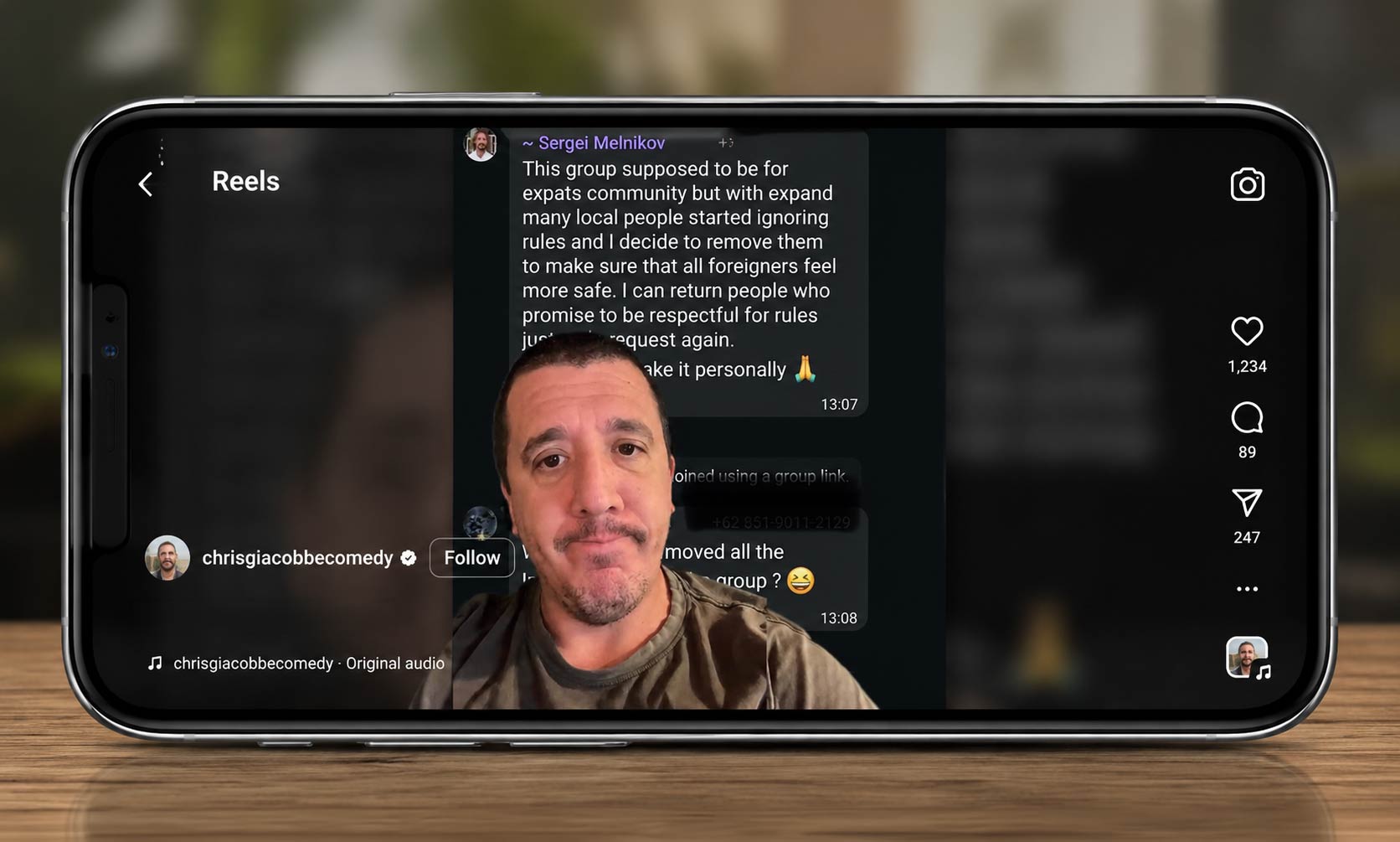
The controversy gained widespread attention after Italian content creator Christian Giacobbe criticised the decision in a video posted on his social media account on Monday.
In the video, Giacobbe identified the group’s administrator as Sergey Melnikov, claiming he had removed all Indonesian members from the Garage Sales in Amed WhatsApp group.
“This is Sergey, the creator of the Garage Sales in Amed group. At one point, he decided to remove all Indonesians from the group,” Giacobbe said.
Screenshots shared in the video showed a message attributed to Melnikov explaining that the group had originally been created for Amed’s expatriate community. He said that as more local residents joined, some had failed to follow the group’s rules, leading him to remove Indonesian members so foreign residents would feel “safer.”
“This group was intended for the expat community. However, as more locals joined and began ignoring the rules, I decided to remove them so that foreign members would feel safer. I can add back those who promise to follow the rules. Please don’t take this personally,” the message read.
The explanation quickly drew criticism from both Indonesians and fellow expatriates, several of whom said members had been removed despite never violating the group’s rules.
Comments shared in Giacobbe’s video included:
“You just removed all Indonesians from the group? Oh my God.”
“I hope not. This group has been very useful. It’s sad if all locals are removed simply because they have an Indonesian phone number.”
“You just removed my partner, even though she never broke any of your rules.”
Admin cites immigration concerns
Following the backlash, Melnikov issued a clarification, saying the WhatsApp group had originally been created as a small marketplace for expatriates living in Amed rather than a public community forum.
He said he had recently received messages from members expressing concern over activities taking place in the group following reports of immigration enforcement in Bali. According to Melnikov, while selling second-hand personal belongings is generally not an issue, some posts had expanded into activities such as subletting properties, selling imported goods, and offering various services, raising concerns among members about possible legal risks.
“Recently, I received many messages questioning whether activities in this group were still safe following reports of immigration enforcement after complaints from local residents. While selling used items is generally not a problem, there have also been posts about subletting, selling goods brought from overseas, and offering various services,” Melnikov wrote.
His explanation, however, did little to calm the criticism, with many social media users arguing that concerns over immigration enforcement did not justify removing members based solely on their nationality.
Immigration responds
Responding to the controversy, Husnan, spokesperson for the Ngurah Rai Immigration Office, said authorities would first verify the information circulating online.
“We will check the information first. From our side, our focus is on each foreigner’s immigration permit,” Husnan said.
He noted that conversations within a private WhatsApp group fall within a private communication space. However, he said immigration authorities would investigate if they received reports indicating possible immigration violations.
“If there is a report, it will be followed up immediately,” he added.
Wider debate
The incident has fuelled wider discussion on social media about the relationship between Bali’s expatriate community and local residents at a time when Indonesian authorities continue to step up immigration enforcement against foreigners found violating the conditions of their stay.
While some argued that private groups have the right to determine their own membership, others said excluding members solely because they are Indonesian risks deepening divisions between expatriates and the local community.
As of publication, immigration authorities have not indicated that they are investigating the administration of the WhatsApp group itself. Officials have reiterated that any action would focus on potential violations of Indonesia’s immigration laws should evidence or formal reports emerge.
Disclaimer: While every effort has been made to ensure accuracy, this article may contain minor inaccuracies
in names, locations, or event details. Readers are welcome to contact the editorial team for any clarification.