

Most people naturally gravitate toward places where they expect to belong. Entrepreneurs attend business events. Artists gather with other creatives. Hospitality professionals meet people from hospitality. Parents spend time with other parents, while wellness practitioners, investors, technology founders, designers, coaches, and educators often develop their own familiar communities.
There is comfort in this. People understand the language being used, recognise similar challenges, and often know what questions to ask. Relationships can develop quickly because common ground already exists.
But familiarity can also limit what enters our world.
One reflection suggests deliberately leaving time to explore new networks by “going to an event outside of my comfort zone, stepping out to an event outside of my industry just to explore.”
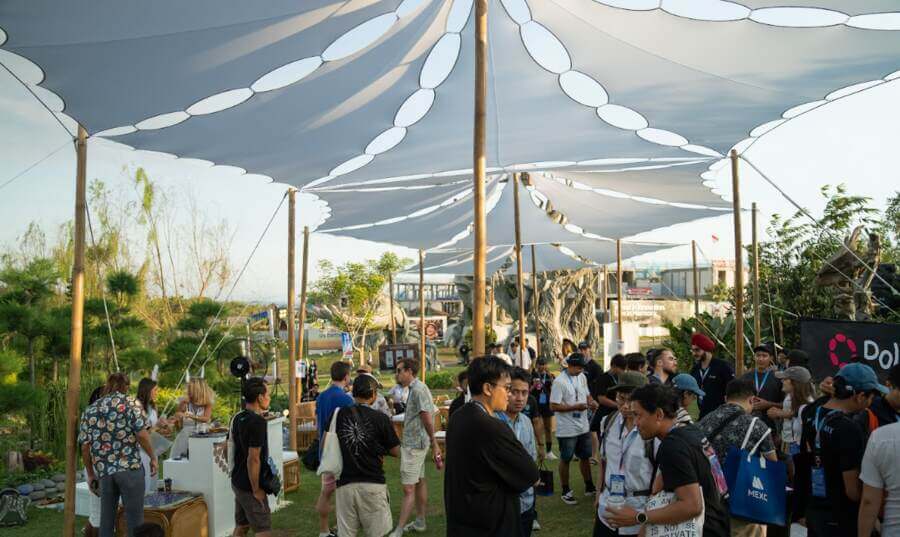
Bali may be one of the most interesting places to practise this.
The island attracts people from an unusually wide variety of cultures, professions, industries, and life experiences. A restaurant owner may find themselves sitting beside a technology founder. An artist may meet an investor. A hospitality executive may begin a conversation with someone working in sustainability. A parent may discover an entirely new professional community through another family at school.
These combinations happen naturally, but people do not always take advantage of them.
When attending an event, there is a tendency to search immediately for relevance. Who is useful to my work? Who understands my industry? Who might become a client? Who knows someone I should meet?
These questions can help create focus, particularly when time is limited. But if every conversation is filtered through immediate usefulness, an important part of networking disappears: discovery.
The person who appears least relevant may introduce the most unfamiliar idea.
Someone working in agriculture may understand the community better than someone building a community platform. A hotel operator may have lessons about customer experience that apply directly to a technology company. An artist may understand attention and storytelling in ways that change how an entrepreneur communicates a product. Someone working with local communities may recognise cultural considerations that an international founder has completely missed.
Different worlds notice different things.
This is one reason innovation often happens at the meeting point between disciplines. When everyone in a room has similar training and experience, they may also share similar assumptions. They know the accepted solutions, the familiar problems, and the conventional way of discussing them.
Someone from outside the industry may ask the obvious question that insiders stopped asking years ago.
Bali’s social environment creates these intersections constantly. Hospitality, tourism, wellness, food, design, technology, sustainability, spirituality, property, education, events, and creative industries frequently overlap. A single community gathering may contain people working across several of these fields.
The opportunity is not necessarily to create a collaboration with everyone.
Sometimes the value is simply exposure.
A conversation can introduce a different vocabulary. Someone can describe a problem from a perspective that has never been considered. Another person may recommend a book, place, community, practice, or idea that sends someone down an entirely new path.
None of these outcomes may be visible on the evening of the event.
This makes them easy to undervalue.
Traditional professional networking often encourages people to enter an event with a clear target. Research the guest list, identify the people you want to meet, and make the most efficient use of your time. There is considerable value in doing this, especially when someone has a specific goal.
But intentionality and openness do not have to contradict each other.
A person can know whom they hope to meet and still leave space for the unexpected.
They can spend most of their professional time within their industry while occasionally entering a room where they know very little.
They can attend something because the subject interests them rather than because they already understand how it will benefit their career.
The discomfort of these environments is part of their value.
When everyone else appears to understand the terminology and we do not, we become beginners again. We need to ask questions rather than demonstrate expertise. We listen differently because we cannot predict every answer.
That position can be surprisingly useful.
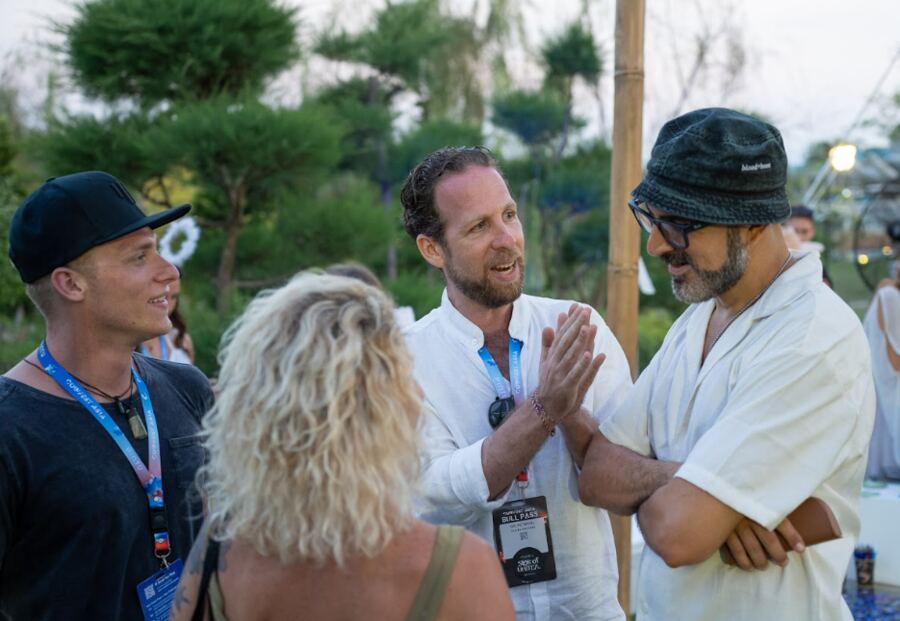
People who have become established in their careers are often surrounded by others who already know what they do. Conversations begin with assumptions. Introductions carry professional history. Expertise can become part of identity.
In an unfamiliar room, much of that disappears.
The question becomes less about proving knowledge and more about understanding what is happening.
This can make conversations more human.
Instead of immediately discussing achievements, people may begin with curiosity. Why are you here? What interests you about this subject? What are you learning? How did you become involved?
Those questions create a different kind of interaction from the usual exchange of titles.
Bali also makes stepping outside familiar circles especially relevant because many people move here precisely because they want something in their lives to change. They may be leaving a familiar professional environment, beginning a business, changing lifestyle, or simply seeking a wider perspective.
Yet it is possible to move thousands of kilometres and rebuild almost exactly the same social environment.
Someone can leave a corporate city and spend all their time with former corporate professionals. A founder can move to Bali and interact almost exclusively with other founders from the same country. Geography changes, but the network remains familiar.
There is nothing inherently wrong with this. Shared culture and experience can create important support, particularly after moving somewhere new. Article 2 of this series explored how belonging develops through participation, trust, and contribution.
But belonging should not require closing the door to other worlds.
A strong community can give people enough confidence to explore beyond it.
Attending one unfamiliar event can be a simple way to begin.
It might be a talk on architecture for someone working in technology. A cultural event for someone whose social life has centred mostly around international communities. A business gathering for an artist. An environmental discussion for someone in hospitality. A creative workshop for someone accustomed to corporate conferences.
The objective does not need to be obvious.
The event can simply be an experiment in curiosity.
Before entering, there is still value in having some intention. Another useful reflection asks people to consider who they wish to meet and why before walking into a networking event. The answer does not need to be a specific name. It might be someone who understands a subject they are curious about, someone with a completely different experience of Bali, or someone whose work challenges how they currently think.
This creates a different target from simply looking for the most influential person in the room.
Influence is contextual.
A person with no relevance to someone’s current business may become important years later because their perspective changed a decision. Someone without a large platform may understand a local community deeply. Another person may never become a collaborator but may introduce an idea that shapes the way someone raises their children, designs a company, or approaches their relationship with Bali.
The value of a network is therefore not only in what it can provide.
It is also in what it can expose us to.
This matters even more as algorithms increasingly shape what people see. Social platforms learn our interests and show us more of what we already engage with. Professional networks recommend people who resemble the people we already know. Online communities gather around increasingly specific interests.
The result can be highly efficient and surprisingly narrow.
Physical events can interrupt that pattern.
In a room, we cannot completely control who sits beside us. Someone unfamiliar can ask a question we would never have searched for online. A conversation can move into a subject we did not know enough about to request from an algorithm.
Serendipity becomes possible.
But serendipity still requires participation.
It is possible to attend an unfamiliar event and spend the entire evening with the friend who came with us. It is possible to stand beside interesting people without beginning a conversation. It is possible to leave early because the room feels uncomfortable.
Stepping into a different network therefore involves two decisions: choosing the unfamiliar room and then choosing to participate once inside it.
The first expands access.
The second creates connection.
There is no guarantee that every experiment will produce something meaningful. Some events will simply confirm that a particular community is not the right fit. Some conversations will be brief. Occasionally, people will leave understanding little more than when they arrived.
That is still useful information.
Exploration does not require every path to become permanent.
Bali gives people unusual access to different worlds within a relatively small geographical area. The opportunity is not to join all of them. It is to remain curious enough to occasionally cross the boundaries between them.
A network built only from people who think, work, and live similarly can provide comfort and reinforcement.
A network that occasionally reaches beyond those boundaries may provide something else: perspective.
When was the last time you entered a room where you were not sure you belonged, simply to discover who and what you might find there?