
Bali attracts people who are changing.
Some arrive after leaving a career, selling a business, ending a relationship, or moving away from a city they had known for years. Others come with less dramatic intentions but discover that living on the island gradually changes their priorities, routines, interests, and understanding of what they want from life.
Change often begins with the individual, but it rarely stays there. As people evolve, their relationships begin to feel different too.
A friendship that once felt effortless may become harder to maintain. A professional circle that once created energy may begin to feel repetitive. People who shared the same lifestyle five years earlier may now want very different things.
None of this necessarily means that someone has done something wrong.
Sometimes the relationship simply belongs to a different version of life.
One useful reflection is to ask: “What network do we want to be a part of, and what are we bringing to the network?”
The question moves attention away from popularity and the number of people someone knows. Instead, it asks whether the relationships around us are aligned with the person we are becoming.
This can be uncomfortable because relationships carry history. Old friends remember earlier versions of us. Families often continue interacting through roles established many years ago. Professional networks may associate someone with work they no longer want to do.
Changing direction can therefore create tension.
Someone starting a new business may need conversations with people comfortable with experimentation and risk, while their existing environment encourages stability. Another person may become more interested in health, spirituality, family, creativity, or community and discover that some relationships no longer have the same rhythm.
Bali makes these transitions particularly visible because reinvention is common here. People arrive carrying previous identities, professions, expectations, and social histories. Then they begin meeting people whose lives expose them to completely different possibilities.

A corporate executive becomes friends with an artist. An entrepreneur spends time with wellness practitioners. A parent discovers a new community through school. Someone focused almost entirely on business becomes interested in culture, service, or community building.
Different relationships introduce different versions of what life can look like.
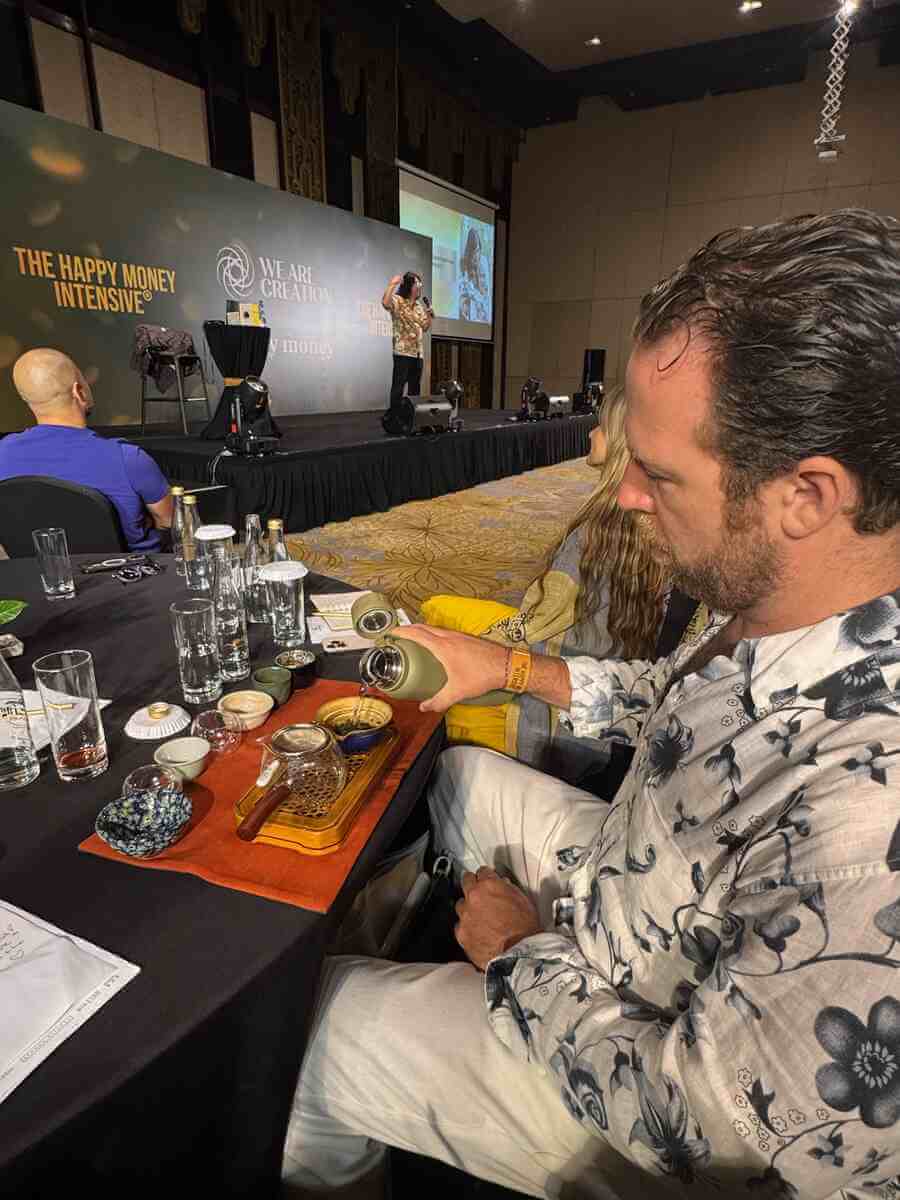
I have experienced this personally through the communities I have become part of in Bali. We Are Creation has been one place where I have seen this happen in real time.
Gatherings like these are not only about bringing people into a room for a programme or event. They create opportunities for people from different backgrounds to learn from one another, exchange ideas, share experiences, and sometimes discover relationships they did not know they needed.
Even something as simple as sitting together over tea can change the quality of a conversation. The programme may bring people into the space, but often it is what happens between the formal moments that shapes what comes next.
Being part of these communities has also reminded me that a network is never finished.
As our lives change, the people around us may change too.
This does not mean newer relationships are automatically better than older ones. Newness can be exciting, while long-term relationships carry depth, memory, and stability that cannot be created quickly. The point is not to replace people whenever our interests change.
The more useful question is whether a relationship allows both people to continue evolving.
Healthy relationships can survive difference. Friends do not need identical careers, beliefs, routines, or ambitions. One person may live in Bali while another remains in London, Sydney, Singapore, or New York. One may build a company while another raises children or chooses an entirely different path.
Alignment does not require sameness.
Difficulty arises when a relationship repeatedly asks someone to remain a version of themselves they are trying to leave behind.
A new goal is dismissed. A lifestyle change becomes the subject of jokes. A business idea receives criticism before it is understood. Someone begins avoiding conversations because they know they will need to defend choices that are becoming increasingly important to them.
Eventually, the question becomes whether the network has your back or is quietly holding you back.
That does not have to imply conflict.
Someone can care deeply about another person and still be unable to support the direction they are taking. Friends and family often give advice through their own experiences, fears, expectations, or definitions of security. Their intention may be loving even when the effect feels limiting.
It is possible to appreciate what a relationship has meant without expecting it to provide everything required for the next stage of life.
Bali offers an interesting place to practise this because relationships already exist within a culture of movement. People arrive and leave. Friendships become long-distance. Communities reorganise. New groups emerge as work, family, location, and priorities change.
Instead of seeing every shift as a failure, it may be more useful to view networks as living systems.
One podcast conversation compared networks to gardens. When something is no longer thriving, the answer is not always to destroy it. Sometimes it simply needs a different place.
Relationships can work the same way.
A friendship may become less frequent without becoming less meaningful. Someone can leave a professional community while remaining grateful for what it provided. Two people can move in different directions without invalidating everything they shared before.
The challenge is recognising which relationships need space and which simply need more attention.
That requires reflection.
Which relationships create energy, honesty, curiosity, and encouragement? Which ones continually make us smaller? Which friendships have simply been neglected? Which remain active mainly because of habit?
The responsibility also works both ways.
It is easy to ask whether other people support our growth, but a healthy network requires asking whether we support theirs.
Are we allowing our friends to change? Are we still expecting someone to play a role they have outgrown? Are we listening to who they are becoming, or responding only to who they used to be?
That is why the second half of the question matters just as much:
What are we bringing to the network?
Some people will stay for decades. Others may appear for a season, introduce an important idea, and move elsewhere. Some relationships disappear for years and later return with completely different meaning.
Bali teaches this constantly. People arrive, grow, leave, return, reconnect, and discover that both sides have changed.
Perhaps the goal is not to hold every relationship in exactly the same form forever.
It is to remain conscious of who is receiving our time, whose growth we are supporting, and whether the network around us reflects the life we are trying to build.
Does your current network support the person you are becoming, and are you doing the same for them?